Build the operational readiness plan as a live programme - from concept to Day 1
Planning toward completion and planning operational readiness are not the same thing. Completion planning tracks what is built. Readiness planning tracks whether the facility can run - across systems, people, and information simultaneously.
CxPlanner builds the operational readiness plan as a live, tracked programme from concept - with effort budgets, workload planning, critical path to readiness gates, and time-to-ready forecasting.
Book a demo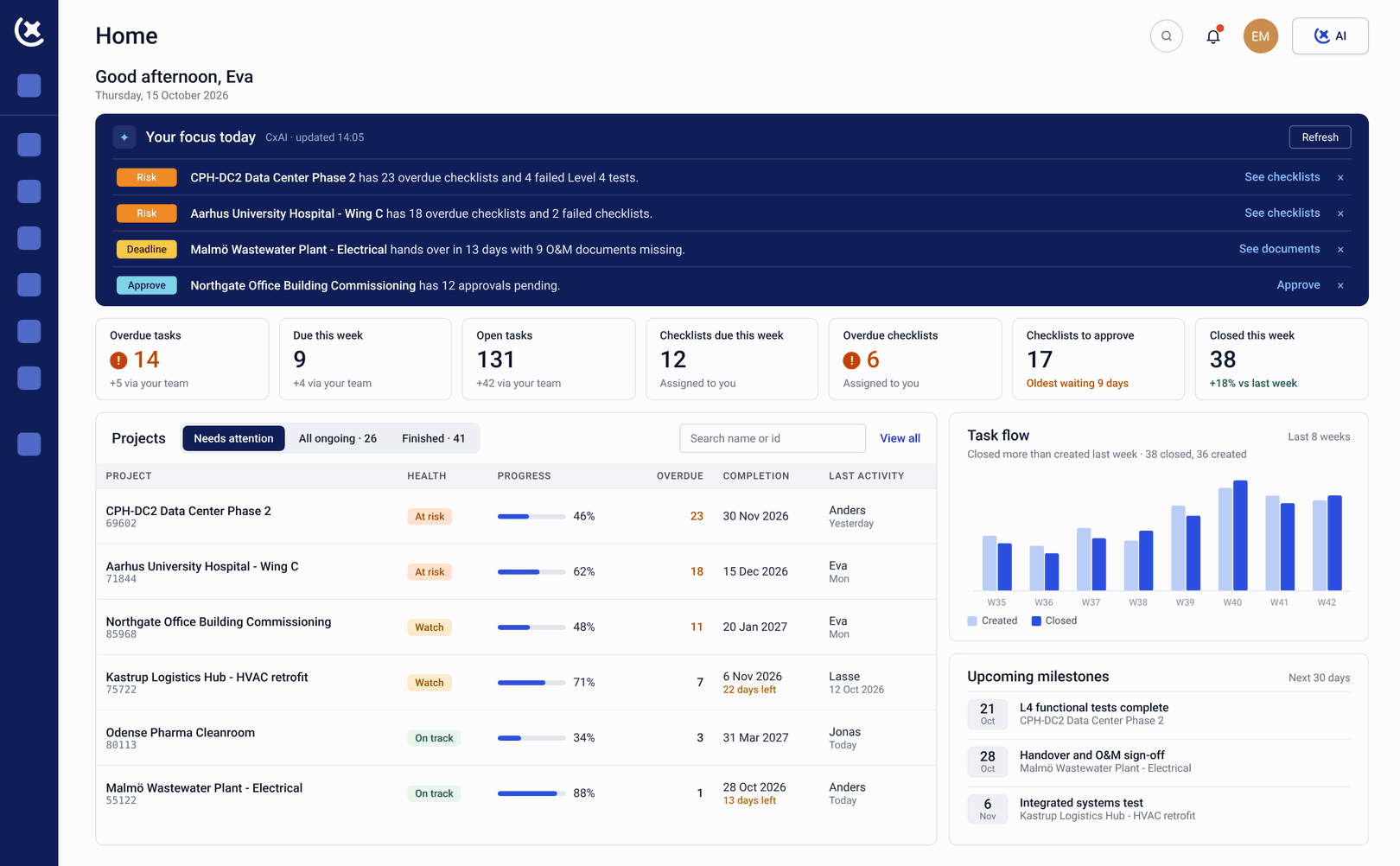
The operational readiness plan is produced at the start and revisited at the end.
The timing of operational readiness planning is where most projects make their most expensive mistake.
The plan exists on paper. Nobody tracks it in between.
An operational readiness plan is produced at the start of the project, filed, and referenced again in the final weeks. In between, nobody tracks whether it is being executed - because there is no system for it. Gaps that should surface at month six surface at week six before handover.
Workforce readiness is left too late to do properly.
Planning that starts at concept builds 6-18 months of lead time for workforce development. Planning that starts at commissioning completion builds a training sprint that produces sign-off records - not operational competence.
Resource allocation is guesswork until it is a crisis.
Without workload planning and capacity forecasting, the question 'do we have enough people to reach Day 1 on time' is answered by assumption - until the final weeks reveal the answer is no.
Operational readiness plan tracked live - surfacing gaps when there is still time.
CxPlanner structures the operational readiness plan in the platform from the start of the project - not as a document but as a tracked programme. Milestones for systems, people, and information readiness are set, tracked, and visible to all stakeholders in real time.
The distinction from completion planning matters here. A completion plan tracks whether the scope is built. The operational readiness planning programme in CxPlanner tracks whether the facility can run - across all three pillars simultaneously, from concept to Day 1.
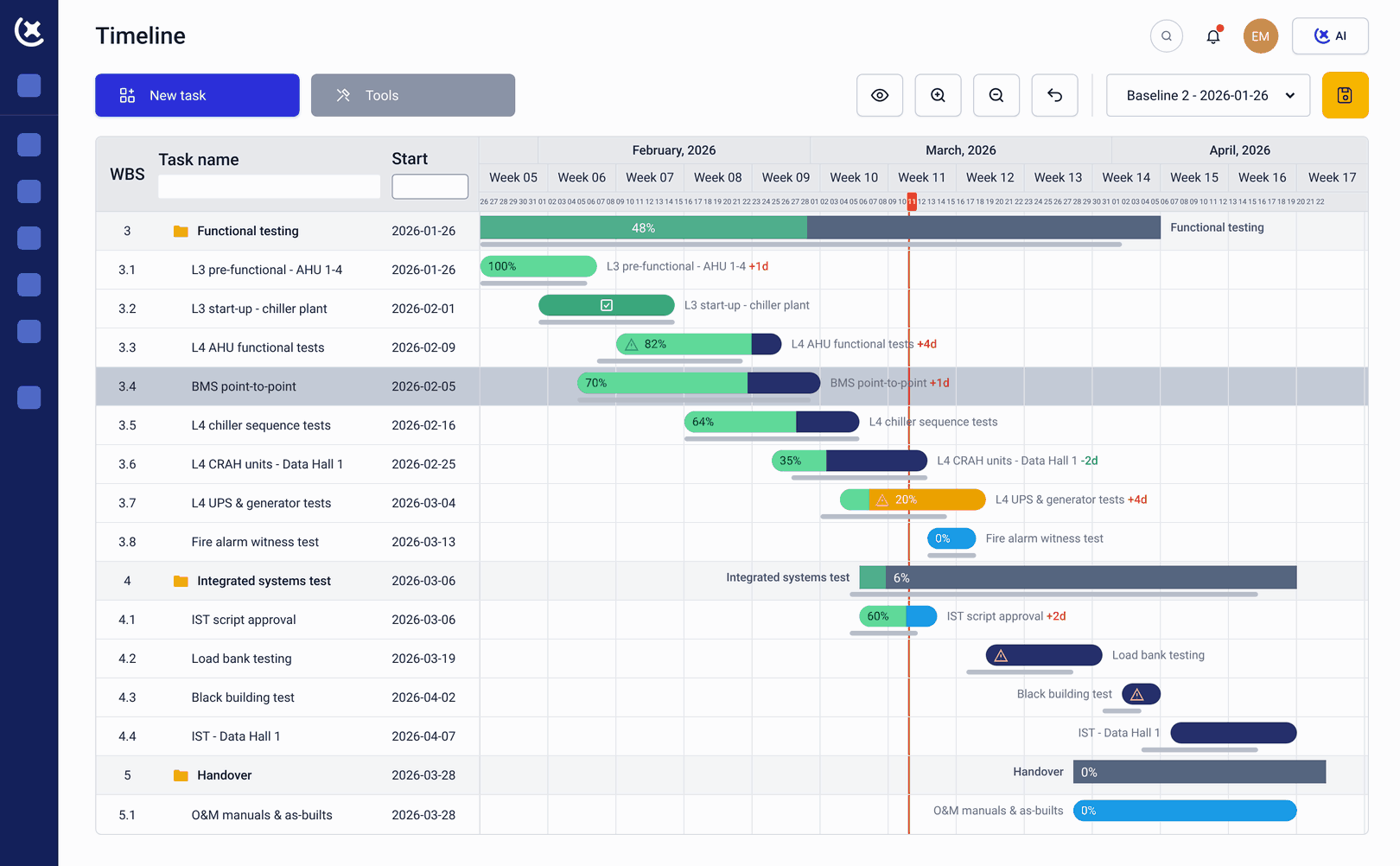
Here's how it works:
Readiness programme scoped at concept
Milestones, gates, and workstream owners defined before detailed design begins. The workforce development timeline is built in from the start.
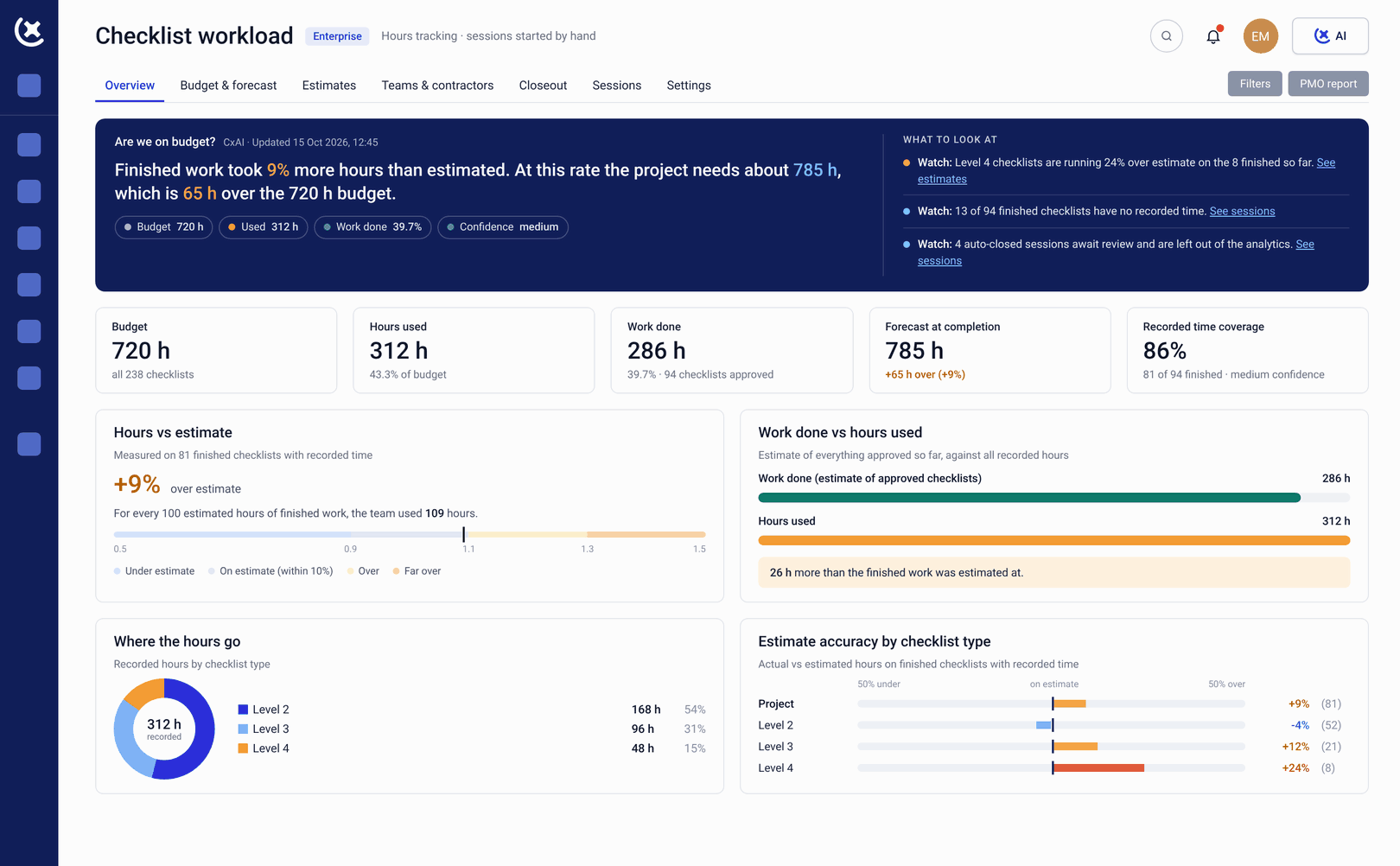
Checklist workload - budget vs. planned set per checklist and activity
Planned effort per checklist tracked against the team's actual usage on the project. Variance visible before it becomes a schedule conversation.
Critical path identified toward readiness gates
The team works on what matters for Day 1 readiness, not on what is loudest.
Workload and capacity forecasting
Resource allocation across systems and pillars visible months before 'do we have enough people' becomes urgent.
How CxPlanner covers operational readiness planning
Plan, budget, and forecast the path to Day 1 - across all three pillars.
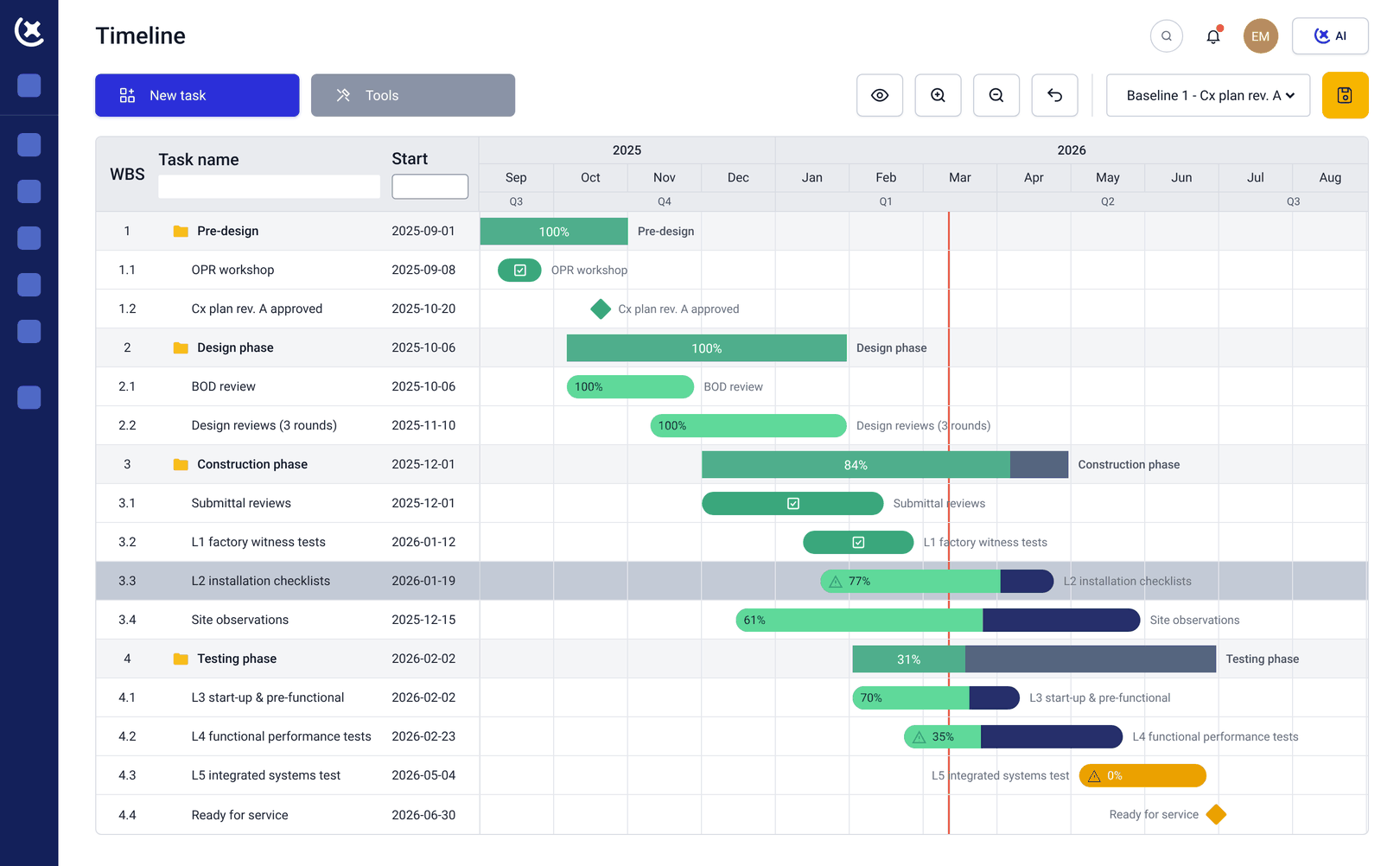
Every pillar's milestones in one Gantt view
Gantt views across the full operational readiness plan - system readiness milestones, people readiness milestones, information readiness milestones, and readiness gate dates - with dependencies between workstreams tracked in the platform.
Variance visible before it is a problem
Planned effort per checklist and activity tracked against actual. Variance graphs show where the programme is over or under budget.
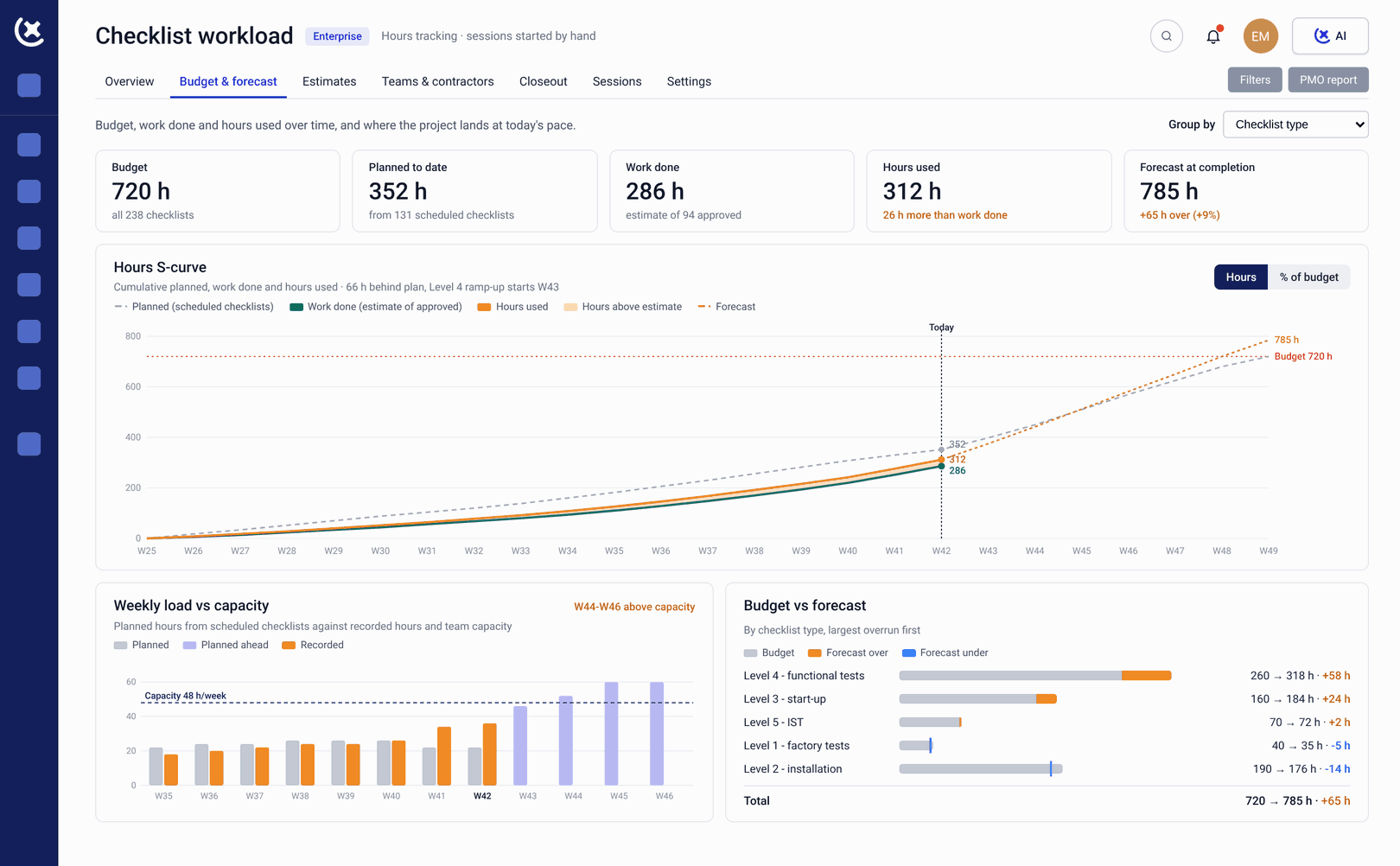
Forecast readiness per system and pillar
Based on current pace and tracked progress, CxPlanner forecasts time-to-ready per system, per pillar, and for the full operational readiness planning programme - visualised through Skyline charts and S-Curve planning.
Connects to your master programme schedule
The operational readiness plan integrates with Microsoft Project for organisations running their master programme schedule in that tool.
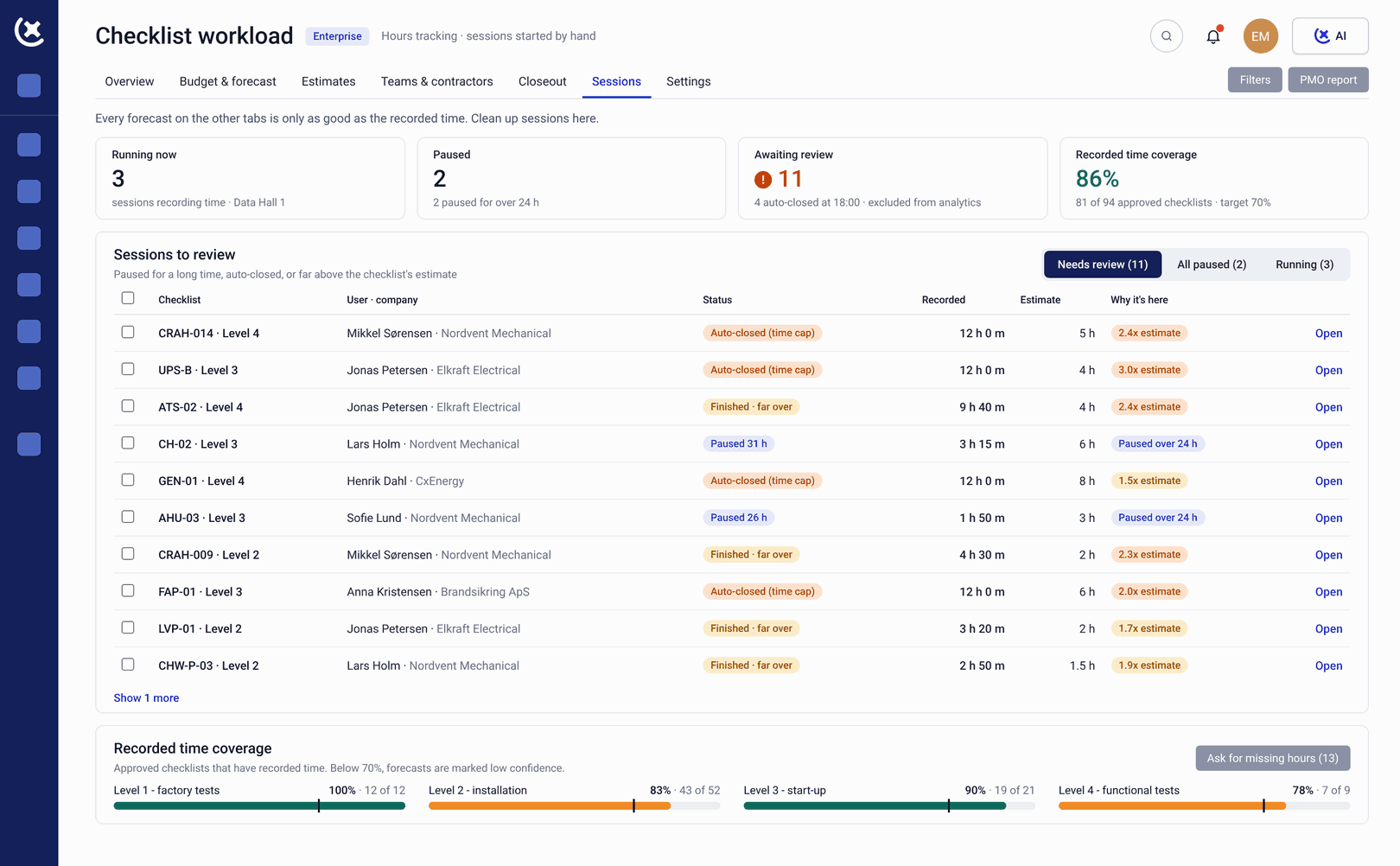
See where to focus before blockers appear
Burndown charts toward each readiness gate show where effort concentrates and whether the programme is on track to close - so the programme director sees where to focus before blockers materialise.
Benefits from building the operational readiness plan at concept
The final weeks reflect a programme closing out - not a team discovering what was not planned.
Lead time is built into the plan, not compressed out of it.
Operational readiness planning that starts at concept gives workforce development, documentation structuring, and systems verification the time they require. The 6-18 months needed for people readiness is available - because the plan starts early enough to use it.
Gaps surface when they are cheap to close.
A gap in the operational readiness plan that surfaces 12 months before handover costs an afternoon to address. The same gap at 6 weeks costs weeks and a schedule conversation. CxPlanner surfaces gaps when there is still time.
Resource questions are answered before they are crises.
Effort tracking and capacity forecasting give the programme director visibility into whether the team can reach Day 1 on the current trajectory - weeks before the question becomes urgent.
Explore how to build readiness planning into the project from day one
If your operational readiness plan is produced at the start of the project and revisited in the final weeks, book a walkthrough. We will show you what a live, tracked readiness programme looks like in CxPlanner.
Book a demoRequest a walkthroughCommon questions about operational readiness planning
When should operational readiness planning start?
Best practice is for operational readiness planning to begin at concept design. Workforce readiness alone requires 6-18 months of lead time. CxPlanner structures the operational readiness plan as a parallel workstream from the start of the project - not a closeout activity.
How is readiness planning different from completion planning?
Completion planning tracks whether the scope is built. Operational readiness planning tracks whether the facility can run - across systems, people, and information simultaneously. CxPlanner plans toward Day 1 readiness across all three pillars, not just toward completion of the physical scope.
Does CxPlanner include effort tracking and workload forecasting?
Effort tracking and capacity forecasting are part of the operational readiness planning module.
Can the readiness plan integrate with Primavera P6 or Microsoft Project?
Integration with Microsoft Project is part of the operational readiness plan roadmap.
How does CxPlanner surface readiness gaps before the gate review?
Readiness gaps appear in the operational readiness plan dashboard the day they surface - not at the gate review. The programme director sees a gap 12 months before handover, not 6 weeks before it.