People readiness tracked against the assets operators will run
The systems are commissioned. The documentation is ready. But if the operators have not been trained, the facility cannot run. People readiness is the most commonly underestimated dimension of operational readiness - and the one that requires the most lead time.
CxPlanner tracks operator training management, competency sign-offs, and workforce readiness against the specific assets and systems the operator will be accountable for from Day 1.
Book a demo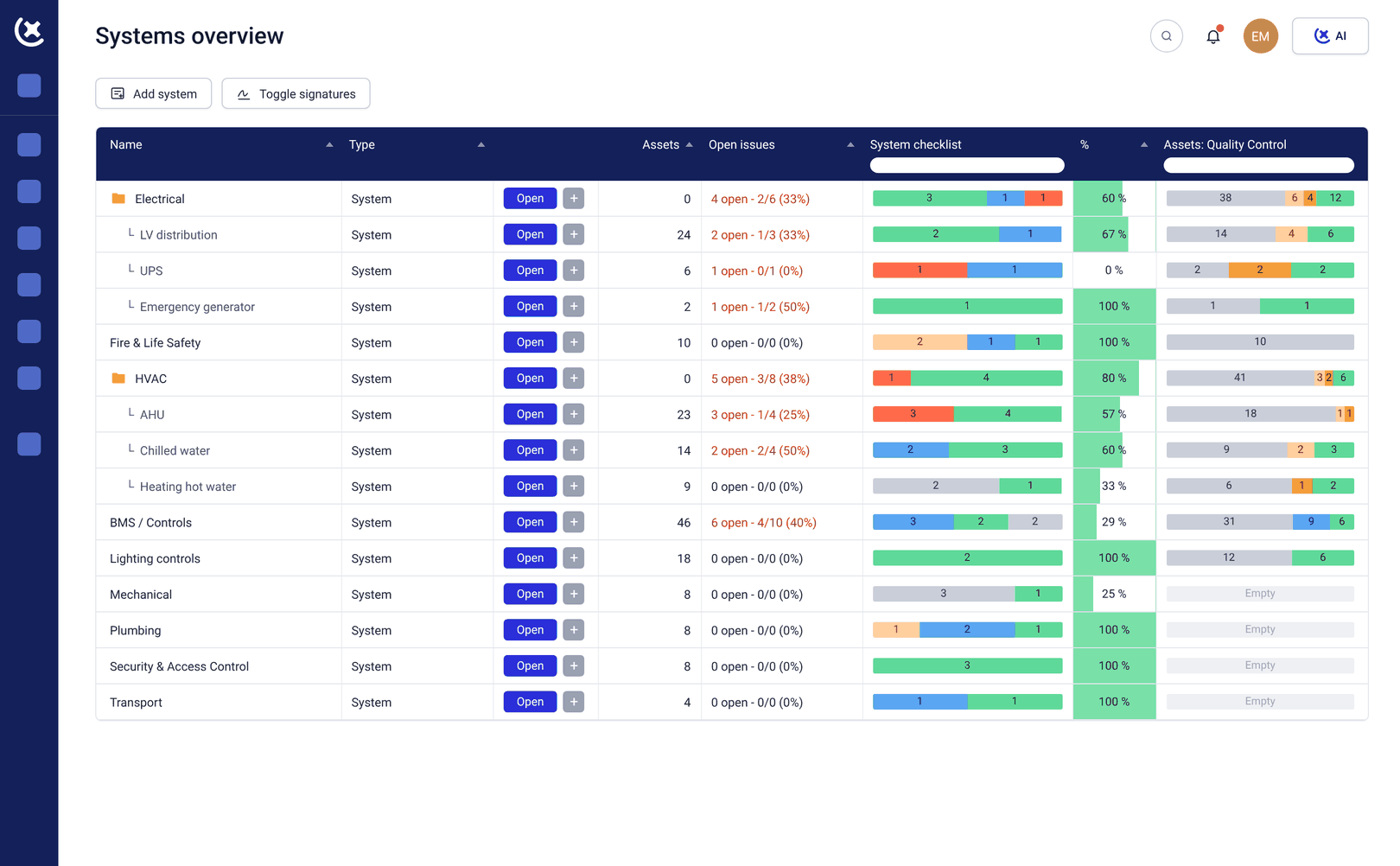
You cannot train an operator in three weeks on systems they have never seen run
People readiness fails when it is treated as a closeout activity rather than a parallel workstream.
Training starts too late to build real competence.
People readiness rarely gets planned - it gets remembered once the system is already in use. Operator training that starts after commissioning is done does not build competence. It produces a sign-off record for training that happened too late to matter.
Competency records are disconnected from the assets they cover.
Training records live in an HR system. The assets the operator will run live in the commissioning platform. Nobody has connected the two. At handover, the owner cannot demonstrate that the person running Cooling System A has been trained on Cooling System A.
Shift staffing and organisational readiness are tracked informally.
Recruitment status, shift model sign-off, and organisational readiness are tracked in spreadsheets - if they are tracked at all. The operator training management picture has no live status; it exists only when someone compiles it.
People readiness tracked like everything else - live, asset-specific, from the start
CxPlanner connects people readiness to the commissioning programme. Operator training records and competency sign-offs are tracked in the same platform as the asset and system data - so when an operator is signed off, the record sits against the asset they will operate.
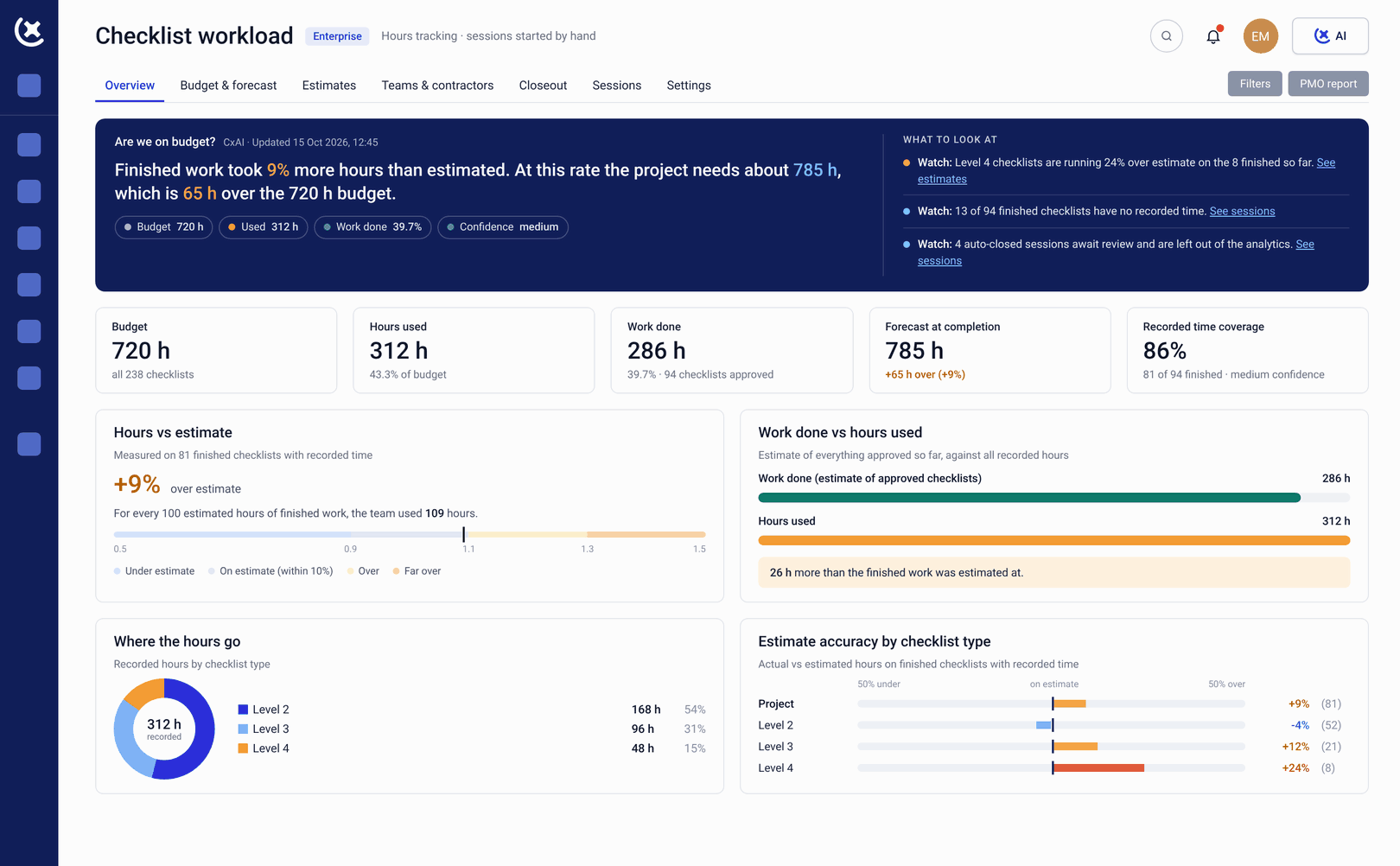
Operator training management starts as a parallel workstream from the beginning of the project. The three-pillar readiness dashboard shows people readiness alongside systems and information readiness, so the owner always sees the complete picture. See the full operational readiness platform overview for how the three pillars connect.
Here is how it works
Training programme defined early
The people readiness programme is scoped at the start of the project - roles, competency requirements, and training timeline set against the facility's asset register.
Operators assigned to systems and assets
Each operator is linked in CxPlanner to the systems and assets they will be accountable for - so training and sign-off records are asset-specific, not generic.
Training tracked as it progresses
Training completion, competency assessments, and sign-off milestones tracked in real time - visible to the owner in the readiness dashboard.
Competency sign-offs recorded against assets
When an operator is signed off on a system, the competency management software record is linked to that asset - demonstrable at handover.
Workforce readiness confirmed at the readiness gate
The people pillar of the readiness gate cannot be signed off until all required training and competency records are complete - enforced in the platform.
How CxPlanner covers people readiness
Operator training, competency sign-offs, and workforce readiness - connected to the assets and systems they belong to.
People readiness demonstrable at the asset level
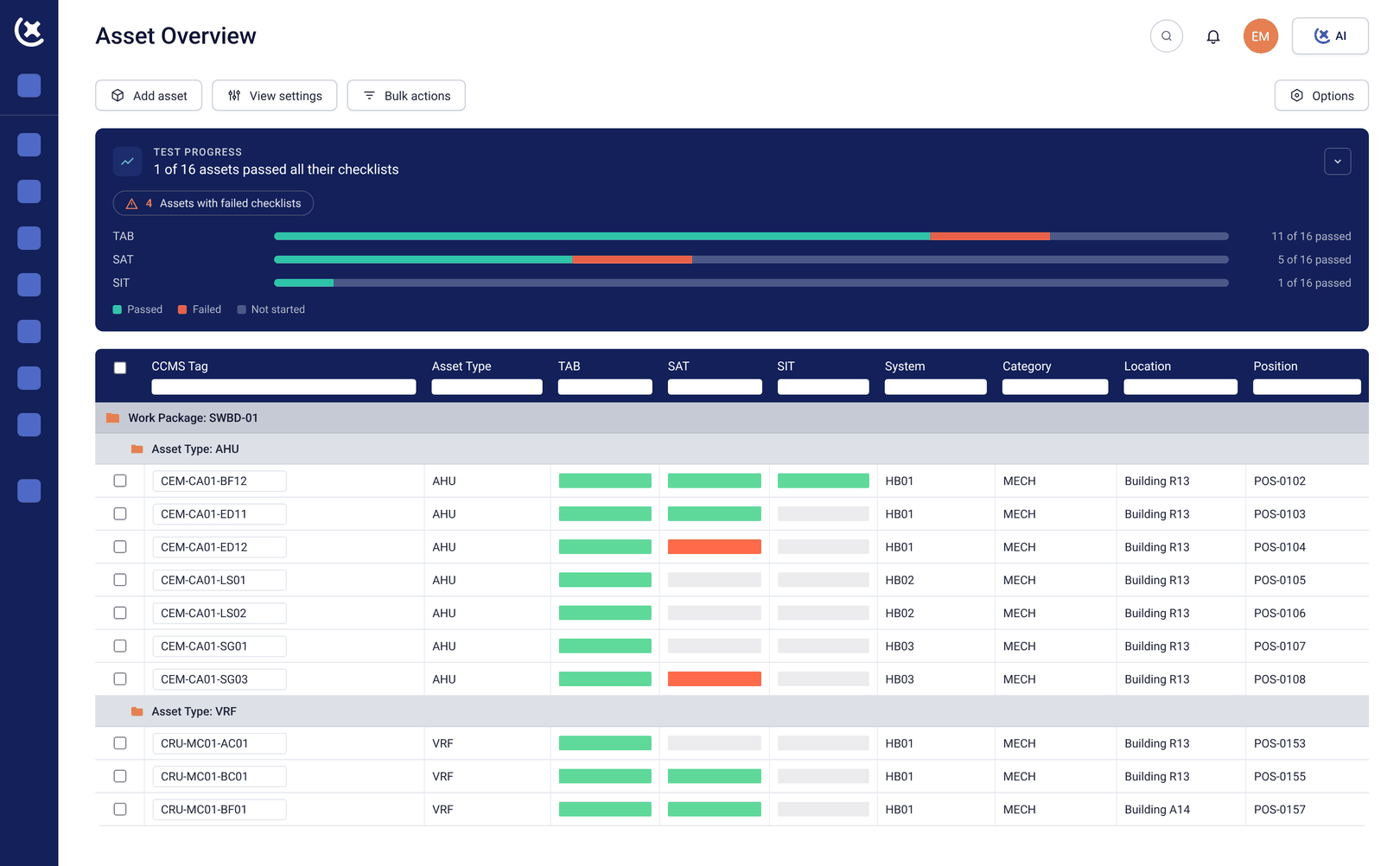
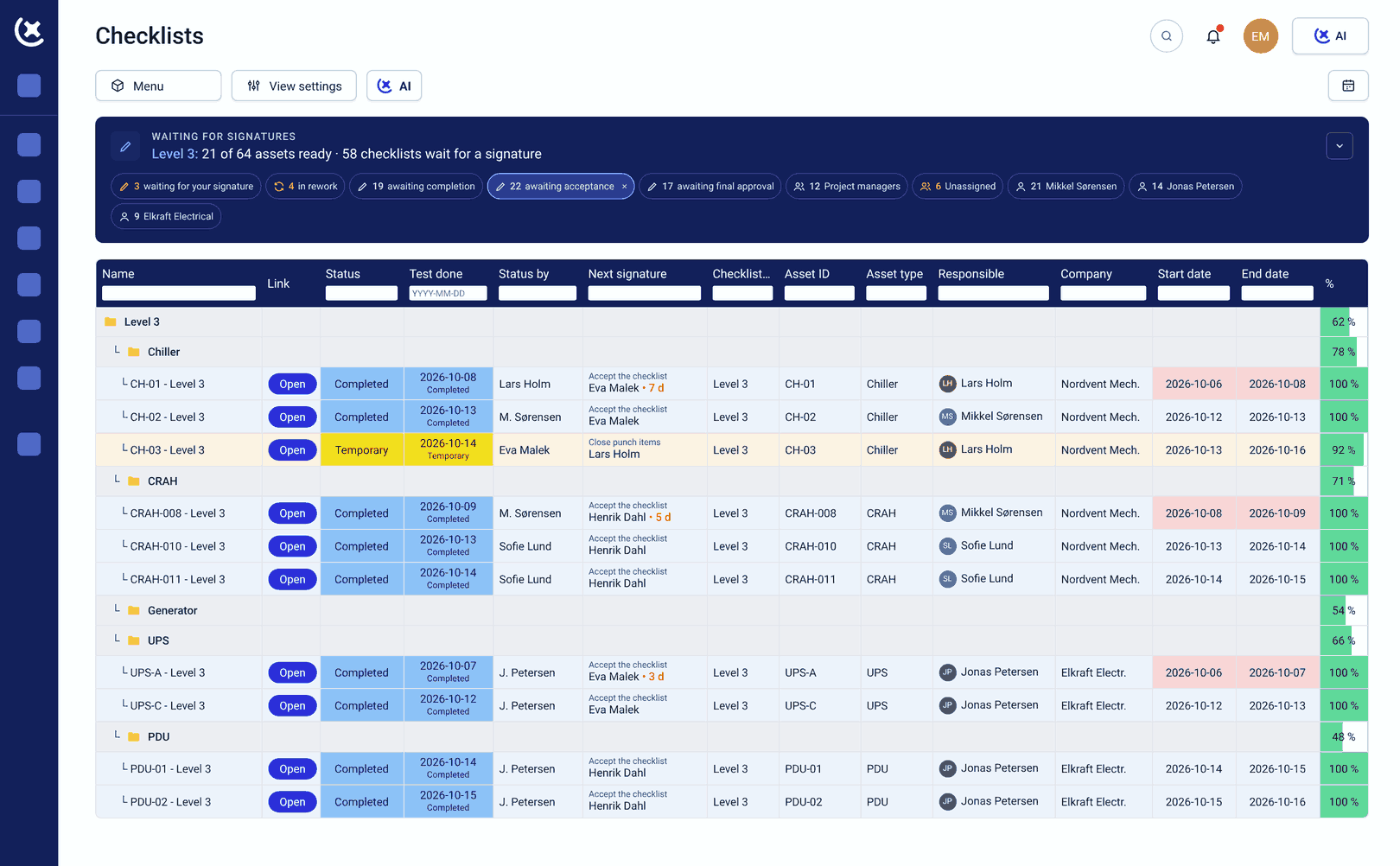
Training completion and competency sign-offs are recorded in CxPlanner against the specific assets and systems the operator will run. People readiness is demonstrable at the asset level - not just at the programme level.
Roles and sign-off status visible in real time
The competency matrix for the operator organisation is tracked in CxPlanner - roles, required competencies, and sign-off status visible in real time. Competency management software built into the readiness programme, not maintained separately.
A parallel workstream, not a closeout activity
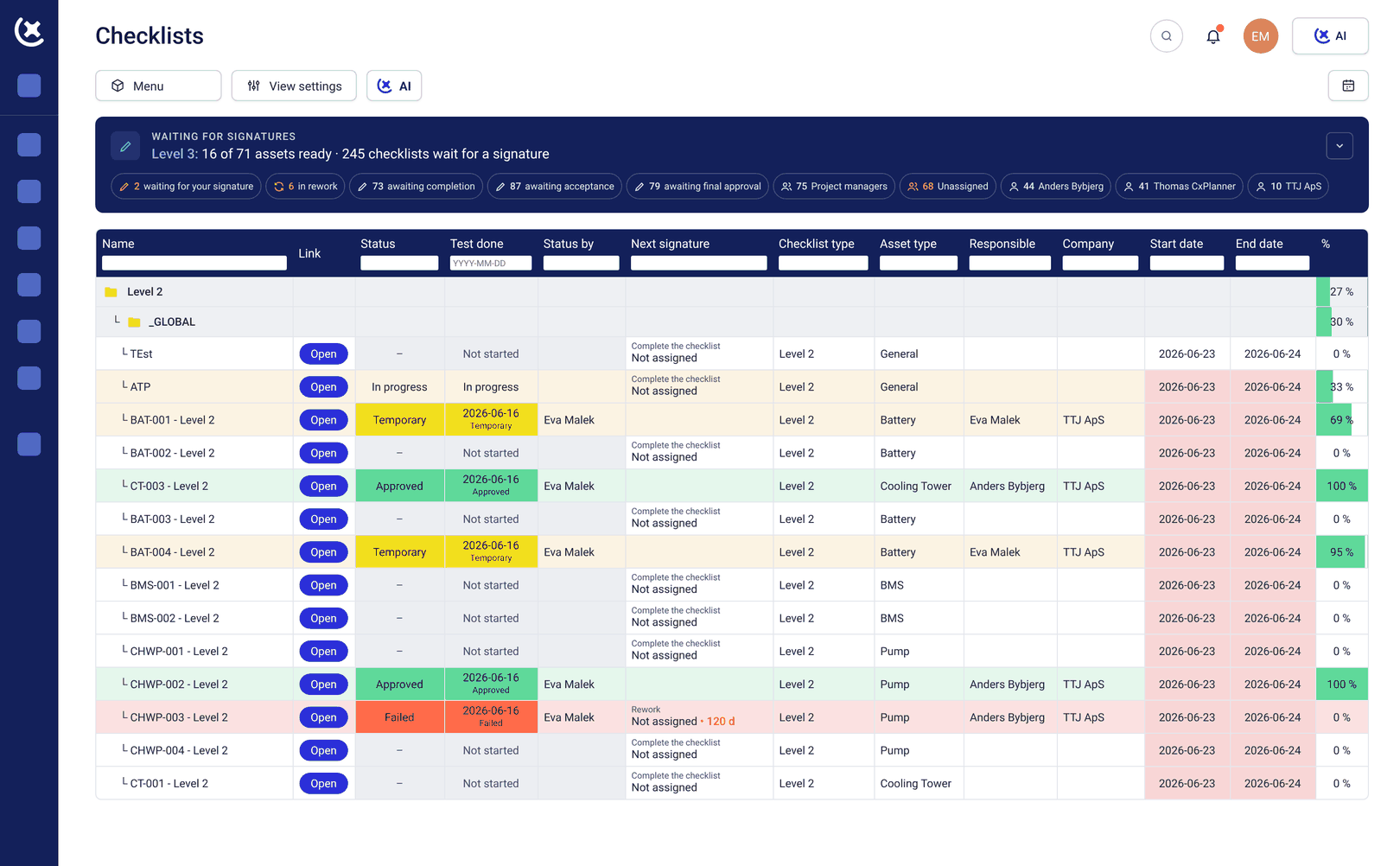
Operator training management starts as a parallel workstream - not a closeout activity. Training milestones are tracked against the project timeline, with the same visibility as commissioning and information readiness milestones.
Formal, asset-specific, time-stamped sign-off
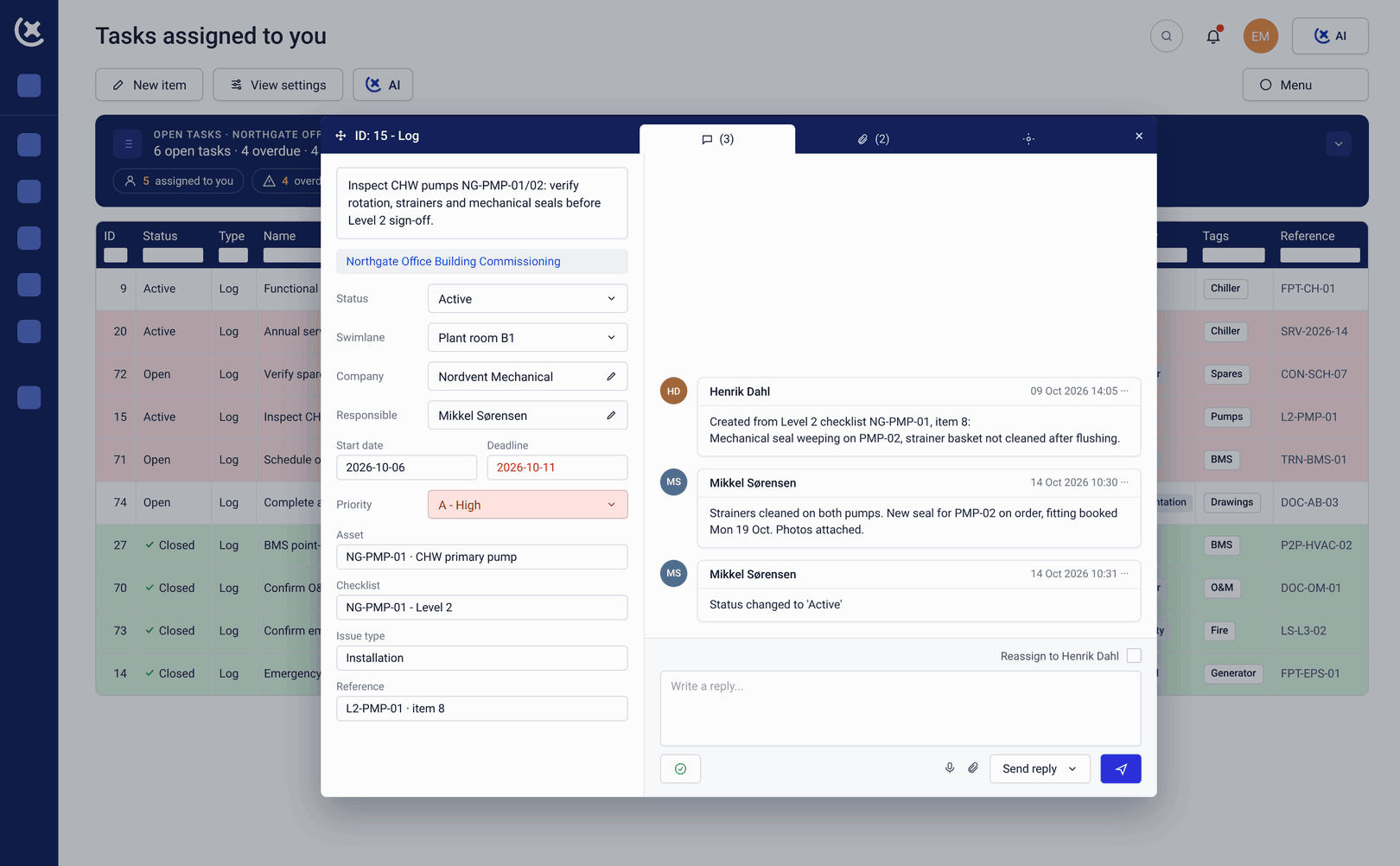
Operator handover workflows - formal sign-off that the operator accepts accountability for a system or asset - are managed in CxPlanner. The record is asset-specific and time-stamped.
One view instead of three spreadsheets
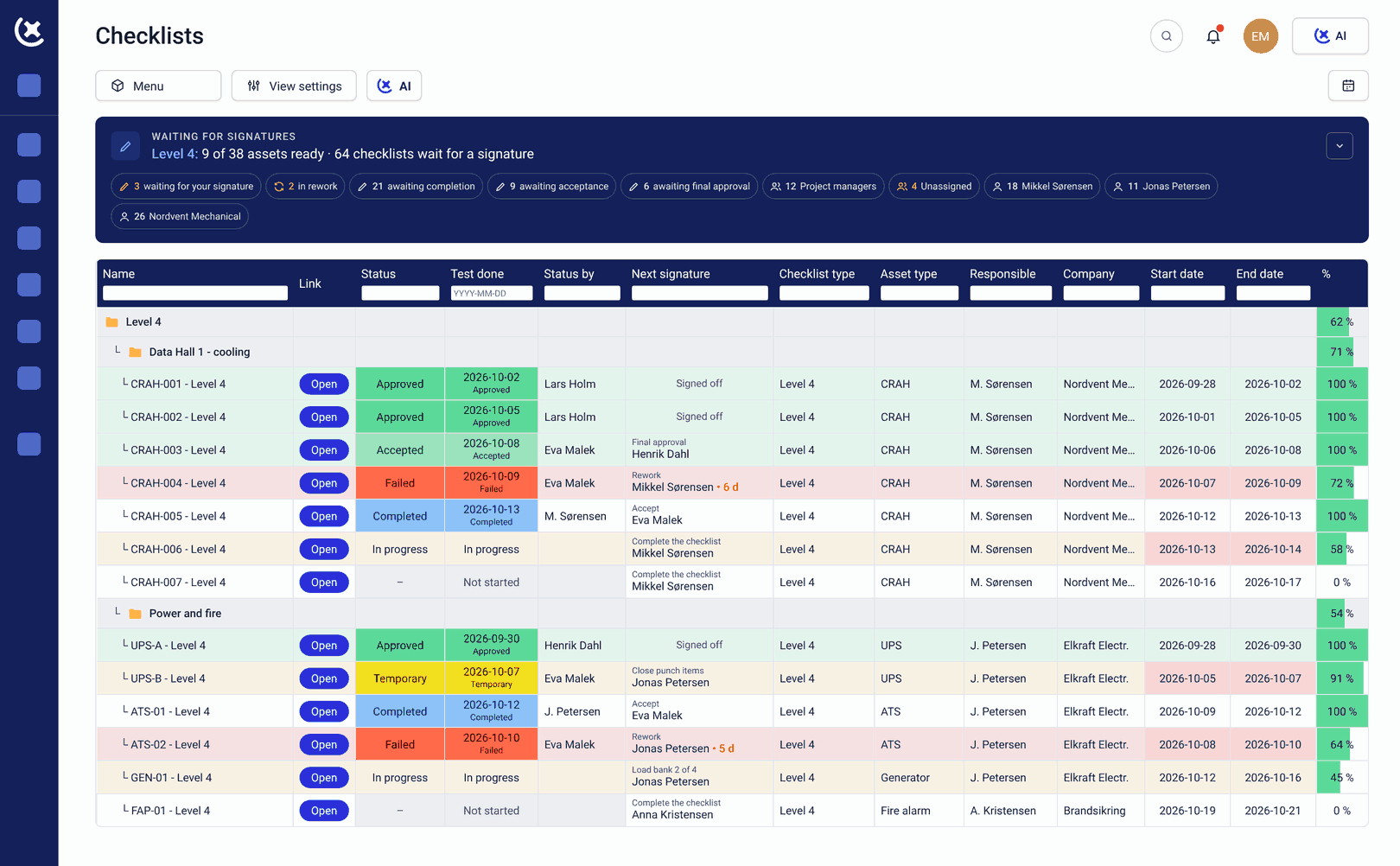
People readiness status is visible alongside systems and information readiness in the owner's dashboard. The complete readiness picture - not three separate spreadsheets - in one view.
Key benefits from tracking people readiness from the start
The people dimension of readiness stops being the last thing addressed and becomes a parallel deliverable.
Training gaps surface early enough to close.
When people readiness is tracked throughout the project, a gap in the training programme surfaces months before the readiness gate - not the week before handover when there is no time to address it.
Competency is demonstrable at the asset level.
At handover, the owner can show that the operator running Cooling System A has been trained and signed off on Cooling System A - not just that a training programme was completed. Operator training management records are asset-specific.
The people pillar is never the last thing standing.
Because people readiness runs as a parallel workstream from the start, it does not arrive as a gap at the readiness gate. The workforce is ready when the systems are - not six weeks after handover.
Explore how CxPlanner makes operators ready when the systems are
If operator training is currently deferred until commissioning is nearly complete, book a walkthrough. We will show you how people readiness tracking works in CxPlanner from programme start to handover.
Book a demoRequest a walkthroughCommon questions about people readiness and operator training
Why does people readiness require 6-18 months of lead time?
Recruitment, onboarding, training, competency assessment, and sign-off for a complex facility cannot be compressed. People readiness that starts in the final months of a project produces records - not operational competence. CxPlanner tracks the programme from the start so lead time is built into the schedule.
Can operator training records be linked to specific assets in CxPlanner?
Yes. Operator training management in CxPlanner is asset-specific. When an operator is signed off on a system, the record is linked to that asset - demonstrable at handover and accessible to the operator's line manager and the asset owner.
How does CxPlanner track the competency matrix for the operator organisation?
The competency matrix - roles, required competencies, and sign-off status - is tracked in CxPlanner as part of the people readiness programme. Progress is visible in the three-pillar readiness dashboard alongside systems and information readiness.
Does people readiness connect to the readiness gate sign-off?
Yes. The people pillar of the readiness gate cannot be signed off in CxPlanner until all required training and competency management software records are complete. Gate enforcement is built into the platform.