Data center operational readiness begins long before the SLA clock does
IST is complete. The white tag is up. The facility is commissioned. And the operator is about to take over systems they have never run under load - with runbooks written in the final weeks and training that happened while commissioning was still running.
Data center operational readiness is what closes that gap. CxPlanner tracks it as a programme that runs alongside commissioning from the start.
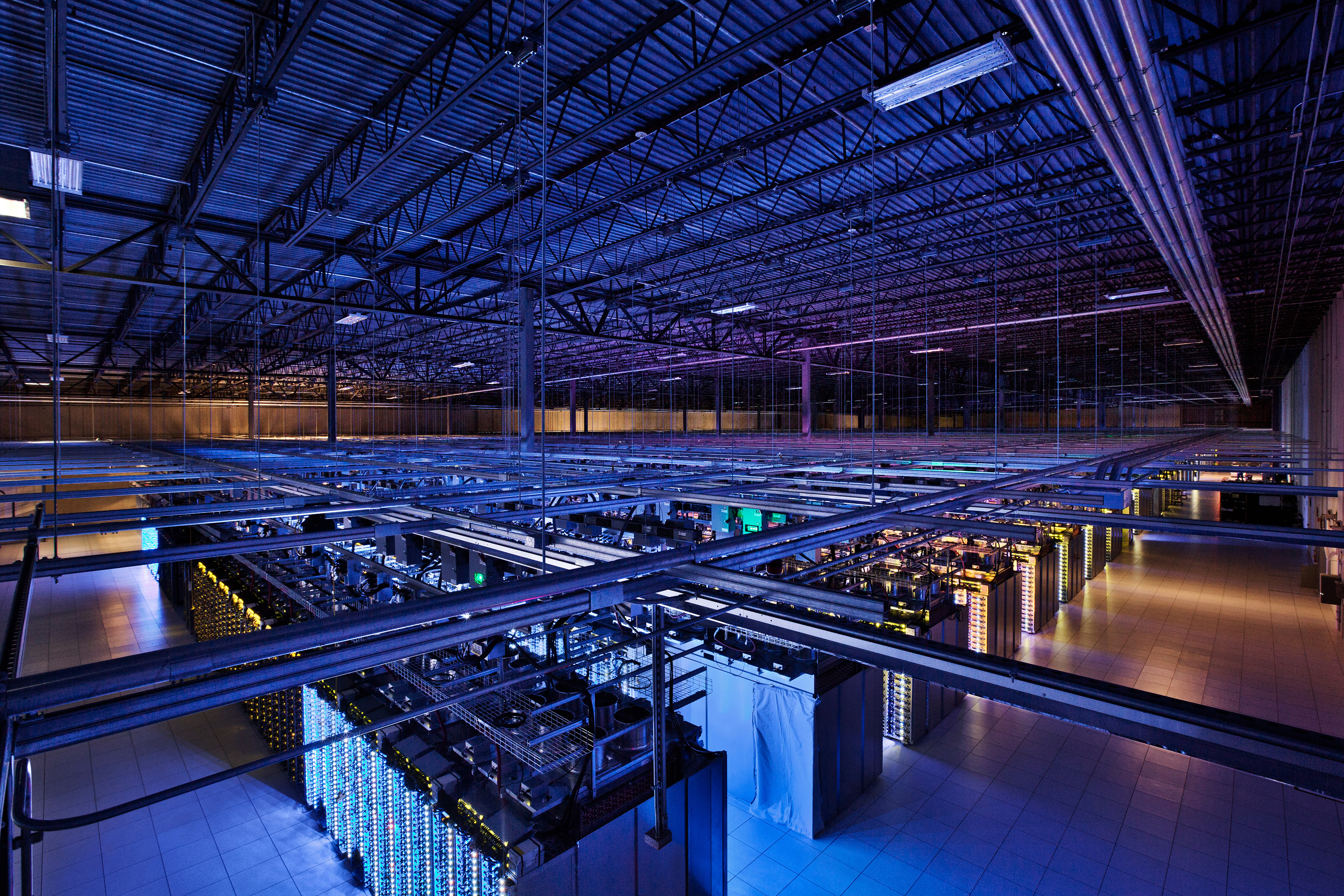
Used by owners and Cx teams to track Day 1 readiness across hyperscale, colocation, and enterprise data center projects.
Most data center projects treat readiness as the phase after commissioning
Commissioning exposes QC gaps that should have been caught earlier.
When QC is incomplete before Level testing begins, the commissioning programme corrects installation problems rather than verifying performance. On a hyperscale campus, a single unresolved L2 dependency can cascade across thousands of tests.
Operators are briefed on systems they have never run under load.
Training at L4 or L5 is training under time pressure on systems still being commissioned. When the first fault occurs after handover, the operator works from memory and incomplete runbooks.
When the commissioning team demobilises, knowledge goes with them.
UPS systems, CRAH units, and BMS configuration - understood by people who are already on the next project. For colocation operators, the commissioning record is a commercial asset. A project folder without asset structure fails both operationally and commercially.
Data center operational readiness tracked from L1 - built throughout the programme
CxPlanner builds data center operational readiness as a parallel programme from the start - running alongside commissioning, not after it.
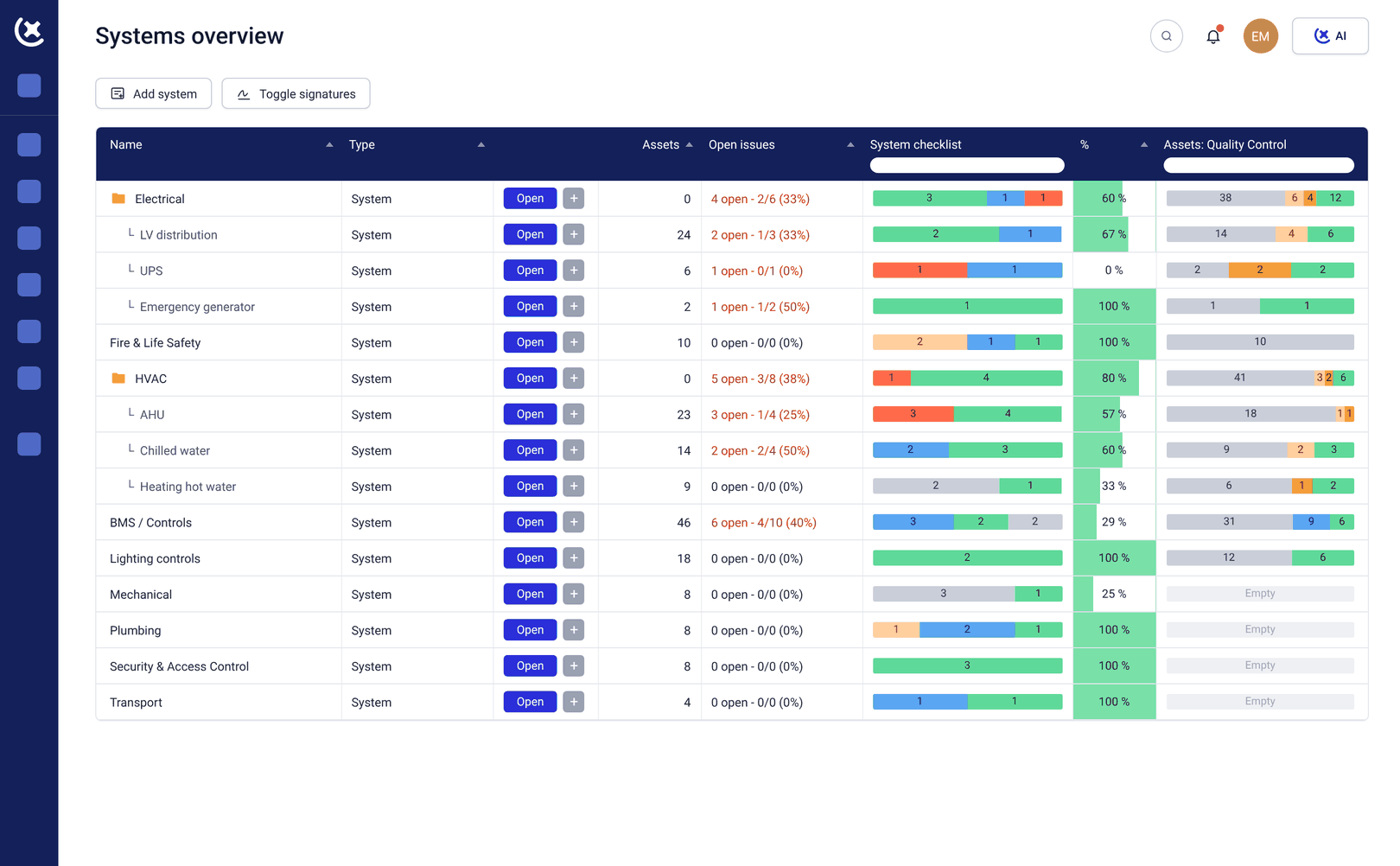
Quality control is tracked per system and asset before Level testing begins. Issues surface during installation, when they are still cheap to fix - before they consume commissioning time that should be spent on verification.
The data center commissioning software and the operational readiness platform share the same data, so each Level sign-off feeds the owner's readiness dashboard automatically.
Operator training and runbooks run as tracked workstreams alongside Level testing - linked to specific assets, reviewed against actual system behaviour during commissioning. A readiness gate requires training, documentation, and spare parts to be confirmed before it closes.
When the Cx team demobilises, the institutional knowledge stays in the platform.
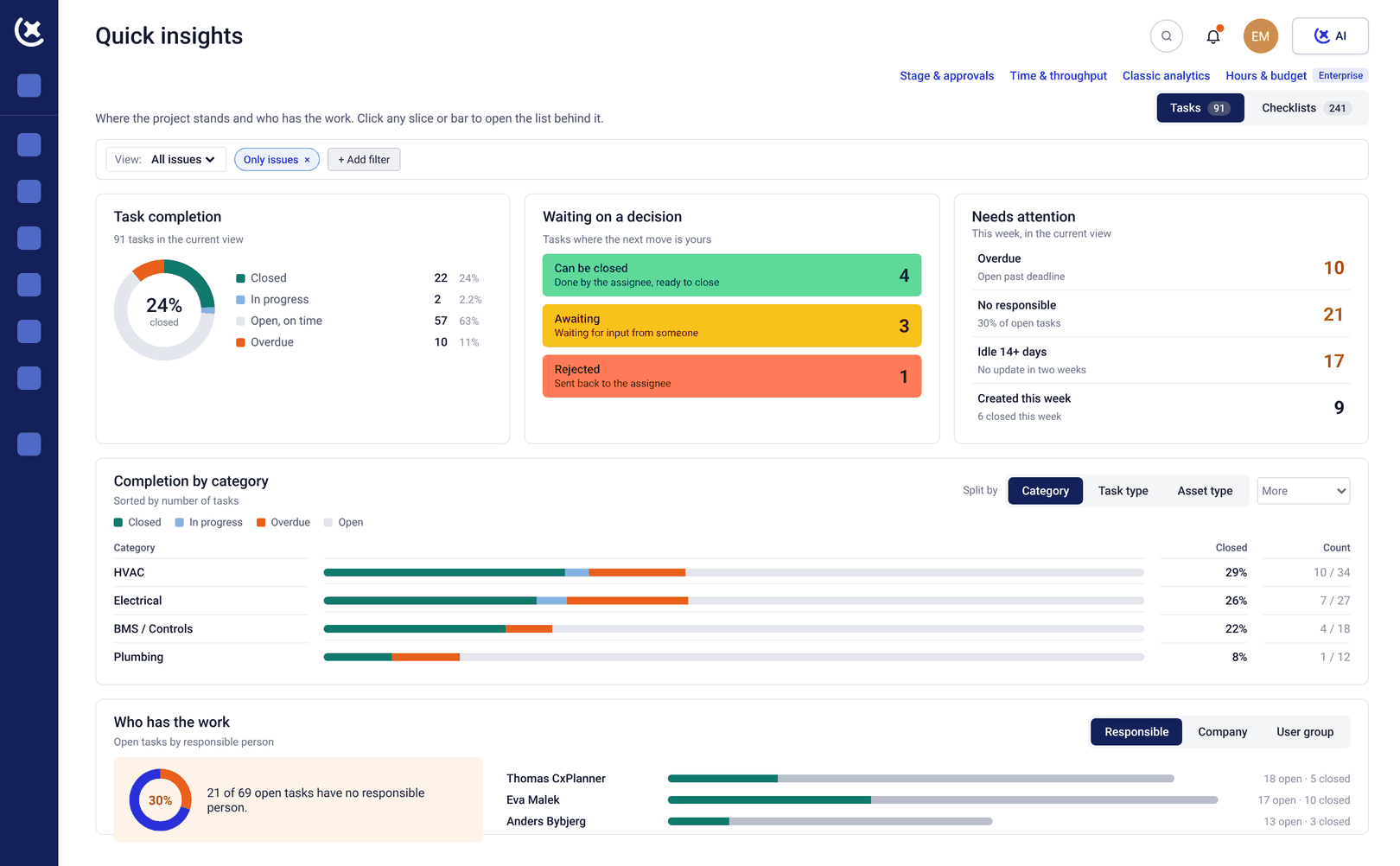
How CxPlanner covers data center operational readiness
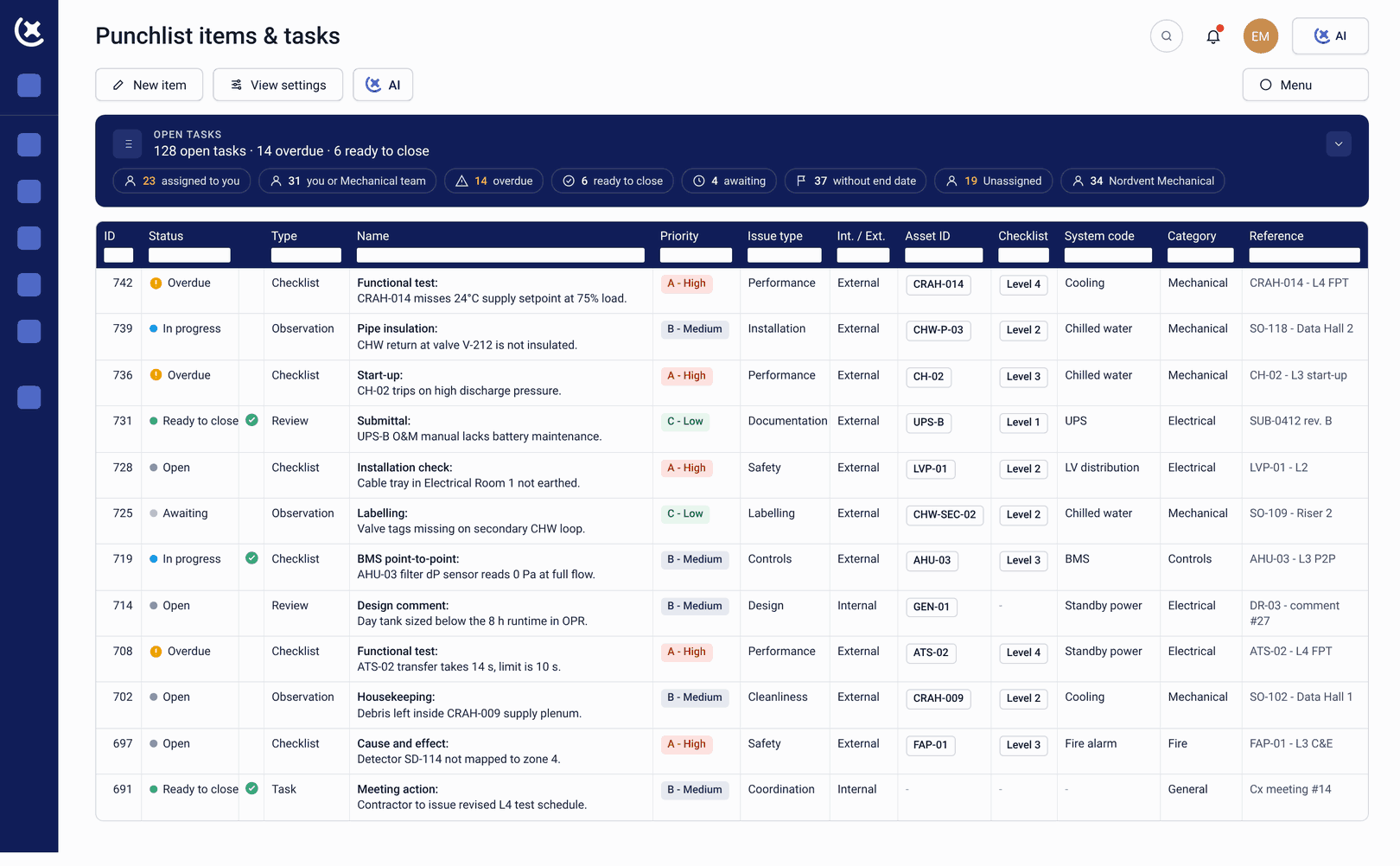
L1-L5 commissioning connected to the readiness dashboard
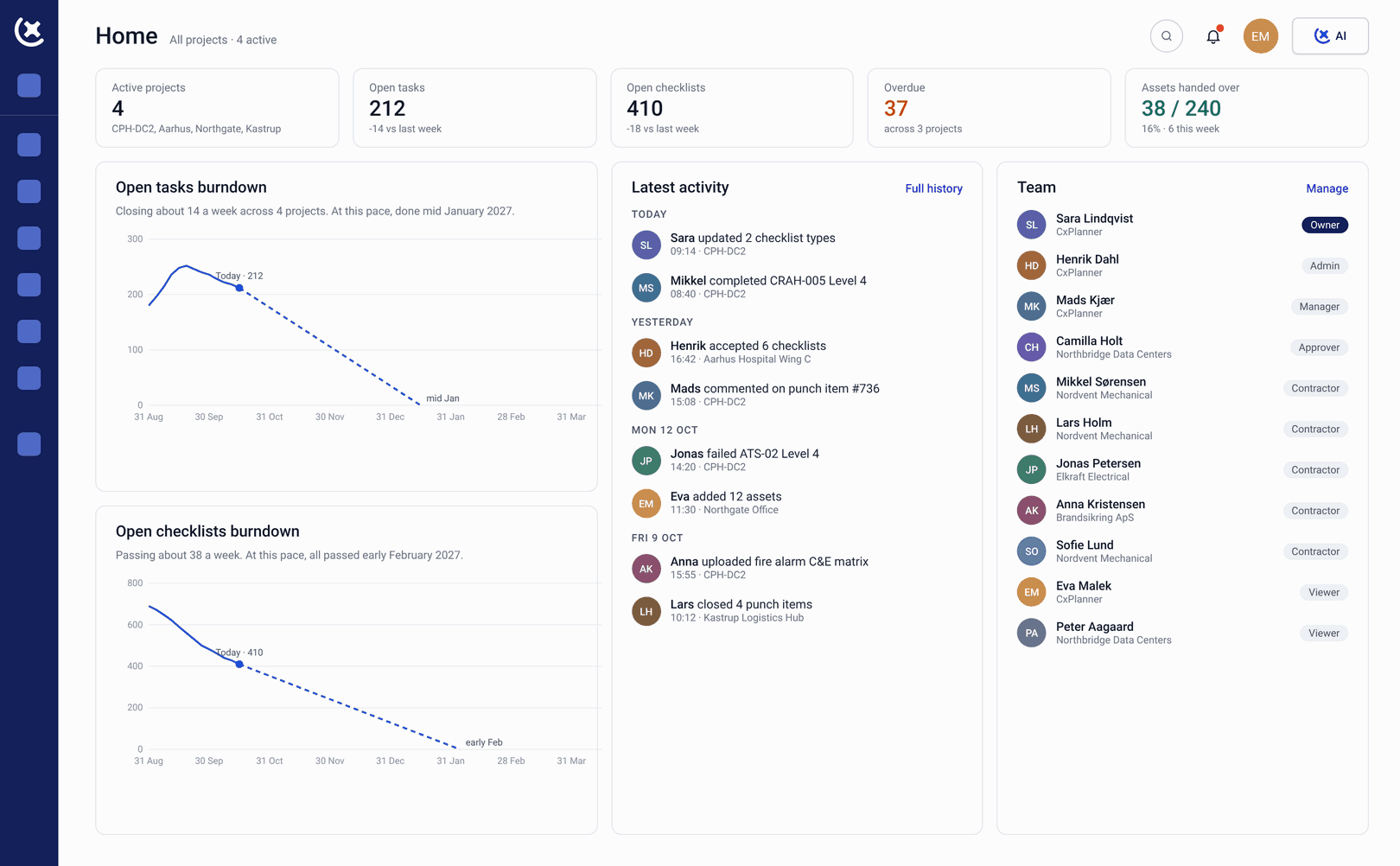
Level testing data flows directly into the data center operational readiness picture. The owner sees which systems have cleared each level - without requesting a report.
Operator training linked to specific assets
Training records for shift operators linked to the specific assets they are qualified for - UPS systems, CRAH units, generators, BMS. Who is qualified to run what, documented before handover.
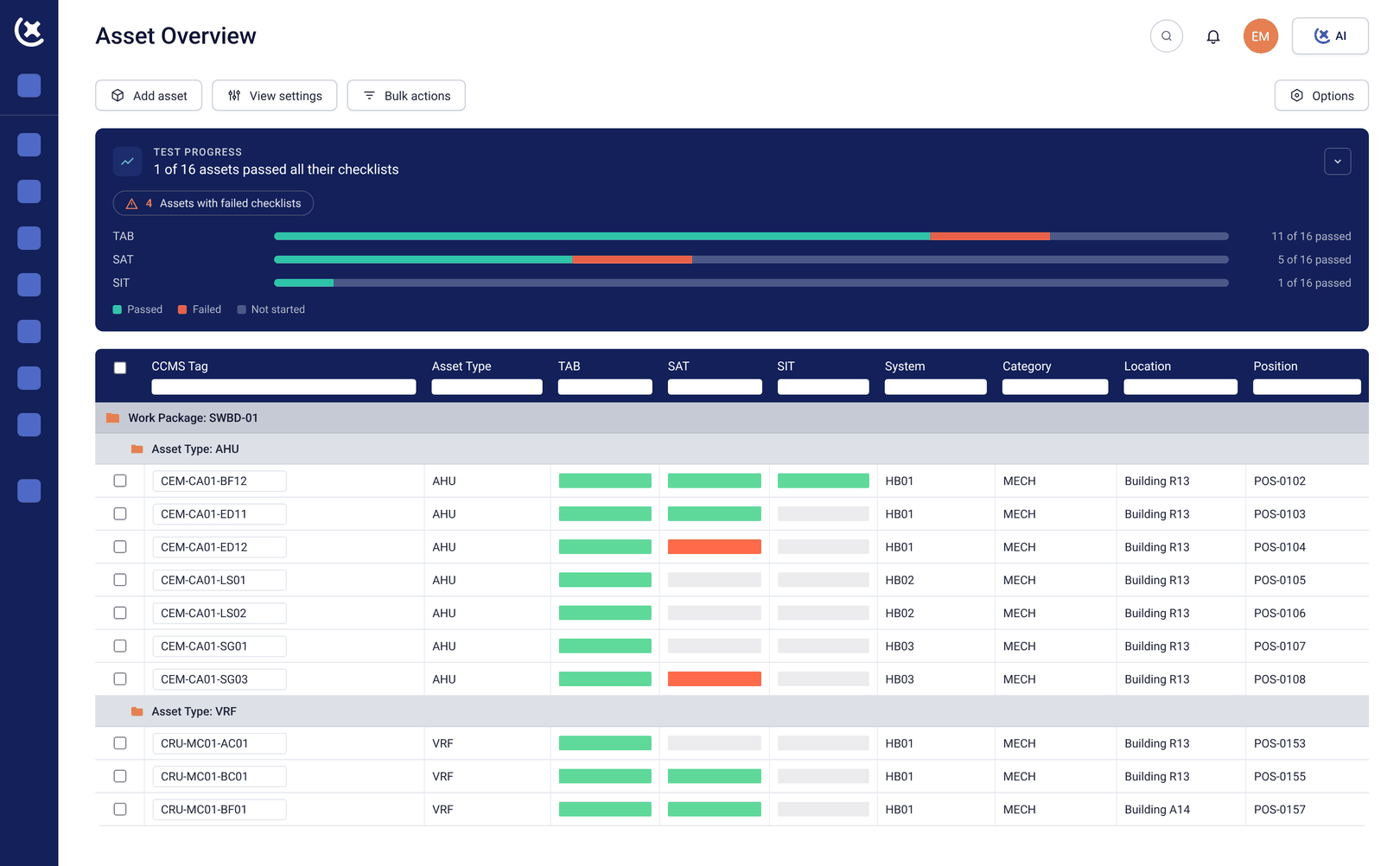
Runbooks and SOPs tracked against commissioning milestones
Sequences of operation for power, cooling, and controls systems written and reviewed inside CxPlanner alongside commissioning. Reviewed against actual system behaviour during IST. Complete when IST completes.
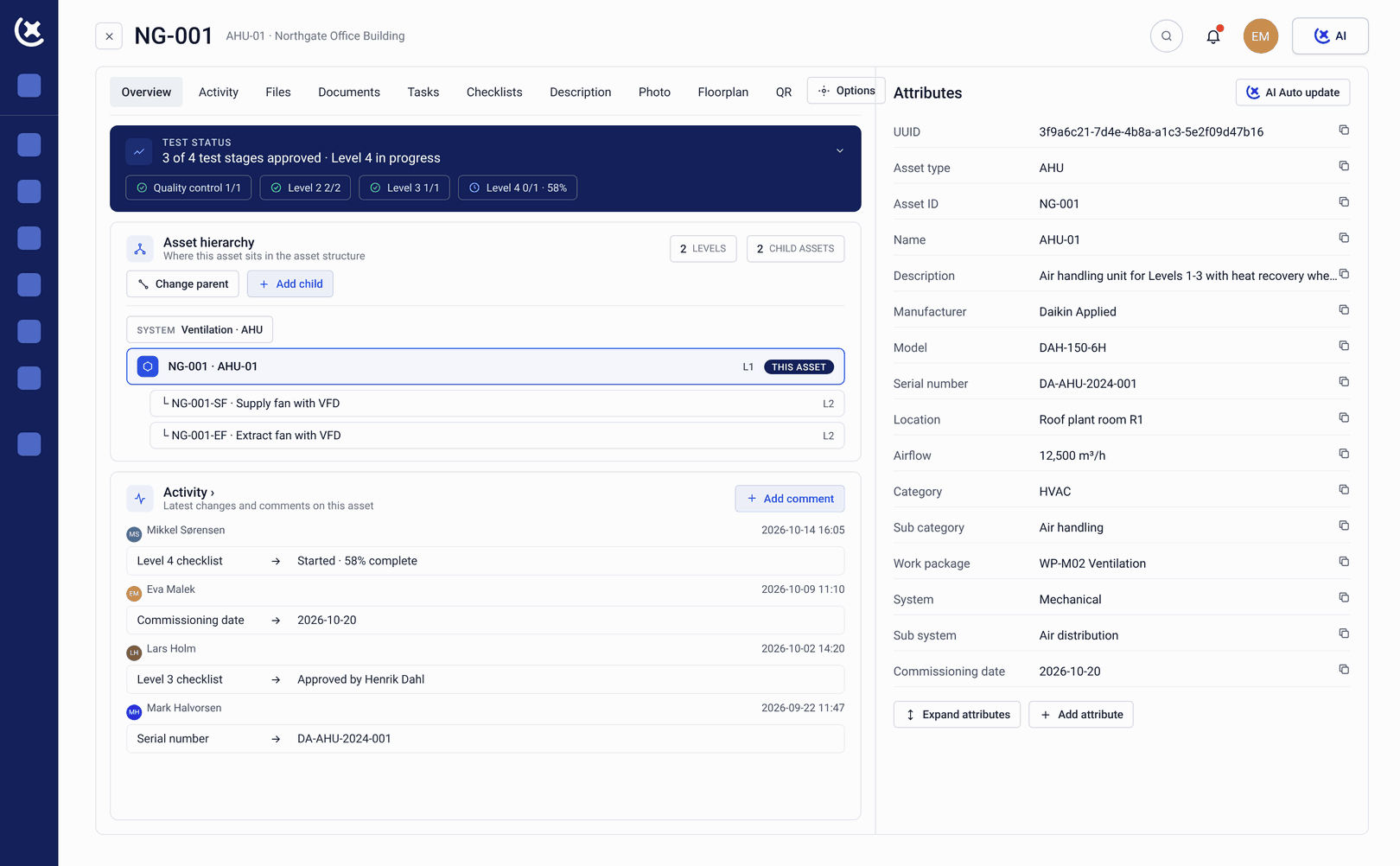
Digital handover package navigable by asset
O&M documentation and test results linked to specific assets. The operator navigates from the UPS or CRAH unit to its documentation. For colocation operators, the structured record underpins tenant SLA commitments. Commissioning software and operational readiness in the same platform.
CxAI for operational readiness
CxAI ranks systems and items most likely to block readiness based on live programme data. Overdue items surfaced automatically. Readiness reports generated without manual compilation.
Quality control tracked before commissioning begins
QC status visible per system and asset before Level testing starts. Issues surface during installation - before they block a gate or cascade across a hyperscale programme.
Key outcomes, when operational readiness runs from project start
Quality problems surface when they are still cheap to fix.
A QC gap during installation costs a day. The same gap at L4 costs a week and a schedule conversation. On a hyperscale campus with phase-by-phase handover, it can hold up an entire hall.
SLA-credible operations tracked against requirements.
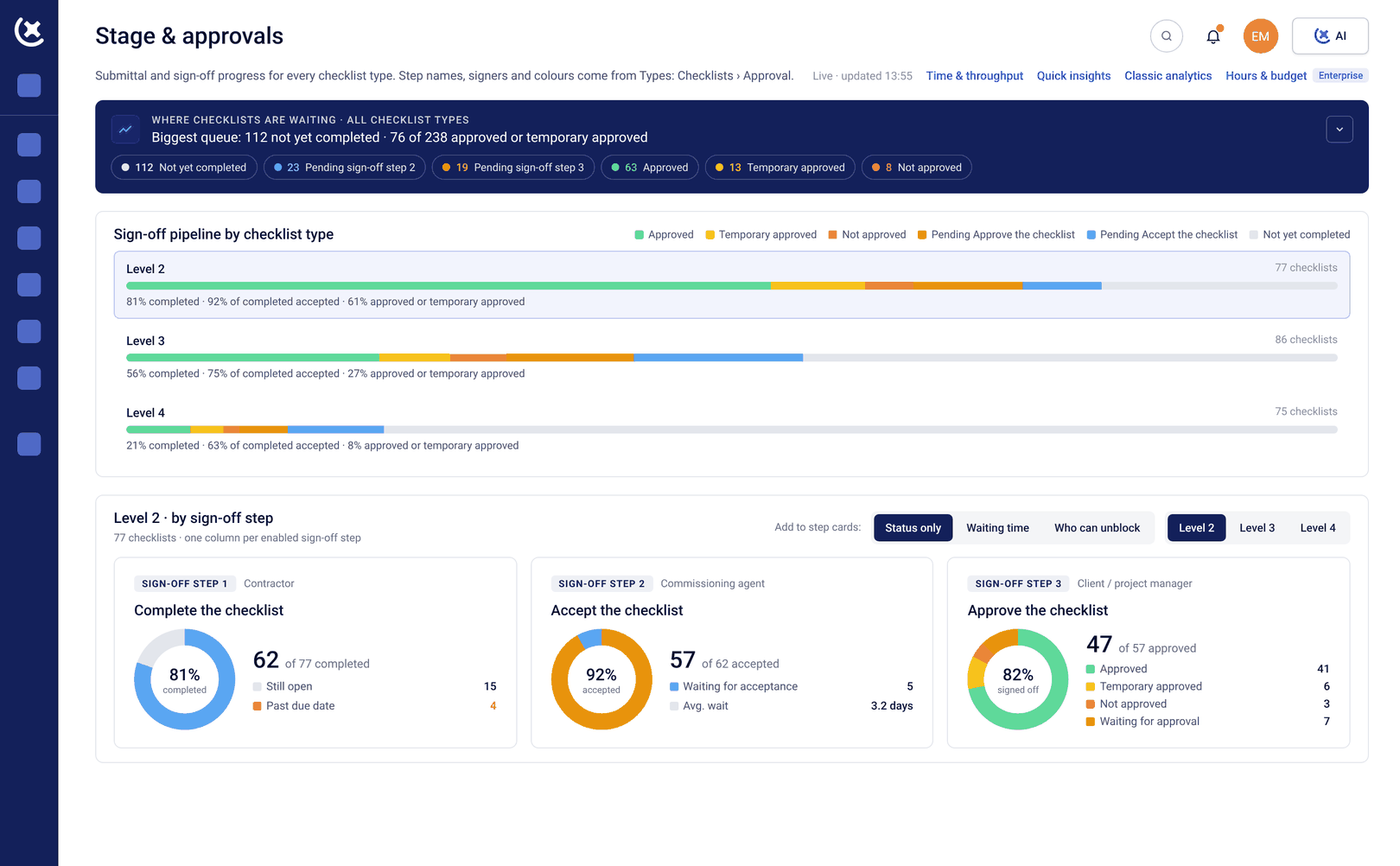
Readiness gates, training milestones, and documentation sign-offs visible every day. Data center operational readiness status is current when the owner needs it. For colocation operators, the structured record is ready for tenant audit before the tenants arrive.
Institutional knowledge captured before the commissioning team leaves.
Runbooks, training records, and O&M documentation in the platform before the Cx team demobilises - linked to the assets they cover, accessible from the first shift.
Related solutions
Day 1 assurance
Live readiness tracking across systems, people, and information against contractual Day 1 requirements.
Explore Day 1 assurancePeople readiness
Operator training management and competency sign-offs linked to specific assets.
Explore people readinessInformation readiness
Digital handover packages, runbook management, and asset-linked O&M documentation.
Explore information readinessSee data center operational readiness tracked alongside commissioning
Most data center projects reach L5 and then discover the readiness programme has not started. CxPlanner runs both in the same platform from the start. Book a walkthrough and bring your current programme structure.
Book a demoRequest a walkthroughCommon questions about data center operational readiness
Why can't data centers treat operational readiness as a phase after commissioning?
The facility is expected to be SLA-credible from the moment it goes live. Training, documentation, spare parts, and maintenance baselines need to be in place before the facility is handed over - not developed during the early operation period. When data center operational readiness starts after L5, there is not enough time to do it properly.
What does SLA-credible operations actually require?
Systems signed off through L5. Shift operators trained and signed off for the specific systems they will run. Runbooks written and reviewed against actual commissioning behaviour. Spare parts on the shelf. O&M documentation navigable by asset. CxPlanner tracks all of these as live deliverables against the contractual handover target.
How does CxPlanner connect L5 sign-off data to the readiness picture?
The Cx team runs the Level testing programme in CxPlanner. The same data feeds the owner's data center operational readiness dashboard automatically. When a system clears L5, the picture updates without a separate reporting step from the commissioning team.
How does CxPlanner handle readiness gate sign-offs?
A readiness gate in CxPlanner requires training, documentation, and spare parts to be actually confirmed before it closes - not just scheduled. Outstanding prerequisites surface automatically before the gate date. The gate enforcement principle that governs Level testing is extended into the readiness layer.
Does CxPlanner scale to hyperscale projects?
Yes. CxPlanner handles thousands of assets across multiple delivery phases. Electrical and mechanical subcontractors, the owner Cx team, and OR specialists all work in the same platform, scoped to their role.