Pharmaceutical operational readiness after IQ, OQ, and PQ
IQ, OQ, and PQ complete. The licence is granted. Operations inherits a qualified facility where SOPs were written for the application, operators were trained on paper systems, and maintenance baselines were never formally agreed.
Pharmaceutical operational readiness is the work that determines whether a qualified facility is also a runnable one. CxPlanner tracks it alongside commissioning and CQV from the start.

Operating licence confirms qualification - not whether the operators can run the facility.
The qualification team arrives to chase commissioning records, not run protocols.
Test records incomplete. Sign-off chains with gaps. As-built documentation not matching what was installed. Before IQ can begin, the qualification team spends weeks reconstructing a commissioning record that should have been GMP-aligned before they arrived. The schedule slips before the first protocol is executed.
SOPs are written to satisfy the regulator, not to support the operator.
SOPs drafted under licence-application pressure cover the minimum required for regulatory approval - written by people who know design intent, not reviewed by the operators who will follow them, not written against the actual installed system. Compliant and inadequate at the same time.
Operator training, maintenance baselines, and spare parts are assembled for handover - not built throughout the project.
Training records, competency sign-offs, and maintenance strategies are gathered into a package at the licence application. Whether they are accurate and linked to specific assets is rarely confirmed until something fails in the first production cycle.
Commissioning, qualification, and operational readiness - all in the same platform.
Commissioning documentation is structured in CxPlanner from the first entry to meet the standard GMP-aligned qualification requires. When the qualification team arrives, the commissioning record is complete and navigable by asset. IQ, OQ, and PQ protocols connect to evidence already in the platform - no reconstruction, no schedule delay before qualification can begin.
SOPs and operator training are formal tracked workstreams in CxPlanner throughout the project - linked to specific assets, reviewed against actual commissioning behaviour, complete before the operating licence is granted.
For pharma commissioning software needs on pharmaceutical builds, CxPlanner handles commissioning, qualification support, and pharmaceutical operational readiness in one platform.
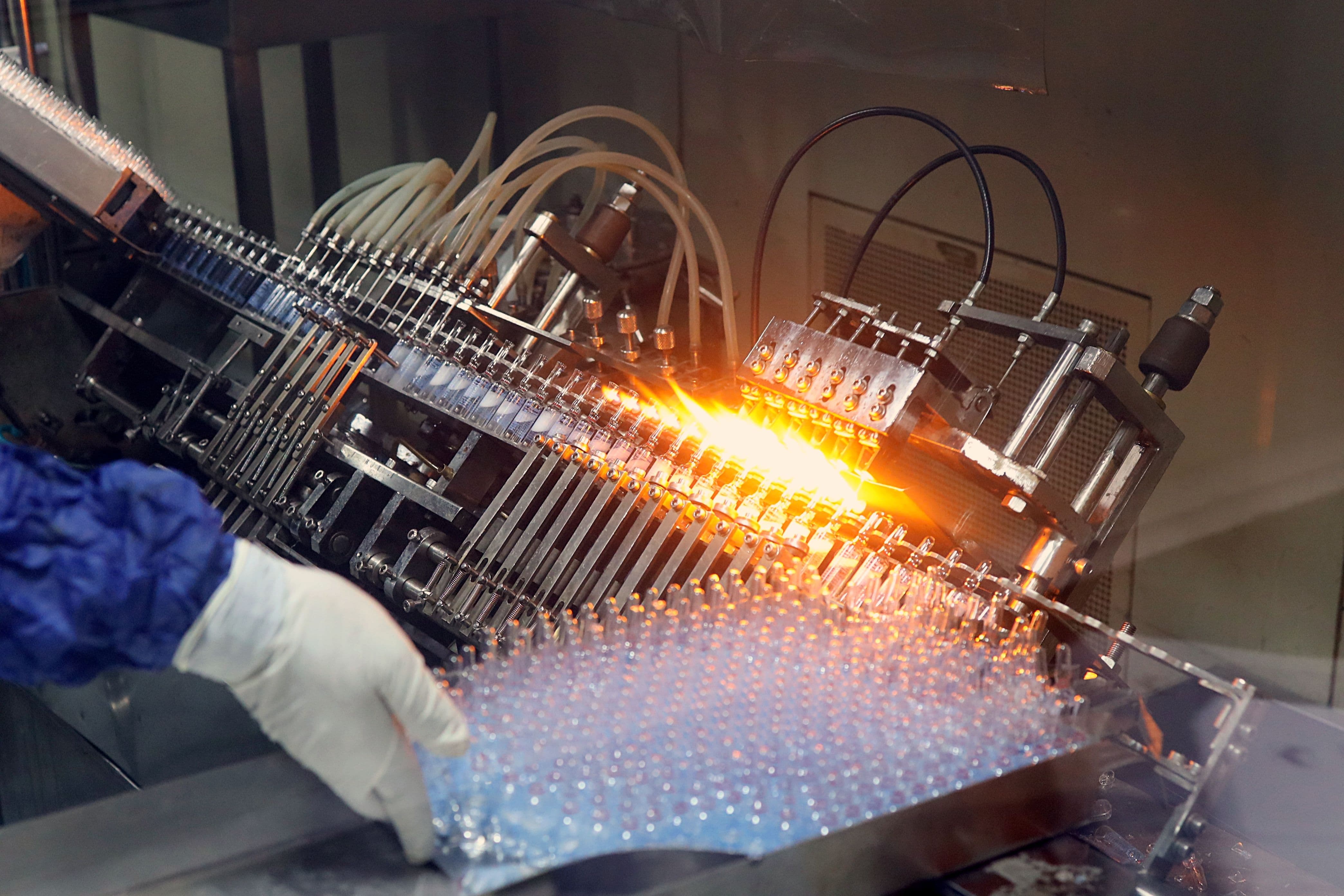
What CxPlanner covers in pharmaceutical operational readiness
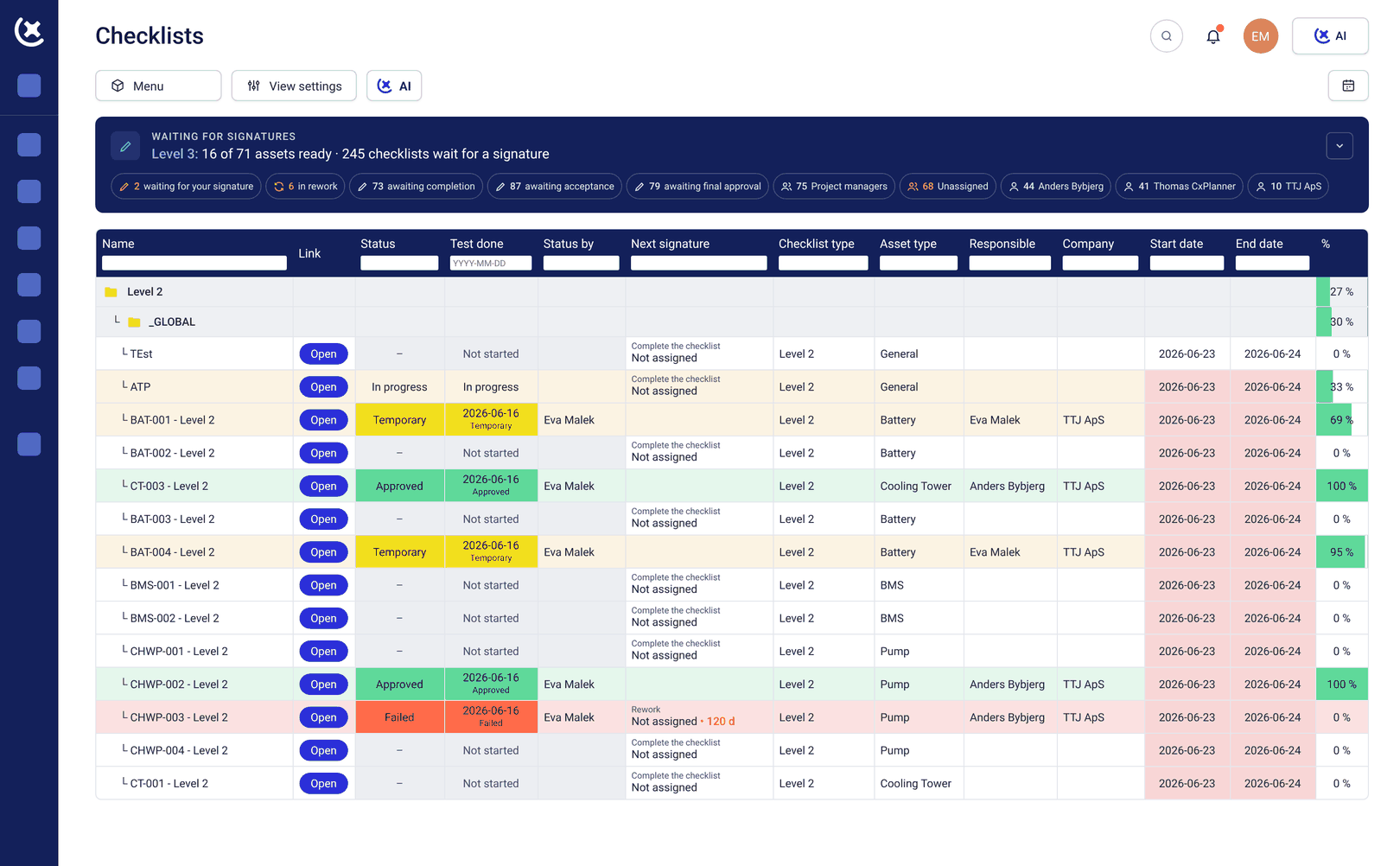
Tamper-evident and linked to specific assets
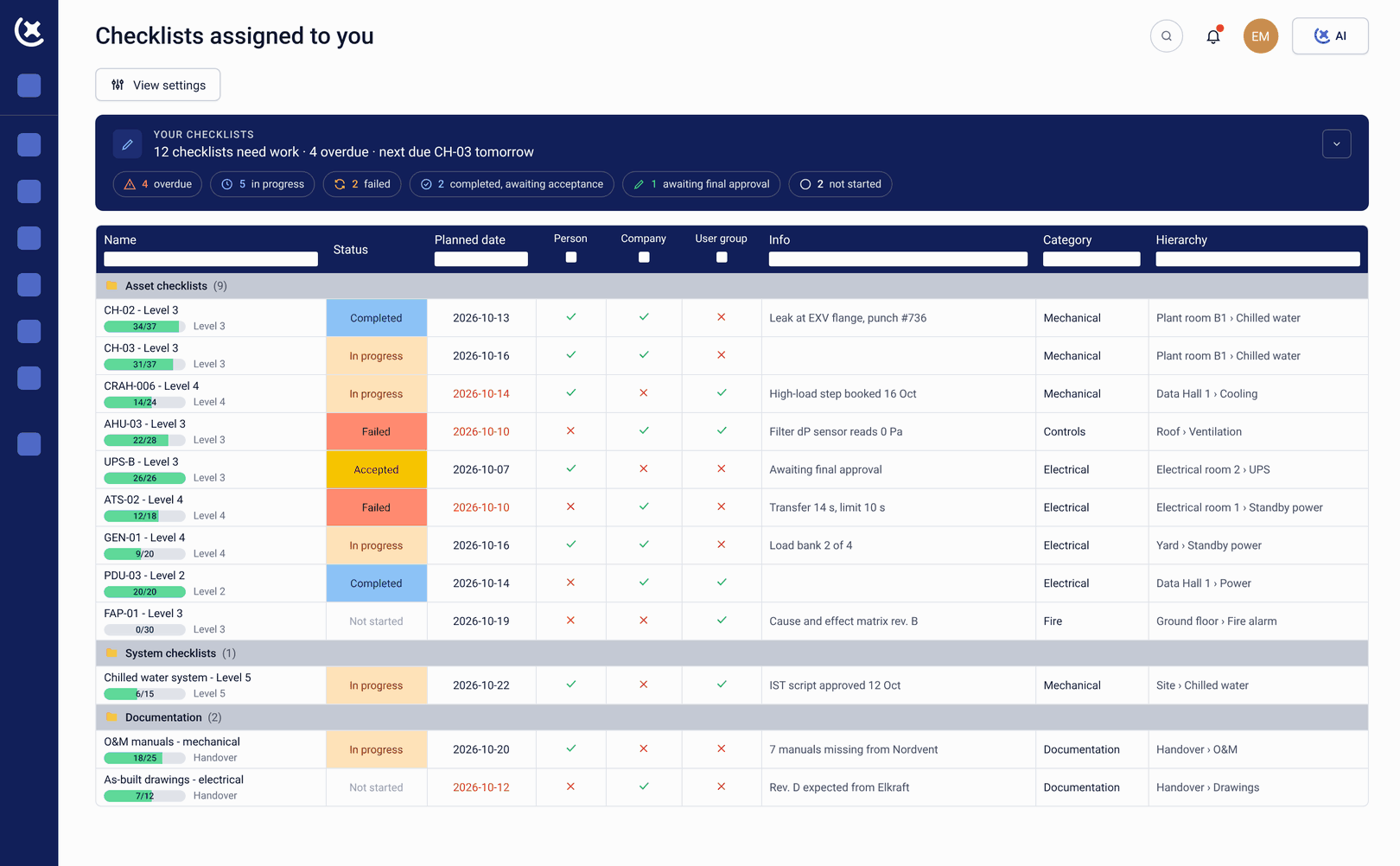
Test records, sign-off chains, and as-built documentation structured to the standard IQ, OQ, and PQ requires - from the first commissioning entry. Tamper-evident, permanently recorded, and linked to specific assets.
Evidence already linked to the checklist item
Commissioning records built to connect to IQ, OQ, and PQ protocols. The qualification team does not reconstruct - the evidence is in the platform, linked to the checklist item that requires it.
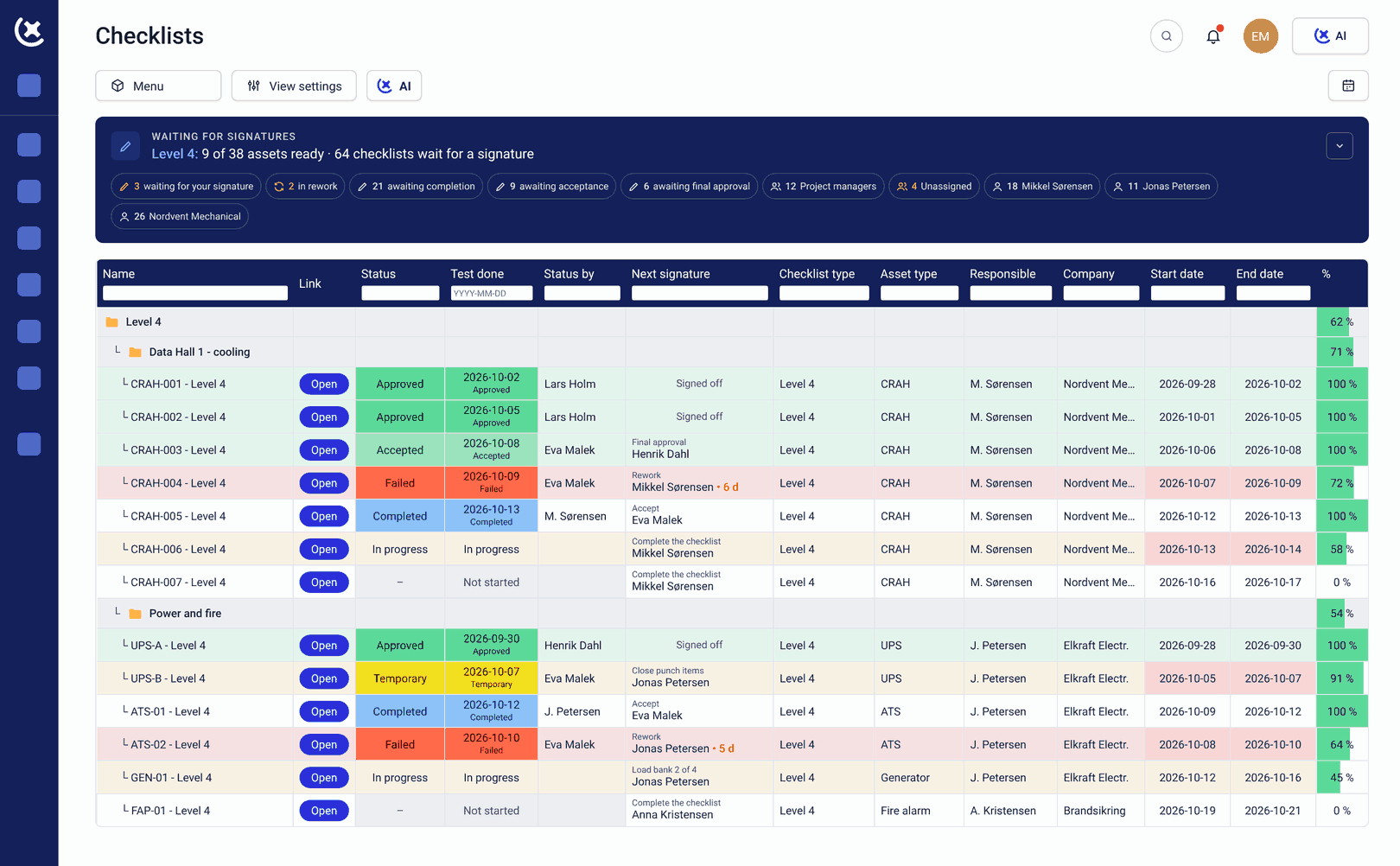
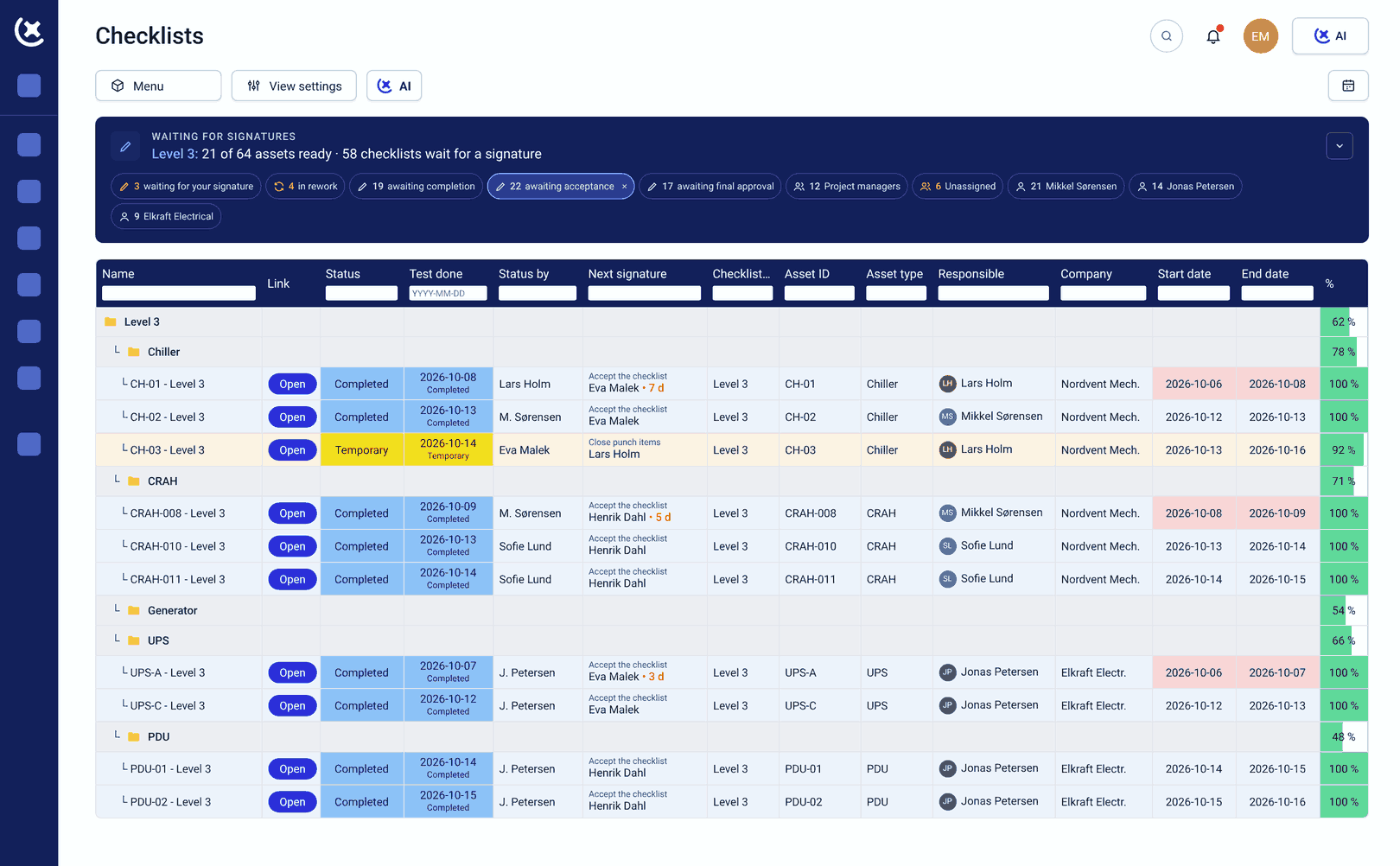
Reviewed against actual commissioning behaviour
Standard operating procedures written, reviewed, and approved inside CxPlanner alongside commissioning. Linked to the equipment they describe, reviewed against actual commissioning behaviour, tracked as formal programme deliverables.
Linked to the process, not filed separately
Training completions and qualification sign-offs linked to the specific processes and equipment each operator is qualified for - not a count filed in a separate HR system.
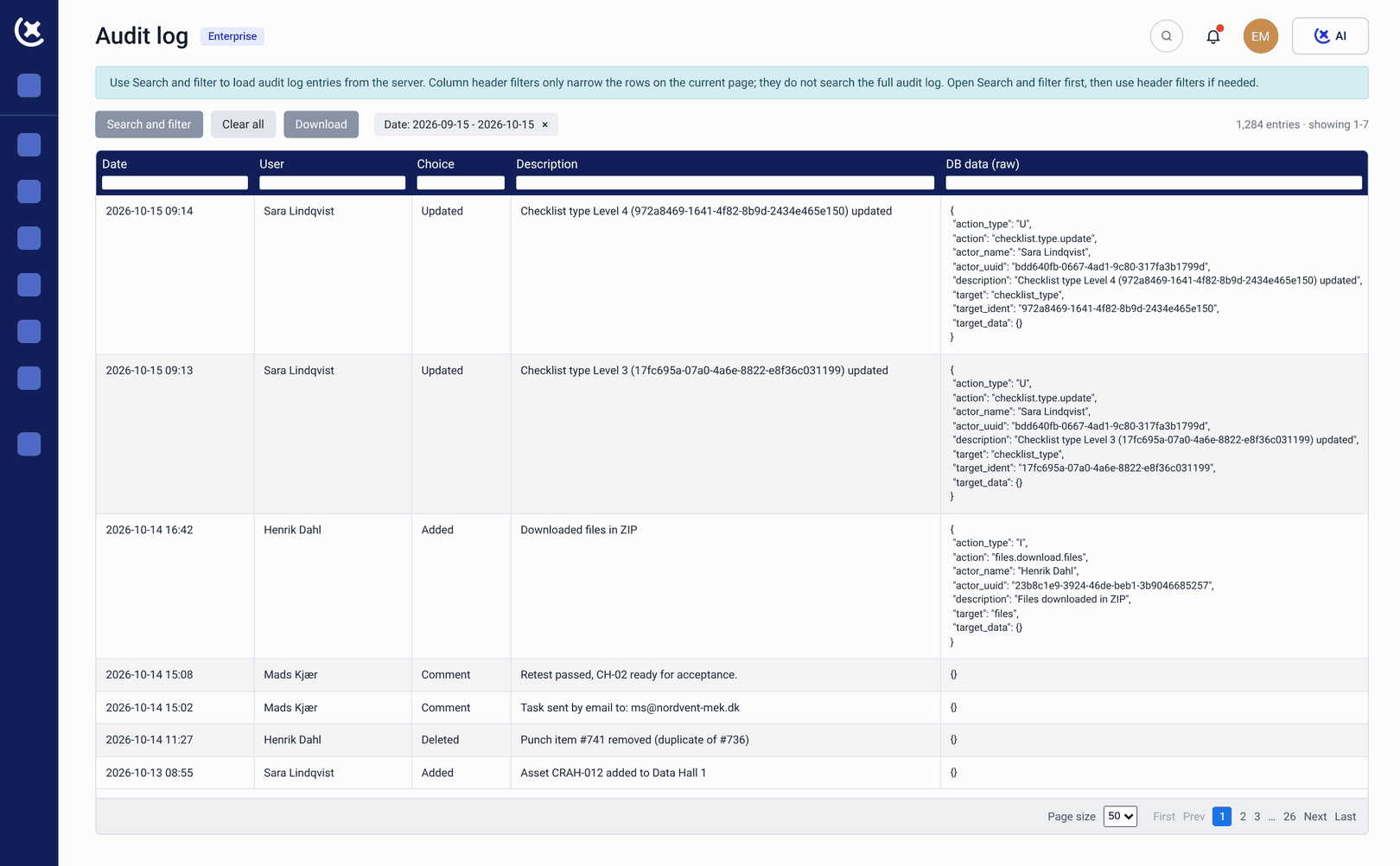
Built continuously, not compiled for inspection
Every action logged with user, timestamp, and reason for change. Document version history maintained. The pharmaceutical operational readiness audit trail is built continuously - not compiled before the inspection.
Key outcomes from working with CxPlanner
Qualification begins on schedule because the commissioning record is ready.
When commissioning documentation is GMP-aligned from the first entry, the qualification team arrives to execute protocols - not chase records. The weeks lost reconstructing incomplete commissioning documentation are recovered before IQ begins.
The operating licence is the end of the operational readiness programme.
SOPs, operator training, and maintenance baselines are tracked deliverables throughout the project. When the licence is granted, the facility is ready to run - not beginning to build the operational readiness programme that should have been complete at handover.
The audit trail exists before the inspection - because it was built continuously.
Every test record, sign-off, and document change logged with the detail regulatory inspection requires from the moment it happens. No retrospective documentation. No gaps the quality team has to explain.
Related solutions
Information readiness
SOP management, O&M documentation, and asset-linked handover packages for pharmaceutical facilities.
Explore information readinessPeople readiness
Operator training and qualification records linked to specific equipment and processes.
Explore people readinessEnterprise data security and compliance
GDPR-ready data management and permanent audit trails for regulated industries.
Explore security and complianceSee how CxPlanner connects commissioning and readiness
The gap between a qualified facility and a runnable one starts in the commissioning phase. CxPlanner closes it by building the commissioning record, qualification evidence, and operational readiness programme in one connected platform. Book a walkthrough.
Book a demoRequest a walkthroughCommon questions about CxPlanner and pharmaceutical operational readiness
What is the difference between qualification and pharmaceutical operational readiness?
Qualification - IQ, OQ, PQ - documents that equipment is suitable for GMP use. Pharmaceutical operational readiness confirms that operators are trained on the actual installed systems, SOPs reflect real system behaviour, maintenance baselines are set, and spare parts are on site. A qualified facility is not automatically a runnable one.
How does CxPlanner support IQ, OQ, and PQ workflows?
Commissioning documentation is built to GMP standard from the start. When the qualification team arrives, the commissioning record is complete and navigable by asset. IQ, OQ, and PQ protocols connect to evidence already in the platform - no reconstruction before qualification can begin.
How does CxPlanner handle SOPs for pharmaceutical facilities?
SOPs are written, reviewed, and approved inside CxPlanner alongside commissioning - connected to the equipment they describe, reviewed against actual system behaviour, and tracked as formal deliverables. They are part of the same documentation record as the commissioning test results.
What does the GMP audit trail in CxPlanner cover?
Every action: test submissions, document versions, sign-off records, and training completions - logged with user, timestamp, and reason for change. Tamper-evident and permanently recorded. Built continuously, not compiled before the inspector arrives.
Can CxPlanner be used across commissioning, qualification, and OR on the same project?
Yes. Commissioning documentation, qualification workflow support, SOP management, operator training tracking, and pharmaceutical operational readiness dashboards all run in CxPlanner with appropriate access for each role.