Request a demo
Products:
Commissioning software (Cx) Completion management software (CCMS) Operational Readiness
CxAI:
CxAI: Less Admin. More Commissioning.
Pricing:
Commissioning software Completion management software Request a demo
Core features:
System and Test view Checklist for Cx and QA/QC Punch list and issue management Issue markup on drawings Planning and scheduling Dashboards and analytics Your Template Center AI LLM engine for checklists Review and markup files 3D model viewer
Industries:
Construction projects Data centers and Hyperscale facilities Oil & Gas and Renewables - onshore and offshore Industrial projects & Mechanical manufacturers
Learn:
Blog Cx newsletter Commissioning 101 The book about commissioning
Support:
Help articles and information Live chat-support Contact-us Talent
Commissioning construction site

The fastest
operational readiness
software ever built

Construction ends. Commissioning ends. Then the real question begins: can the facility actually run on Day 1? CxPlanner's Operational Readiness Platform brings systems, people and information into one platform - so the answer is yes.

Icon
Day 1 readiness
Icon
AI-powered assistance
Icon
Trusted by thousands
Request a platform walkthrough Completion Asset Overview

Operational readiness software trusted by owners and operators globally.

Commissioning Specialists Association
Bulk
Equinix
ACG
Red

A facility isn't ready when it's built.
It's ready when it can run.

Operational readiness is the state where a facility can be operated from Day 1. Not handed over. Operated.

That means the systems work. The people are trained. The procedures are written.
The spare parts are on the shelf. The maintenance plan is loaded. The documentation is in the hands of the operator, not the contractor.

Most projects miss this layer. Construction finishes. Commissioning finishes. Completion records are signed. And then the operator inherits a facility they can't actually run - because hiring, training, SOPs, spare strategy and O&M documentation were left to the final sprint.

CxPlanner closes that gap. Operational readiness is treated as a deliverable from the start, not a scramble at the end.

Here's how our operational
readiness software works

Monitor progress

Systems. People. Information.

The three pillars of operational readiness

Industry frameworks agree on the same three pillars: systems that work, people who are trained, and information the operator can actually use.
CxPlanner is built around that model.

Plan, track and verify all three from one platform - so readiness is a single picture, not three separate spreadsheets owned by three separate teams.

Completion Asset Overview
Test tracking

Systems ready

Every system verified, every asset accounted for

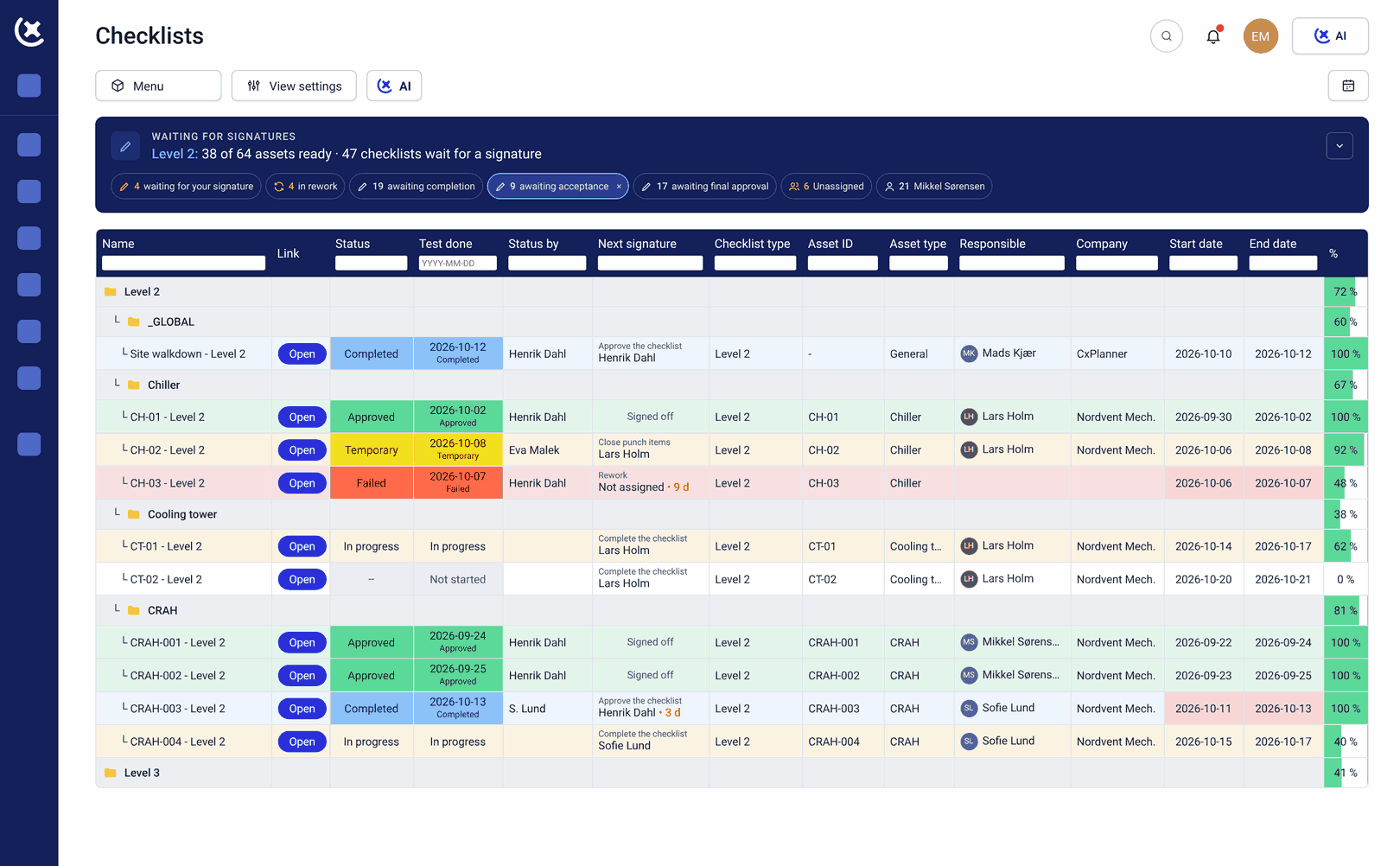
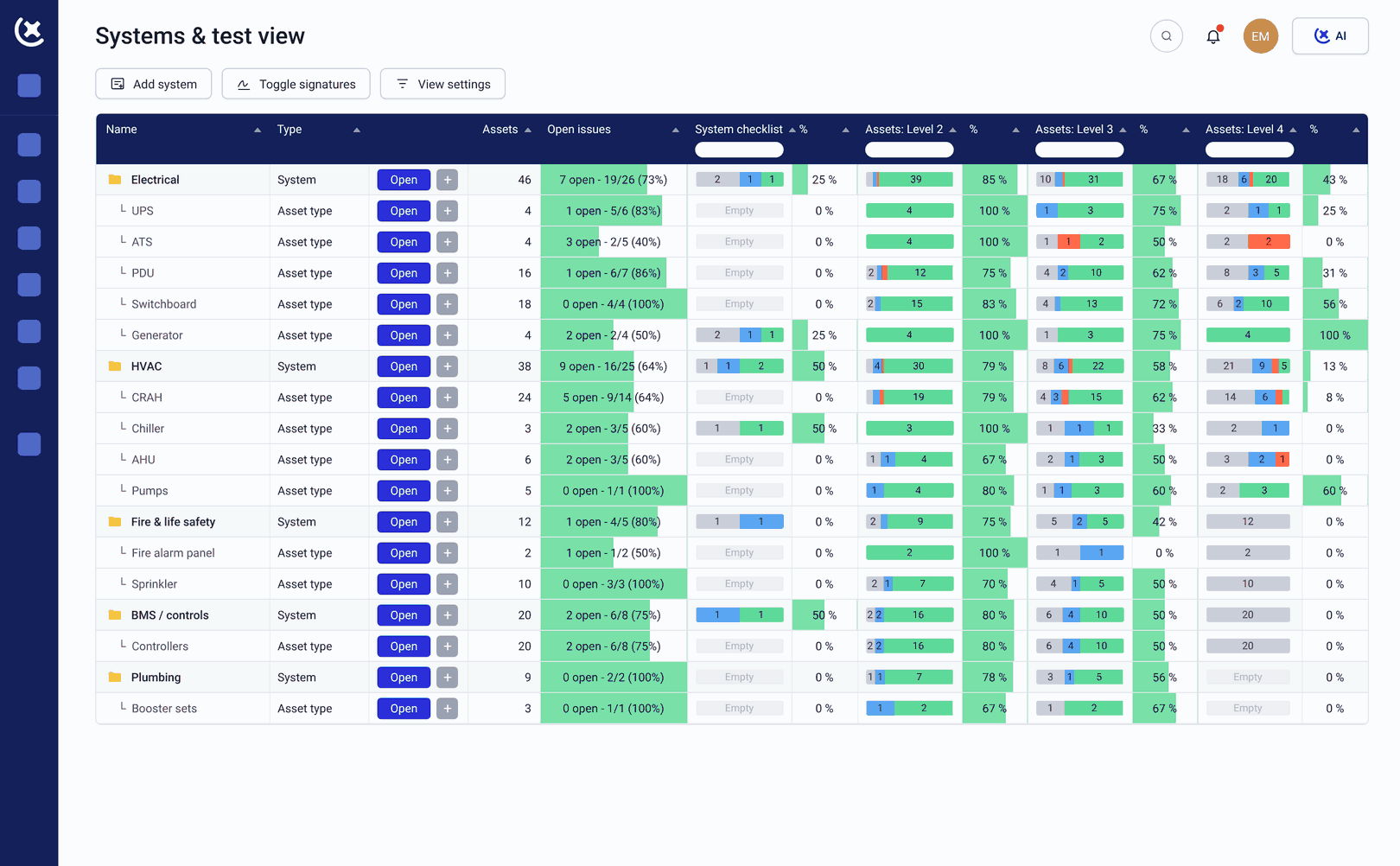
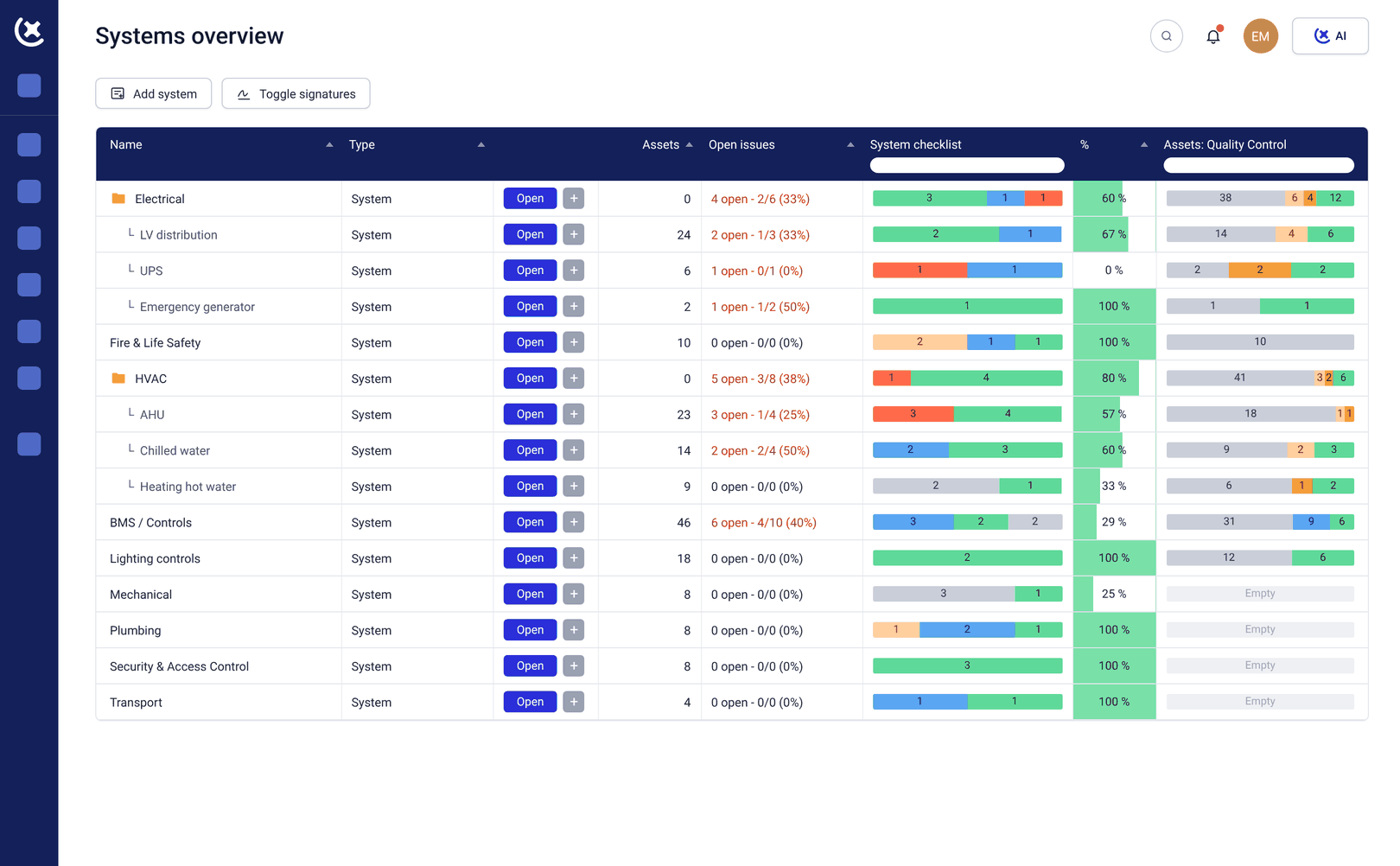
System readiness starts with knowing what has to operate. Structure the project by systems, sub-systems, assets, equipment and locations. Track commissioning, QA/QC and testing against the real scope.

PFC, FPT, IST and Level 1 through Level 5 - all connected to the assets they verify. So when an owner asks "is this system ready," the answer is in the platform, not in someone's inbox.

Monitor progress

People ready

Training, competency and operator handover

A trained operator on Day 1 doesn't happen by accident. CxPlanner tracks training requirements per system and per role, competency sign-offs, walkdowns, operator familiarisation sessions and shift readiness.

Operations teams arrive prepared - not handed a binder on the morning of go-live.

Completion Asset Overview
Test tracking

Information ready

O&M documentation the operator can actually use

Test records, as-builts, sequences of operation, vendor manuals, asset metadata, maintenance baselines, spare parts lists - all connected to the systems and assets they belong to.

Built up as the project runs, not compiled in a panic before handover. So the operator gets a usable digital handover package, not a 40 GB folder no one can navigate.

Monitor progress

Operations ready

SOPs, spares and maintenance baselines

Operational readiness fails when the facility is built but the operating procedures aren't written, the CMMS isn't loaded, and the spares aren't on site.

CxPlanner tracks these alongside the technical work - so SOPs, maintenance plans and spare parts readiness move with the project, not after it.

Completion Asset Overview
Test tracking

Open items resolved

Punch lists, issues and readiness gates

Day 1 readiness means open items can't be hiding in someone's notebook. Connect punch list items to the right system, asset, location and owner.

Mark them up on drawings. Close them out with documentation. Hold readiness gates that can't be passed until the right work is verified.

Monitor progress

Day 1 visibility

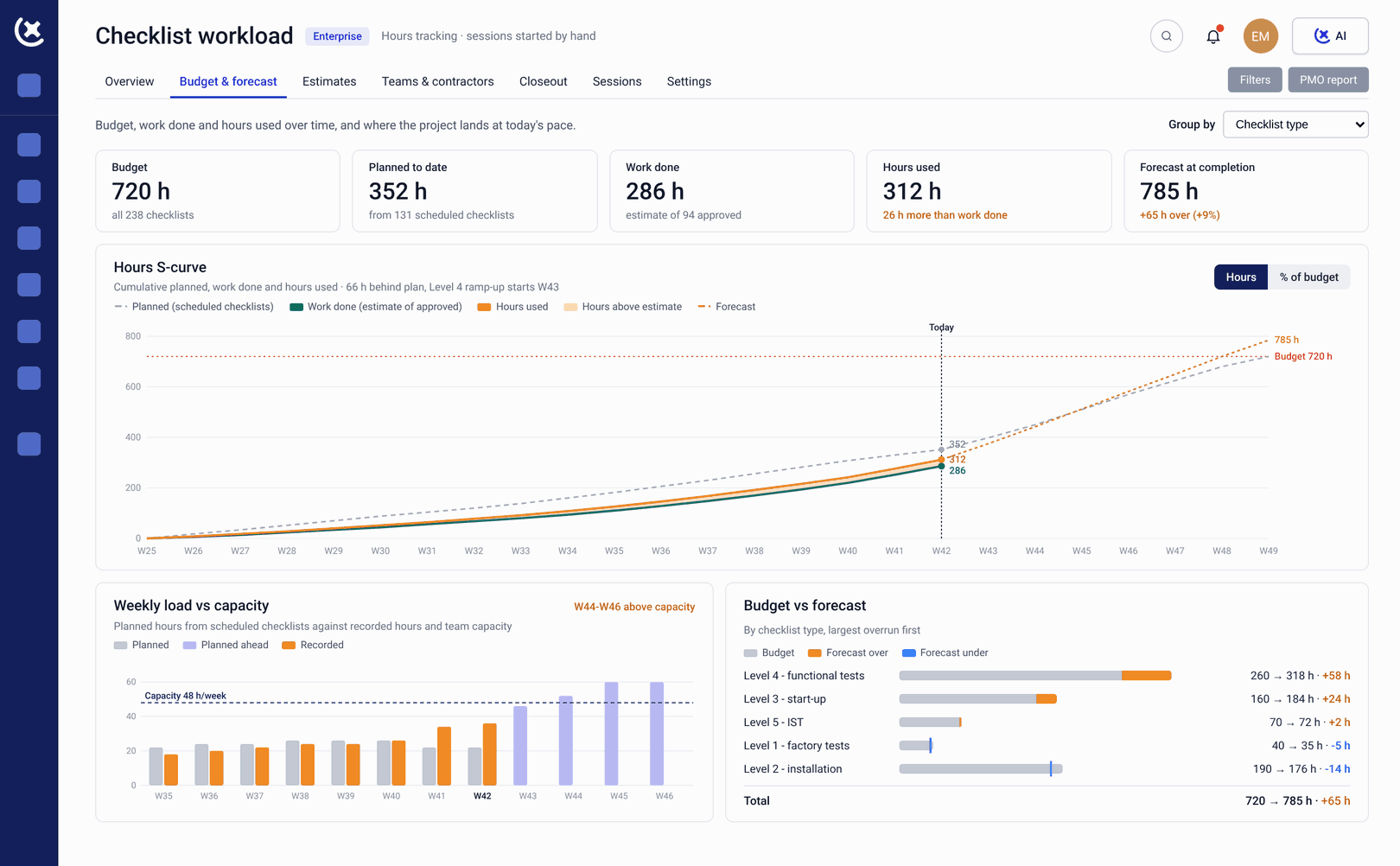
One dashboard for Day 1 readiness

Owners, operators, GCs and Cx teams looking at the same picture. What's ready. What's not. What's blocking go-live. Which systems can be turned over and which can't.

CxPlanner builds the readiness picture from the live data the field teams use to execute - so the answer is always current, and there's no reconciliation marathon before each milestone.

Completion Asset Overview

Commissioning is one input.
Completion is another.
Operational readiness is the outcome.

Three workflows. One destination.

Commissioning (Cx) verifies that systems perform as designed. Completion management (CCMS) verifies that the scope is built and documented. Operational readiness verifies that the facility - and the organisation behind it - can actually operate.

It's the layer above the build. Where the project hands over to the people who have to run the asset for the next 20 years.

That's why operational readiness covers more than Cx and CCMS combined: systems, assets, QA/QC, punch lists and handover plus training records, operating procedures, spare parts, O&M documentation, organisational readiness and Day 1 assurance. CxPlanner is the only platform that connects all three.

Less admin.
More readiness.

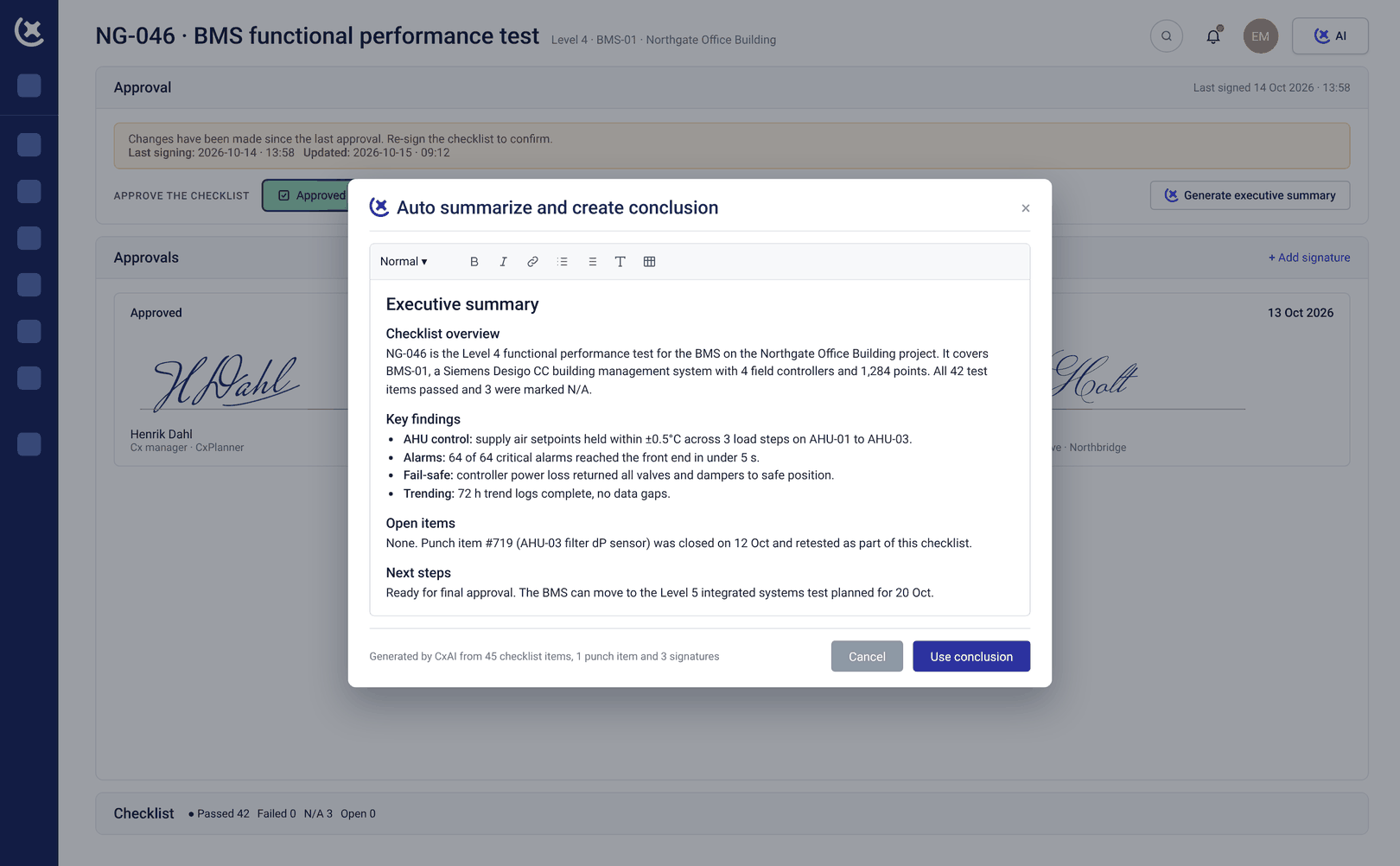
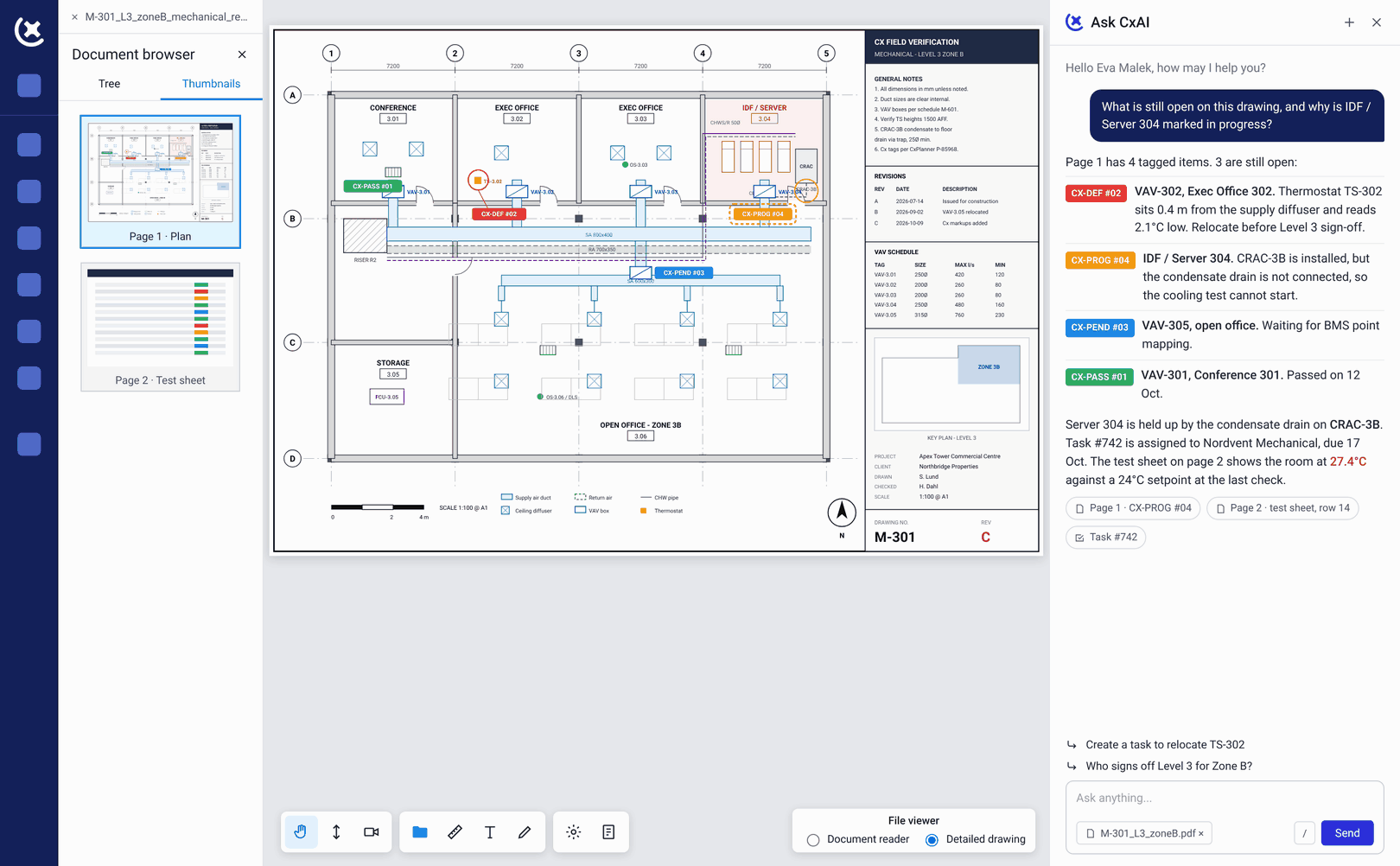
CxAI is the AI built into CxPlanner by the team that built the platform. It removes the manual work that slows readiness down - finding overdue items, surfacing blockers, extracting asset data from documents, pulling SOPs from specifications, summarising project activity, generating reports.

It supports the people who deliver readiness. It doesn't replace them.

Learn more about CxAI

Built for how owners actually operate today

Legacy completion and readiness systems were designed when "ready" meant the building was finished and the binders were full. Modern owners need something different: a platform that proves the facility can run on Day 1, with the systems, the people and the information in place to support it.

That's a different category of software. CxPlanner is built for it - fast to set up, fast to adopt, structured enough to scale, and simple enough that the field teams will actually use it.

Operational readiness by industry

Data centers and hyperscale

SLA-credible operations on Day 1. CxPlanner connects Level 1 to Level 5 commissioning, asset documentation, operator training, runbooks, spare parts strategy and readiness gates — so the facility can take live load when the contract says it can.

Data center operational readiness

Oil & gas and energy

Ready-to-operate status at handover, with full traceability across systems, training records, operating procedures, maintenance baselines and assurance documentation. Built for the OR&A discipline, not retrofitted to it.

Oil & gas operational readiness

Construction projects

Owners increasingly require Day 1 readiness as a contractual deliverable — not just completed construction. CxPlanner gives GCs and owners the platform to prove it: QA/QC, commissioning, training, documentation and handover, all in one place.

Construction operational readiness

Industrial and mechanical manufacturers

From factory production through installation, commissioning, operator training and Day 1 production. One platform for the people building the asset and the people who will run it.

Industrial operational readiness

"Commissioning verifies the systems. Completion verifies the scope. Operational readiness verifies that the facility can actually run on Day 1. That's the layer owners have been missing - and it's what we built CxPlanner to deliver."

- Thomas T. Jarloev
Founder & CEO of CxPlanner, QCxP, CxM, CxA

15+ years in commissioning · CxAP · CxM · QCxP · First in the EU to hold both CxM and CxAP · Author of commissioning books + guidelines

Curious to see CxPlanner in action?

Book a walkthrough with Thomas
TTJ Talking

See operational readiness in one place

Systems. People. Information. SOPs. Spares. Training. Documentation. Handover.
One platform - so the facility is ready to operate from Day 1, not just ready to hand over.

Request a platform walkthrough

FAQ

What is operational readiness?

Operational readiness is the state where a facility can be operated safely and efficiently from Day 1. It goes beyond construction and commissioning. It covers the readiness of the systems, the people who will operate them, the procedures they'll follow, the spare parts and maintenance plans they'll need, and the information that supports it all. Most industry frameworks describe it as three pillars: systems, people and information.


How is operational readiness different from commissioning?

Commissioning verifies that systems perform as designed. Operational readiness verifies that the facility — and the organisation behind it — can actually run the asset on Day 1. Commissioning is one input to readiness. So is completion. Readiness is the outcome.


How is operational readiness different from completion management?

Completion management tracks whether the project scope has been built, tested and documented. Operational readiness asks the bigger question: can the operator take this facility and run it from Day 1? That includes everything completion covers, plus training, SOPs, spares, maintenance baselines, organisational readiness and Day 1 assurance.


How is this different from CxPlanner's Commissioning and Completion products?

Commissioning software (Cx) is for commissioning providers running test programmes. Completion management (CCMS) is for industrial completion teams managing thousands of assets and turnover packages. Operational Readiness is for owners and operators accountable for what happens on Day 1 — and it sits on top of both. The three products share the same platform, so an owner using Operational Readiness sees the Cx and CCMS work happening underneath it in real time.


Who is operational readiness software for?

Owners, operators, asset managers, Day 1 readiness leads, OR&A teams, project directors and the GCs and Cx providers who deliver against readiness gates. It's especially relevant for facilities where Day 1 performance is contractually required — data centers, oil & gas, hospitals, semiconductor fabs, hyperscale infrastructure.


Does CxPlanner cover the "people" and "information" pillars, or just systems?

All three. Systems through commissioning, QA/QC and asset tracking. People through training records, competency sign-offs and operator handover workflows. Information through O&M documentation, SOPs, spare parts data, maintenance baselines and digital handover packages — all connected to the systems and assets they belong to.


How does CxPlanner support data center operational readiness?

By connecting Level 1 to Level 5 commissioning, asset records, operator training, runbooks, SOPs, spare parts data and readiness gates in one platform. The same data field teams use to execute the work is the data owners see in their Day 1 readiness dashboards.


How does CxPlanner support oil & gas operational readiness (OR&A)?

With workflows that match the OR&A discipline: asset owner organisation readiness, front-end operations input, operations needs beyond project scope, and continuous assurance across the project lifecycle. A modern alternative to legacy OR&A systems.


How does CxAI help with operational readiness?

CxAI handles the administrative load around readiness — finding overdue items, surfacing blockers, extracting asset data from specifications, pulling SOPs from documentation, generating reports. It supports the people delivering readiness; it doesn't replace their judgement.


Can CxPlanner replace spreadsheets for operational readiness?

Spreadsheet-based readiness tracking fails the moment the project gets complex — which is most of the time. CxPlanner gives structured workflows for systems, people and information, with one dashboard everyone is looking at.