Commissioning software built for hyperscale data center projects
A hyperscale data center build does not fail because the commissioning team does not know what they are doing. It fails because the tools were not built for the scale: thousands of assets, multiple electrical and mechanical subcontractors.
Delivery phases running in parallel. A Level testing programme that has to stay in sequence across all of it. CxPlanner connects assets, tests, schedules, and subcontractor check-sheets in one platform, built for the complexity that scale brings to a hyperscale data center build.
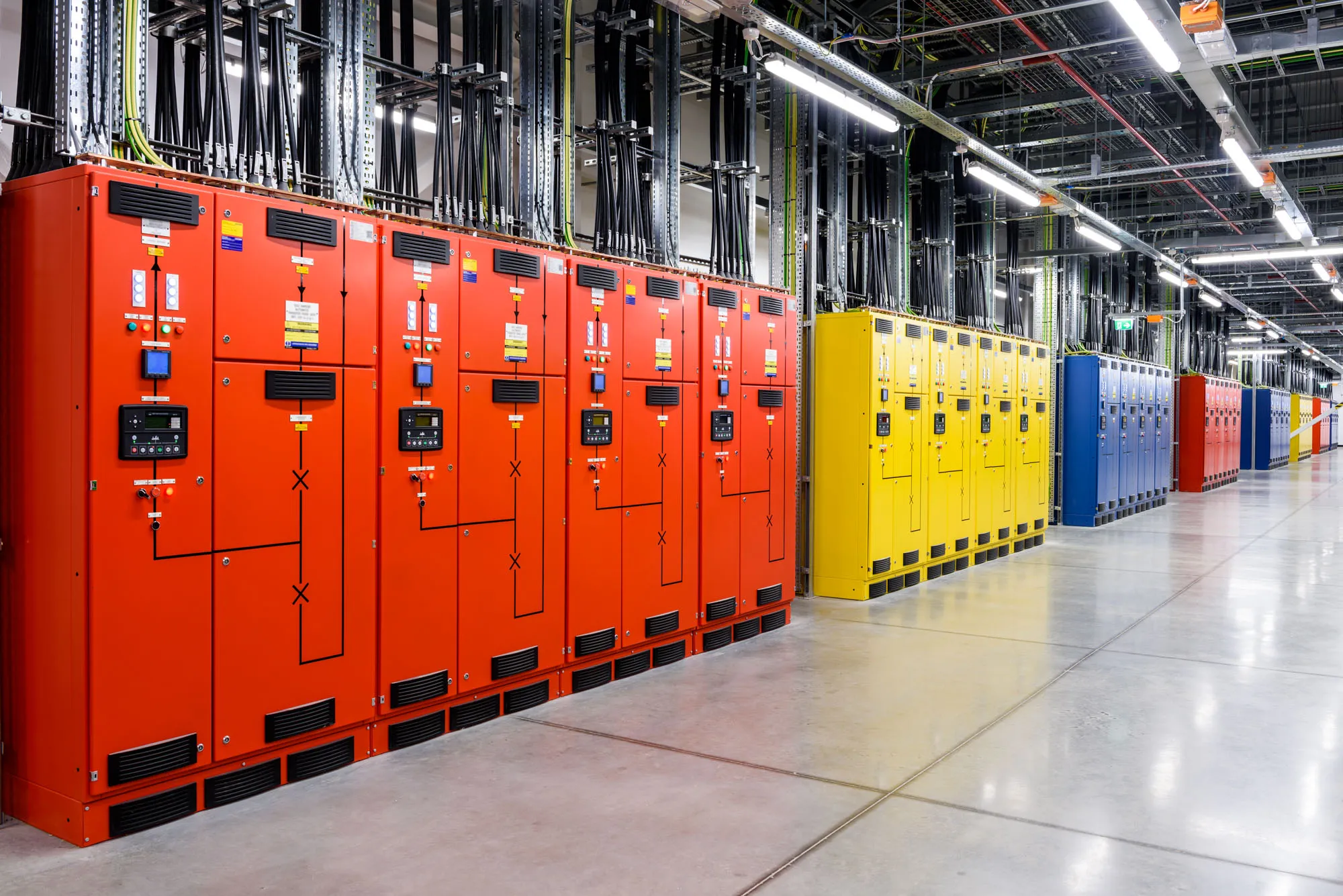
At hyperscale, the schedule is the commissioning problem
The technical work is familiar. The scale is what breaks the tools most teams bring to it.
Book a demo- Thousands of assets across multiple simultaneous delivery phases. Different halls or pods sit at different Level testing stages at once. The commissioning schedule has to reflect what is actually happening across all of them, not what was projected when the programme was built.
- Multiple subcontractor scopes with different tools and formats. Electrical and mechanical subcontractors bring their own systems and check-sheet formats. The owner Cx team manually reconciles all of it before seeing a coherent programme picture.
- A missed dependency at L4 delays L5 by weeks. On a hyperscale data center programme, dependencies between subcontractor scopes and delivery phases are the highest-risk part of the schedule. Tracked informally, they fail at the worst possible moment.
One platform. Every asset and scope, in sequence.
CxPlanner builds the commissioning schedule from the assets and tests already in the platform. On a hyperscale data center build, that means thousands of assets linked to their Level, system, and subcontractor scope from day one.
Dependencies between levels and delivery phases are tracked in the same system as the tests, not a separate Smartsheet. Subcontractors work directly in CxPlanner to the documentation standard required, so the owner Cx team sees current progress across every scope in one view.
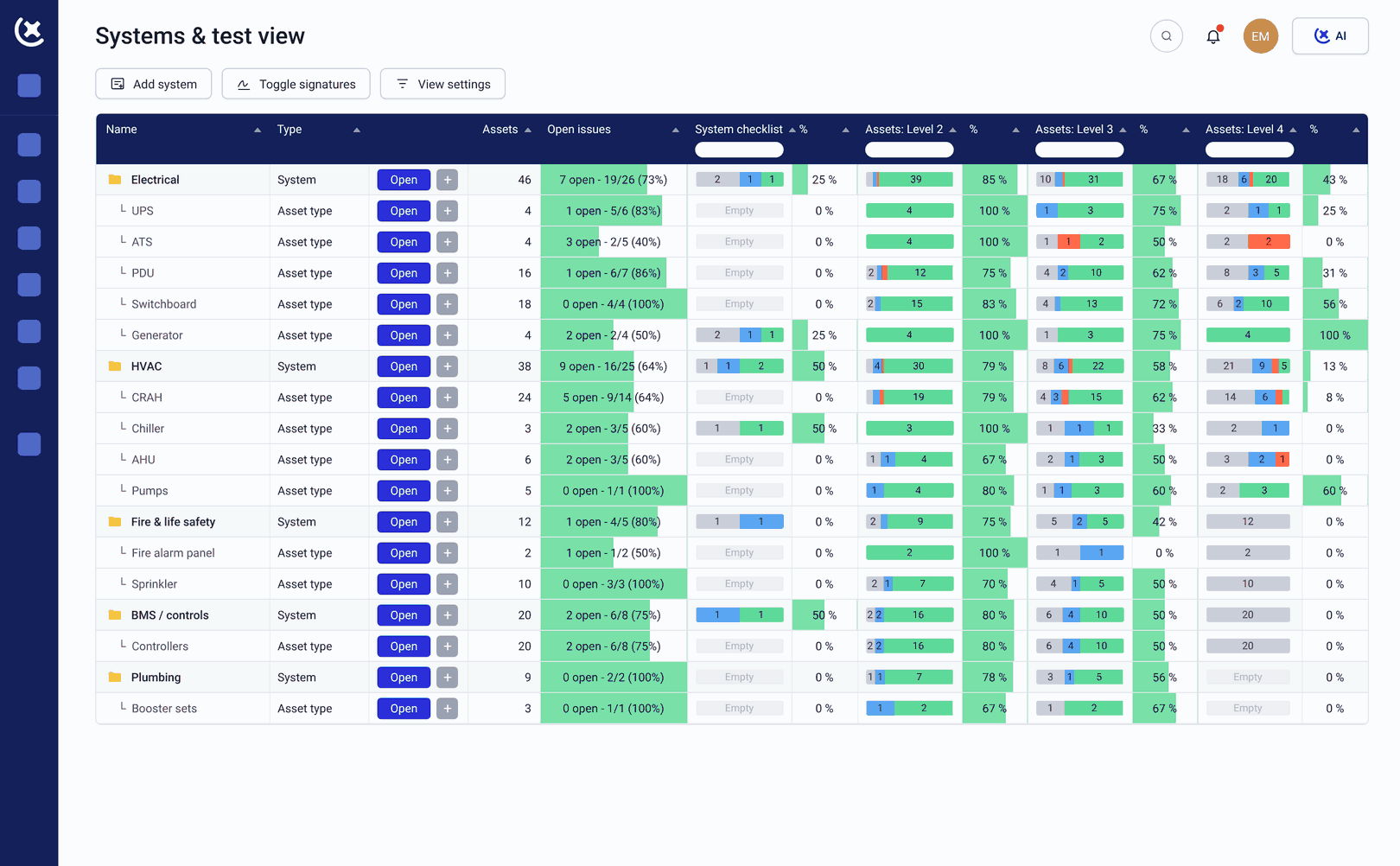
What CxPlanner covers on a hyperscale data center project
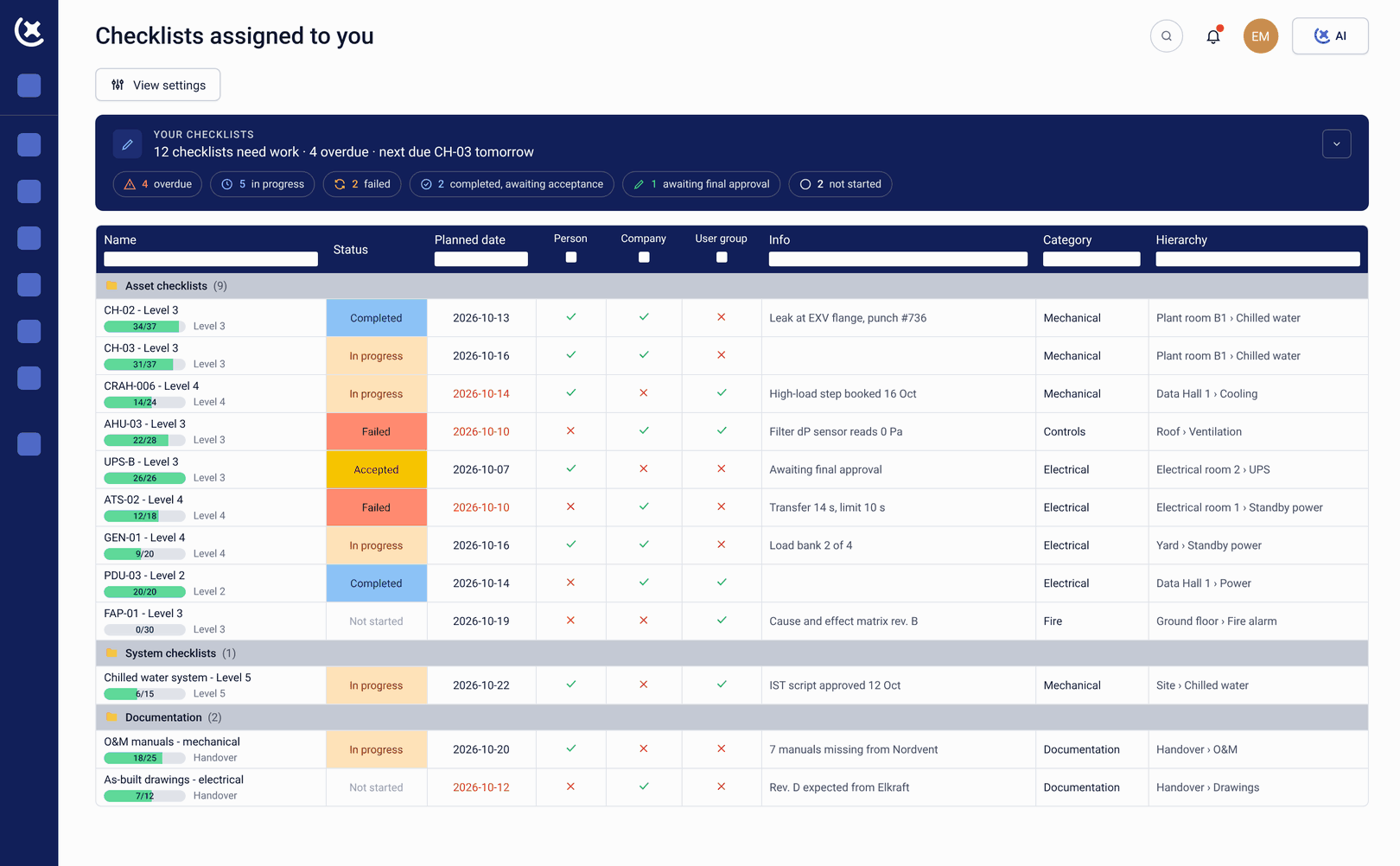
Level testing across thousands of assets
Every asset linked to L1 through L5 from the start. Gate enforcement is built in: L4 cannot begin until L3 is signed off across the scope it depends on. The Level testing sequence holds at hyperscale data center scale, regardless of project size.
Multi-phase, multi-scope scheduling
Build the commissioning schedule from real asset and test data. Multiple halls or pods at different Levels simultaneously, all visible in one programme view and updated in real time as work progresses on site. See how hyperscale construction scheduling works in practice.

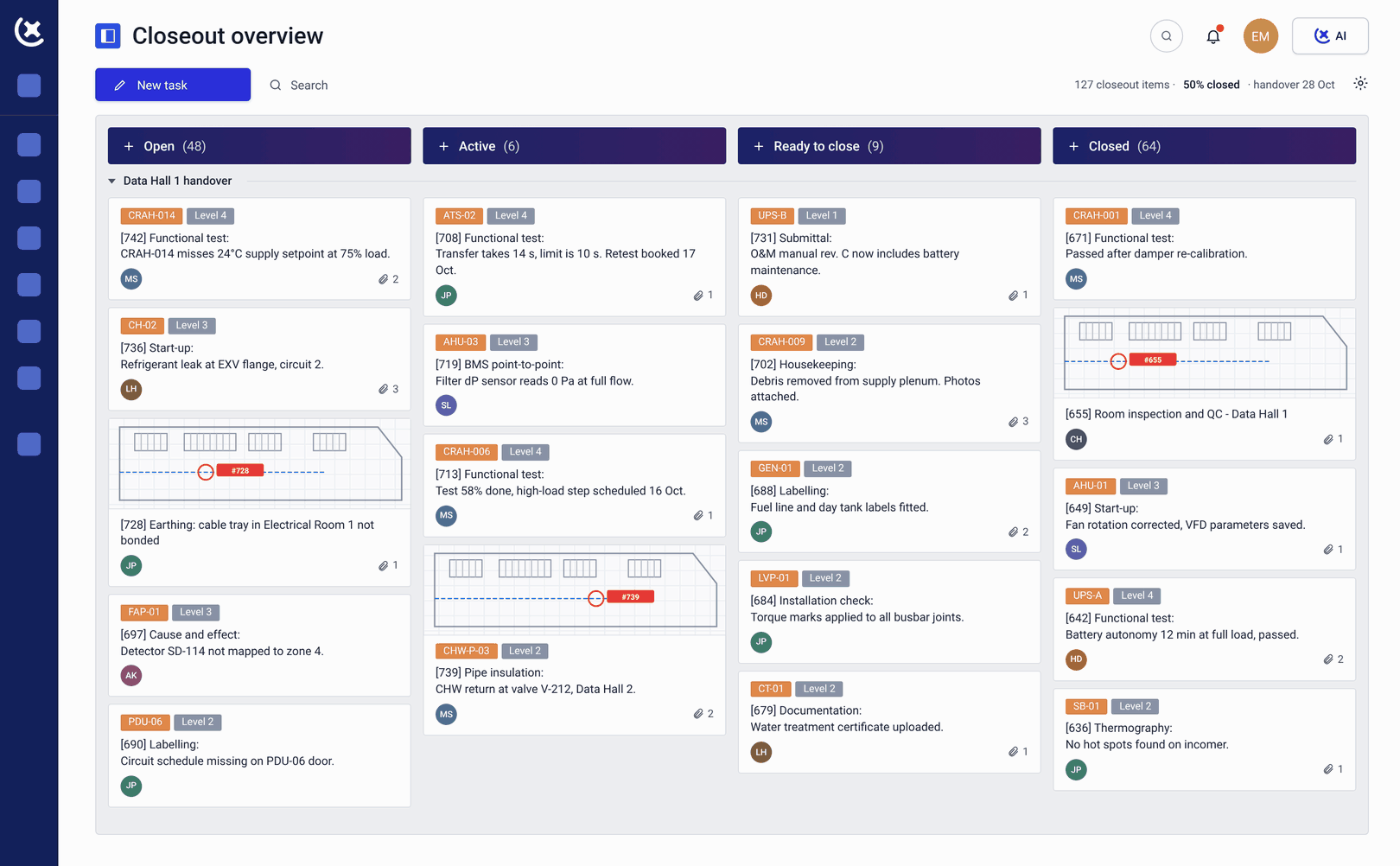
Cross-subcontractor programme visibility
Electrical and mechanical subcontractor progress is visible side by side. Dependencies between scopes are tracked in the platform, so a delay in one scope surfaces before it affects another Level or another delivery phase on a hyperscale data center programme.
CxAI nameplate scanning at scale
With thousands of assets to register on a hyperscale data center build, CxAI nameplate scanning removes the manual data entry that fills the early weeks of L2. A reported 75% time saving on data capture from large equipment volumes in real project usage.
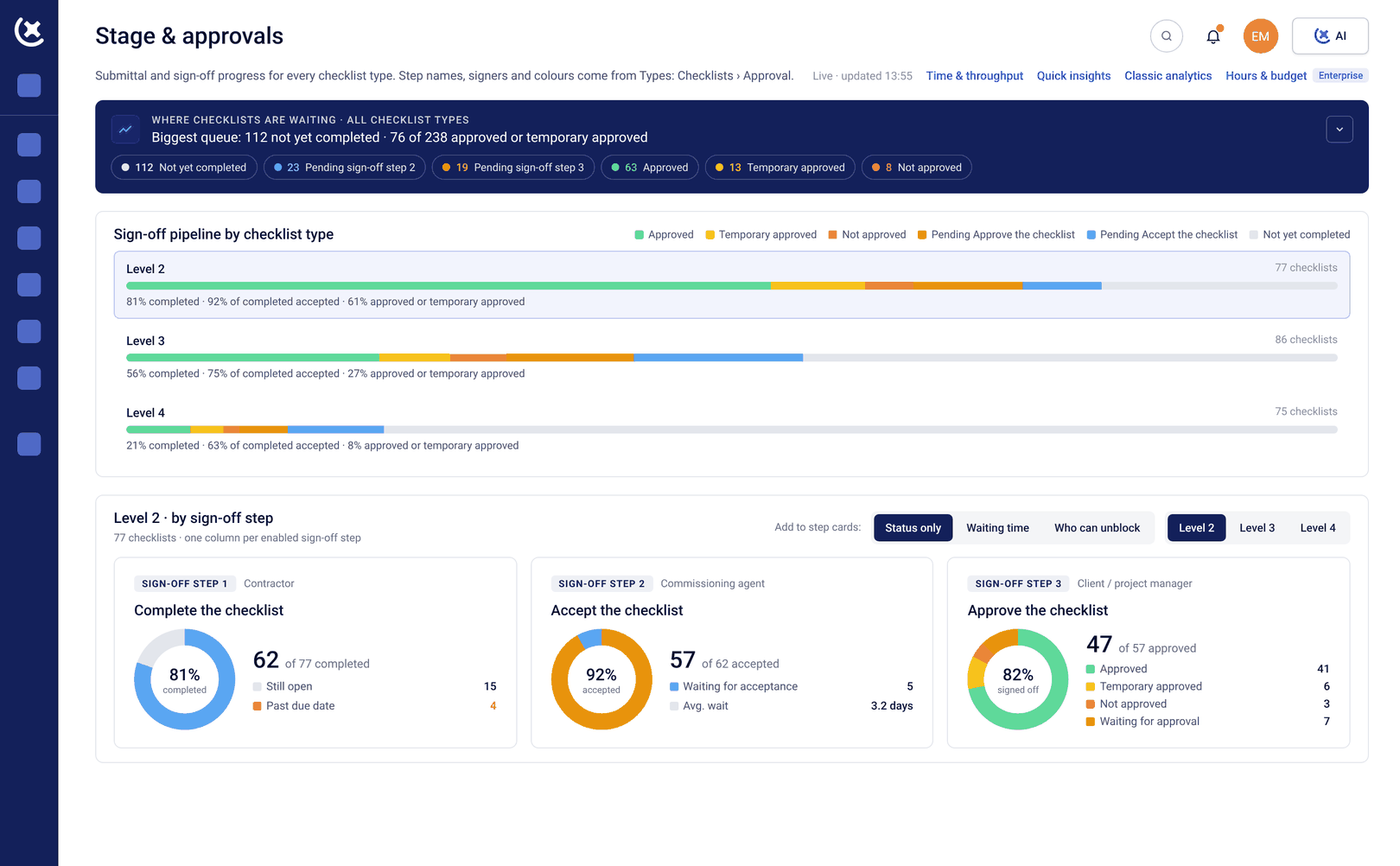
Live dashboards across all phases
Current progress across every delivery phase, every Level, and every subcontractor scope in one view. The owner Cx team sees the full hyperscale data center programme without compiling status from multiple sources.
What changes at hyperscale in one platform
The owner Cx team stops managing the gap between the scheduling tool and the commissioning tool, and starts managing the programme.
- Dependencies caught before they cascade across delivery phases. A missed dependency between an electrical L2 scope and a mechanical L3 scope surfaces before it becomes a gate delay. On a programme where one phase's delay cascades into the next, catching it early is the difference between a day and a week.
- The schedule reflects what is actually happening on site. Built from live asset and test data, the commissioning schedule updates as work progresses on site. The programme picture the owner Cx team sees is the current one, across every hyperscale data center delivery phase.
- Subcontractor documentation lands correctly first time. When electrical and mechanical subcontractors complete check-sheets in CxPlanner to the standard required, first-submission rejection rates drop. On a hyperscale data center programme with hundreds of L2 submissions, that compounds across every phase.
See how a hyperscale data center programme is handled with CxPlanner
If your current tools were not built for the scale of a hyperscale data center build, book a walkthrough. Bring your current programme and we will show you how it maps into CxPlanner.
Request a walkthroughCommon questions about commissioning software for hyperscale data centers
Does CxPlanner scale to projects with thousands of assets?
Yes. CxPlanner handles projects of any size, including hyperscale data center builds with thousands of assets across multiple simultaneous delivery phases. You activate only the workflows and modules needed for the scale of your build.
How does CxPlanner handle multiple delivery phases running in parallel?
Each delivery phase is tracked separately within CxPlanner, and dependencies between phases are enforced by the platform. The owner Cx team can view the full hyperscale construction programme across all phases or filter to a specific hall or pod.
Can CxPlanner replace Smartsheet for commissioning scheduling on a hyperscale build?
For most hyperscale data center projects, yes. The commissioning schedule is built from asset and test data already in CxPlanner, so there is no separate scheduling tool to maintain or sync with.
How does CxAI nameplate scanning help register assets faster?
On a hyperscale data center build, nameplate scanning captures asset data straight from equipment nameplates instead of manual entry. A reported 75% time saving on data capture from large equipment volumes in real project usage, with fewer transcription errors reaching the asset register.