Commissioning software built for colocation data center environments
A commissioning record on a colocation data center is a commercial document as much as an operational one. It gets tested against a tenant SLA or an audit long after handover, and every day of programme slippage is a day closer to missing a tenant's committed date.
CxPlanner gives the Cx team one platform to manage the full programme, Level testing, subcontractor check-sheets, and documentation, without losing track of which scope belongs to which tenant, or what each tenant's SLA requires.
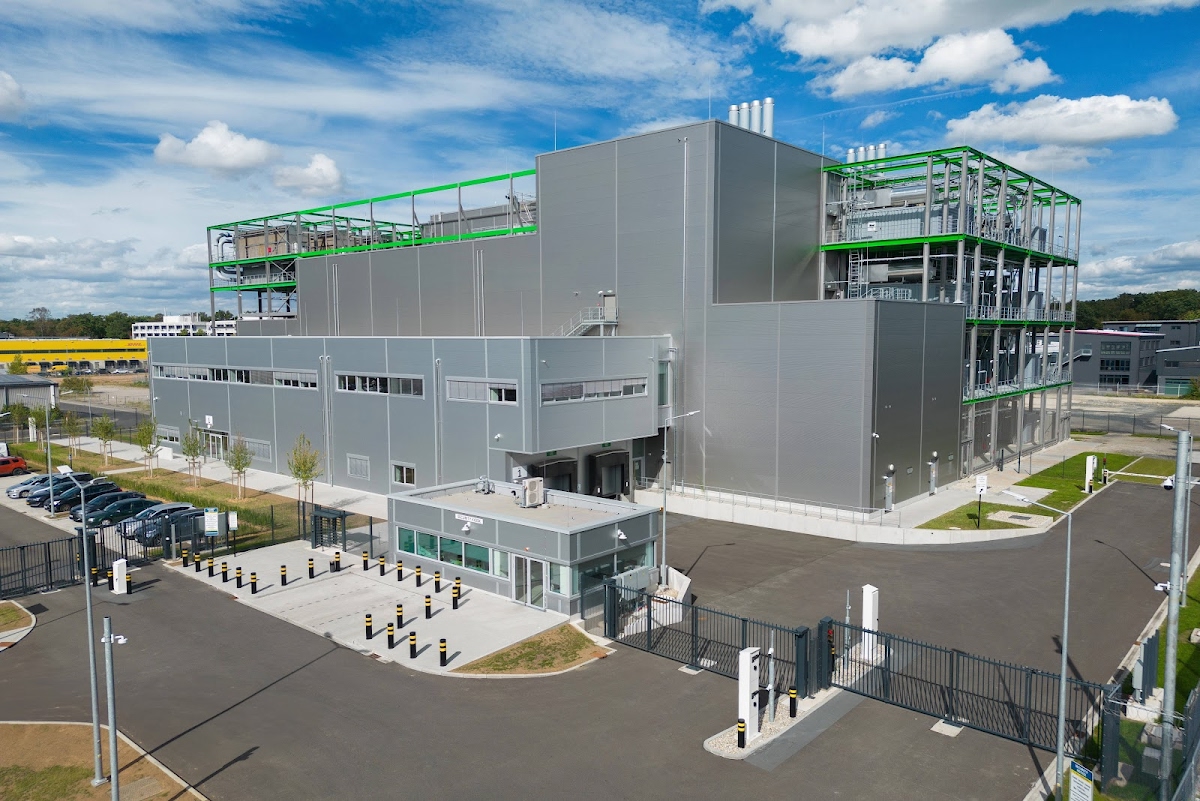
Every tenant programme runs against its own SLA, and the record has to hold up if one slips
Colocation commissioning is not one programme. It is several running simultaneously, each one measured against a different tenant's SLA and commitment date, and the operator is accountable for all of them.
Book a demo- A missed commitment date is a commercial event. Every day a tenant's fit-out runs behind is a day closer to missing a contractual commitment date. When that happens, the commissioning record is what the operator produces to show where the time went and who owns it.
- Concurrent fit-outs at different stages of the Level testing programme. One tenant is at L4 functional performance testing while another is still completing L2 site inspections. Keeping the programmes separate, and the documentation clean, across multiple concurrent scopes is a coordination problem the tools rarely solve.
- The operator needs visibility across all tenants without exposing one to another. The commissioning management software the operator uses has to show full programme status across all tenant scopes, while keeping each tenant's data visible only to the right people.
One platform. Each scope tracked separately. Documentation meets every standard.
CxPlanner structures the colocation data center commissioning programme around scopes, so each tenant's fit-out is tracked separately within the same platform.
The operator's Cx team sees all scopes in one view, while each tenant sees only their own. Check-sheets are built to the documentation standard each scope requires, so submissions meet the operator's standard and the tenant's requirements from the first entry. The programme runs in parallel without the documentation crossing over, and the record for each tenant is complete enough to stand behind if an SLA is ever disputed.
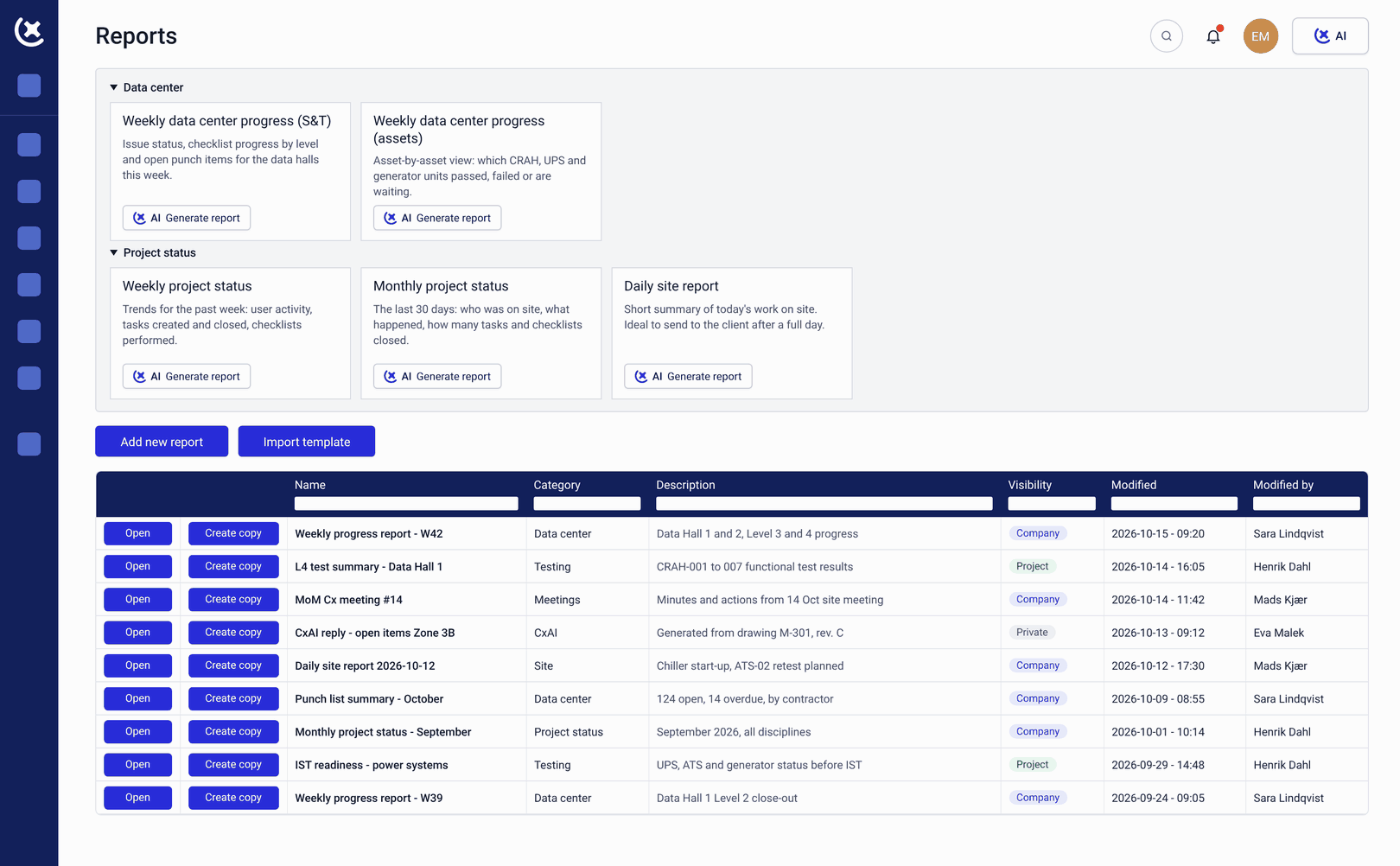
What CxPlanner covers on a colocation data center project
Multiple tenant scopes, one platform, full programme visibility for the operator.

Scope-separated commissioning programmes
Each tenant fit-out runs as a separate scope within CxPlanner. Level testing, check-sheets, and documentation are tracked independently, with no risk of one tenant's data appearing in another's programme view.
Operator-level cross-scope visibility
The operator's Cx team sees current progress across all tenant scopes in one live view, without pulling separate reports from each tenant programme.
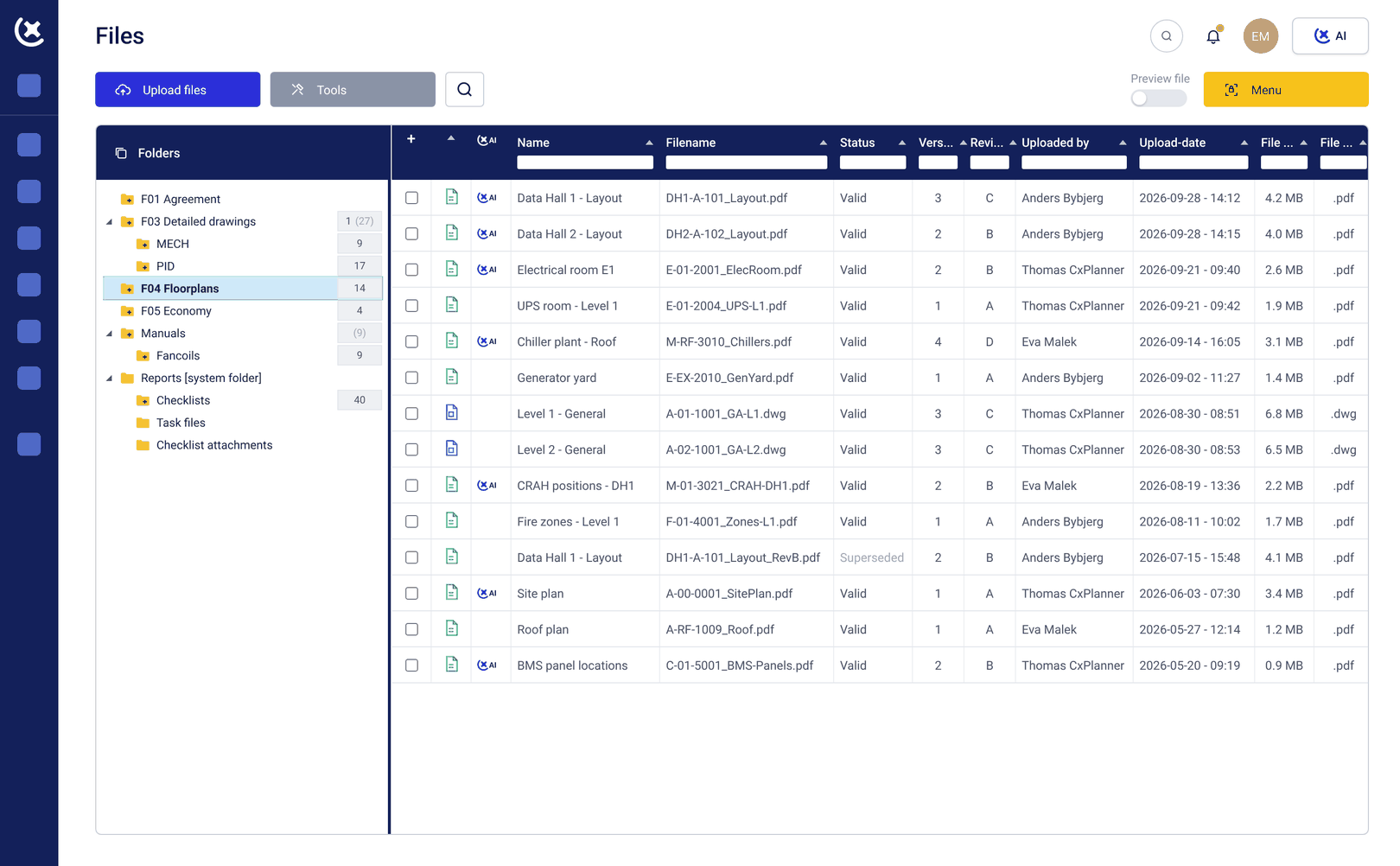
Documentation built to multiple standards
Check-sheet templates are customisable per scope, so the documentation an electrical subcontractor completes for Tenant A meets Tenant A's standard, while the template for Tenant B reflects Tenant B's requirements.
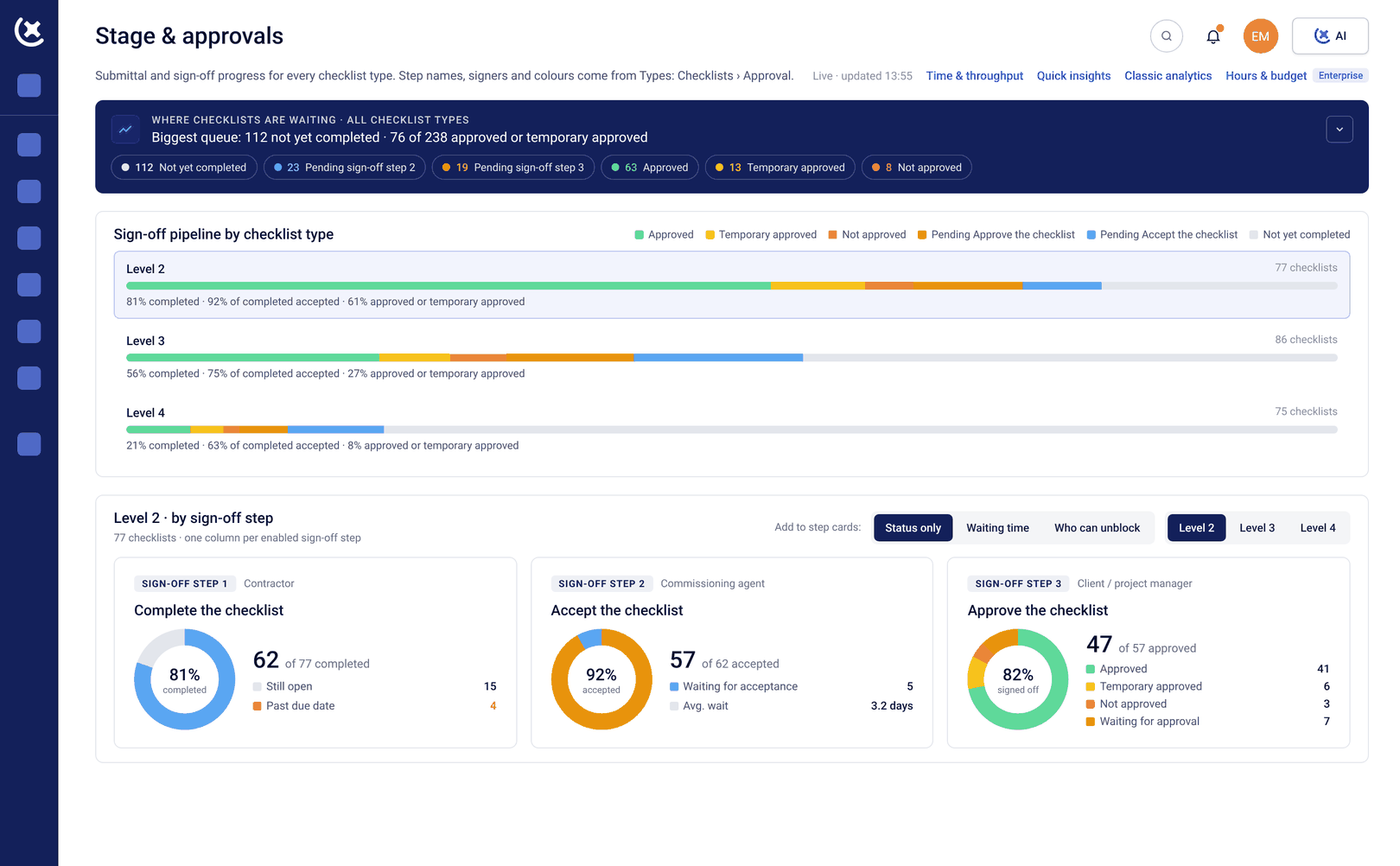
Concurrent L1-L5 programmes across tenant scopes
Multiple tenant scopes at different Levels simultaneously. Gate enforcement is per scope: L4 for one tenant cannot begin until L3 for that scope is complete, independent of where another tenant's programme stands.
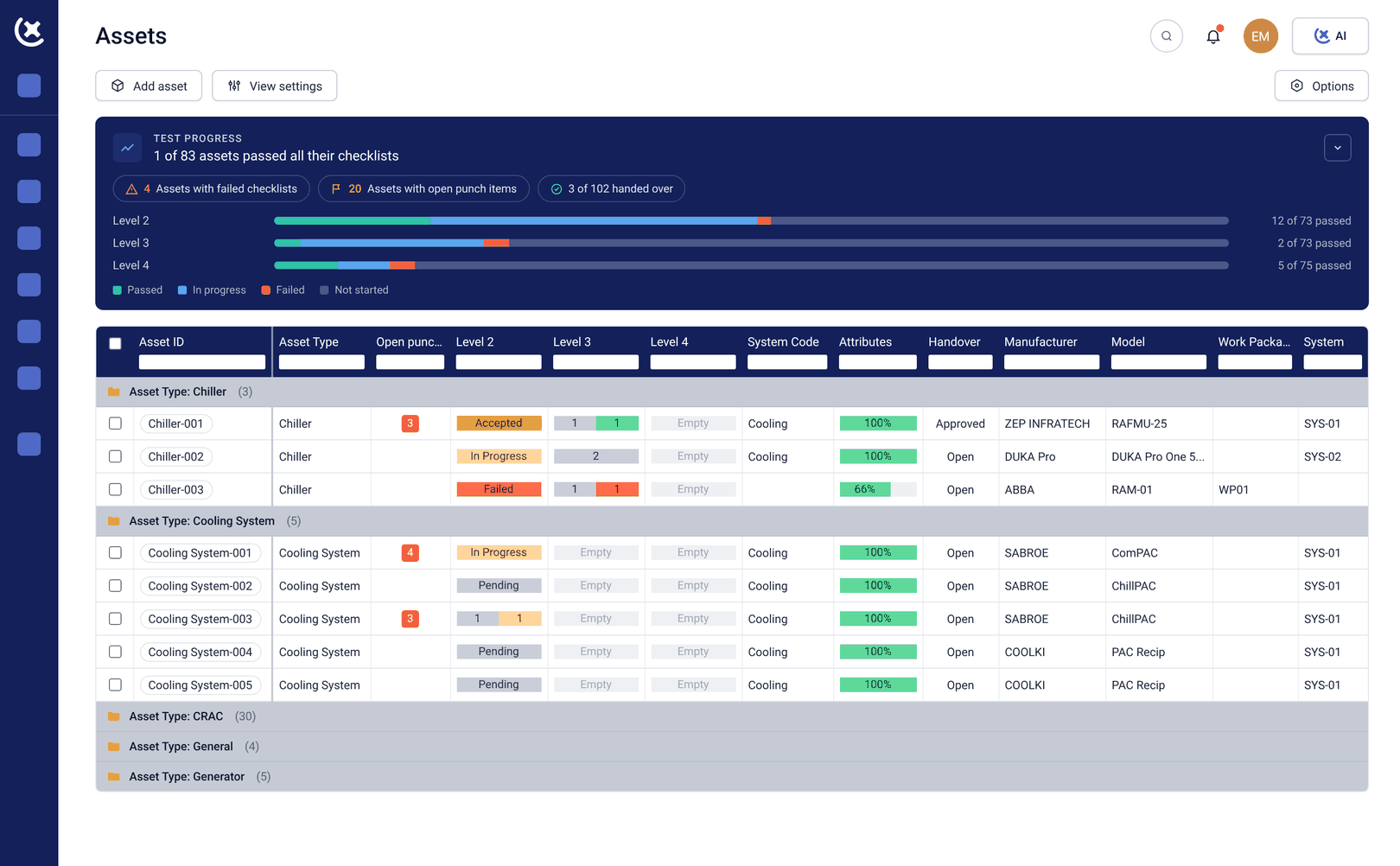
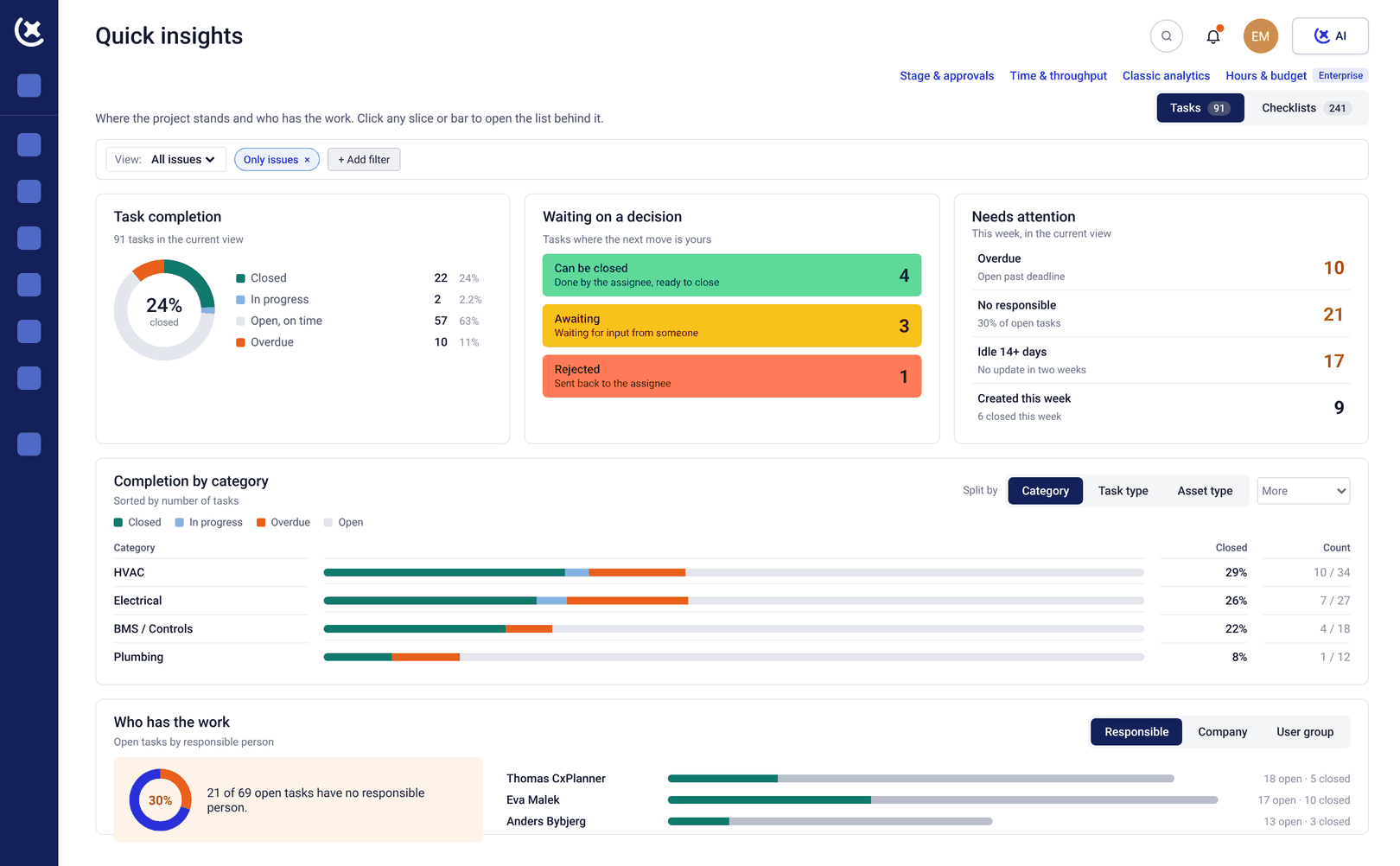
Live dashboards per scope and across the facility
The operator sees the full colocation data center programme in one commissioning management software dashboard. Each tenant scope can be filtered separately, so the operator presents each tenant with their own programme view without sharing the full facility picture.
What changes for colocation operators
The colocation data center operator stops managing separate programmes in separate tools and starts managing the full facility from one view.
- Concurrent fit-outs tracked without documentation overlap. Each tenant scope runs independently in CxPlanner. The operator sees all of them, with no risk of one tenant's check-sheets appearing in another's documentation package, and no manual separation step at closeout.
- Every tenant handover holds up if the SLA is tested. When documentation, sign-offs, and test records are tracked per scope throughout the programme, the handover package for each tenant is ready from the data already in the system. If a tenant later disputes a commitment date, the record shows exactly what happened and when.
- The operator's Cx team stops chasing status across concurrent programmes. Live programme visibility across all tenant scopes means the Cx team sees where each fit-out stands without asking subcontractors or tenants for updates. The status conversation starts from data, not from a compiled report.
See how CxPlanner handles concurrent commissioning scopes
If your Cx team tracks multiple tenant fit-outs across separate tools, book a walkthrough. We will show you how scope separation and cross-programme visibility work in CxPlanner.
Request a walkthroughCommon questions about commissioning software for colocation data centers
Can CxPlanner handle multiple tenant scopes running simultaneously in the same facility?
Yes. Each tenant fit-out in a colocation data center is tracked as a separate scope within CxPlanner, and the operator's Cx team sees all scopes in one programme view.
How does CxPlanner prevent one tenant's documentation from appearing in another's programme?
Each scope is access-controlled separately. A tenant sees only their own programme data, tracked independently from the start.
Can the operator present each tenant with their own programme view?
Yes. The operator can filter the dashboard to a specific tenant scope and give that tenant direct access to their own programme view, without exposing the full facility picture or other tenant data.
Does CxPlanner support the documentation standards of multiple tenants in the same facility?
Yes. Check-sheet templates are customisable per scope, so the documentation format for each tenant's fit-out reflects that tenant's requirements, while still meeting the operator's overall commissioning standard.