Commissioning software built for enterprise data center projects
An enterprise data center may be smaller than a hyperscale or colocation facility, but the consequence of a commissioning failure is not. A trading system or a hospital's clinical operations depends on the same rigor as any mission-critical build.
CxPlanner gives enterprise teams the platform to run a complete Level testing programme, coordinate subcontractors, and deliver audit-ready documentation, without the overhead of building the process from scratch for every new facility.

The stakes are the same as hyperscale, even when the programme is smaller
Enterprise data center builds do not carry hyperscale's scale, but they carry the same non-negotiable rigor. A missed test or undocumented deficiency costs the institution that depends on the facility just as much.
Book a demo- A small Cx team managing a large test programme. L1 through L5 testing across power, cooling, BMS, and fire suppression systems, with a Cx team often running the programme alongside other duties. Managing check-sheets, schedules, and documentation manually takes time the team does not have.
- Subcontractor documentation that does not meet the required standard. Electrical and mechanical subcontractors submit check-sheets in their own formats, and the Cx team spends time reformatting and chasing missing fields before L3 can begin.
- Audit-ready documentation is assembled at the end, not tracked throughout. The owner requires complete documentation at handover. When records are scattered across email chains and shared drives, compiling them in the final weeks is the most stressful part of the programme.
A structured programme from day one. Documentation audit-ready throughout.
CxPlanner gives the enterprise data center Cx team a programme structure built around the Level testing model, without building it from scratch. Assets, check-sheets, and test records are linked to their level from the start, and gate enforcement is in the platform.
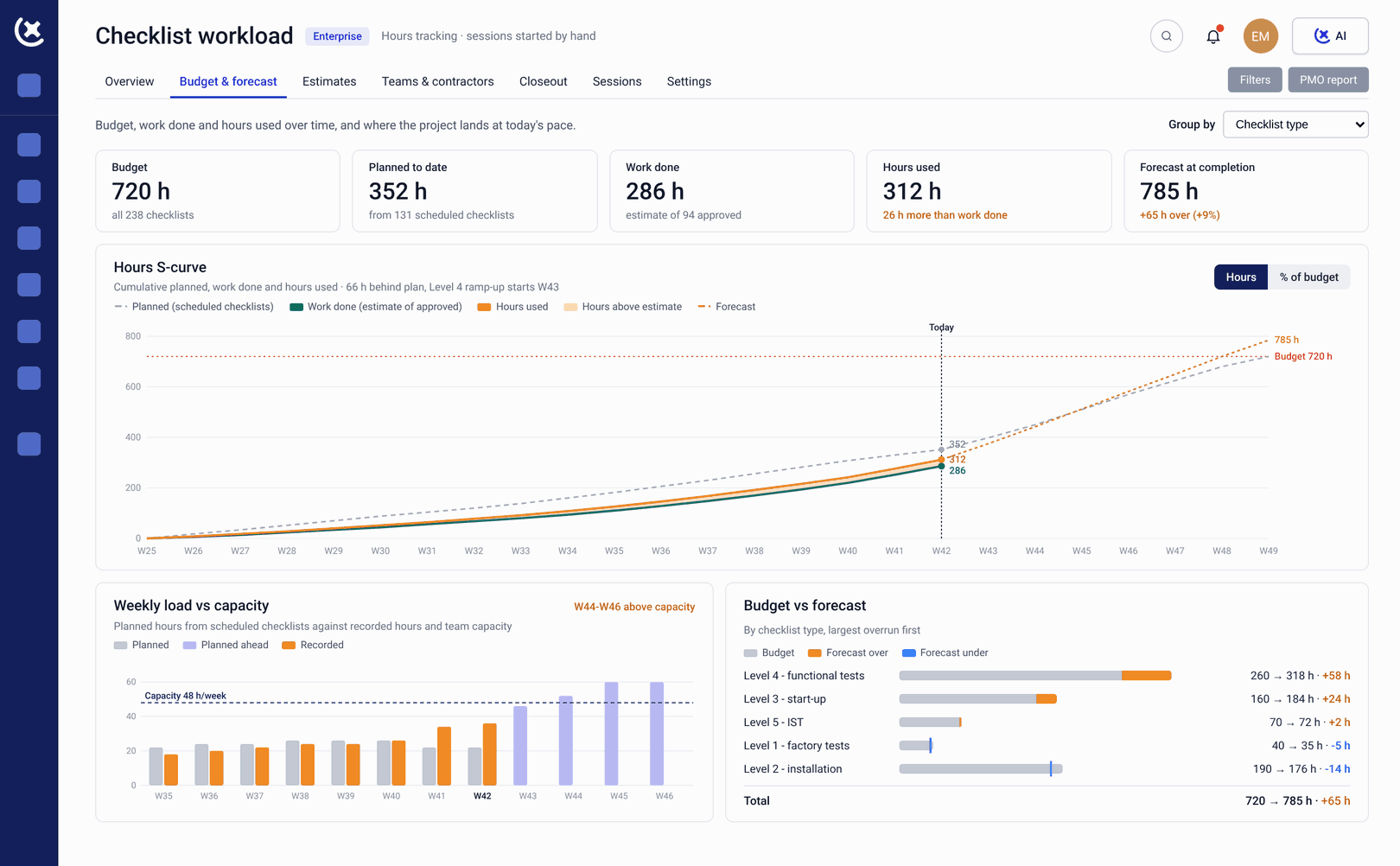
The data center management software dashboard gives the owner live visibility without a separate reporting step. Subcontractors work directly in CxPlanner to the standard the Cx team sets, so check-sheets meet the required format from the first submission.
The documentation that accumulates throughout is the handover package, with no compilation sprint in the final week. The rigor does not depend on how many people are running the programme.
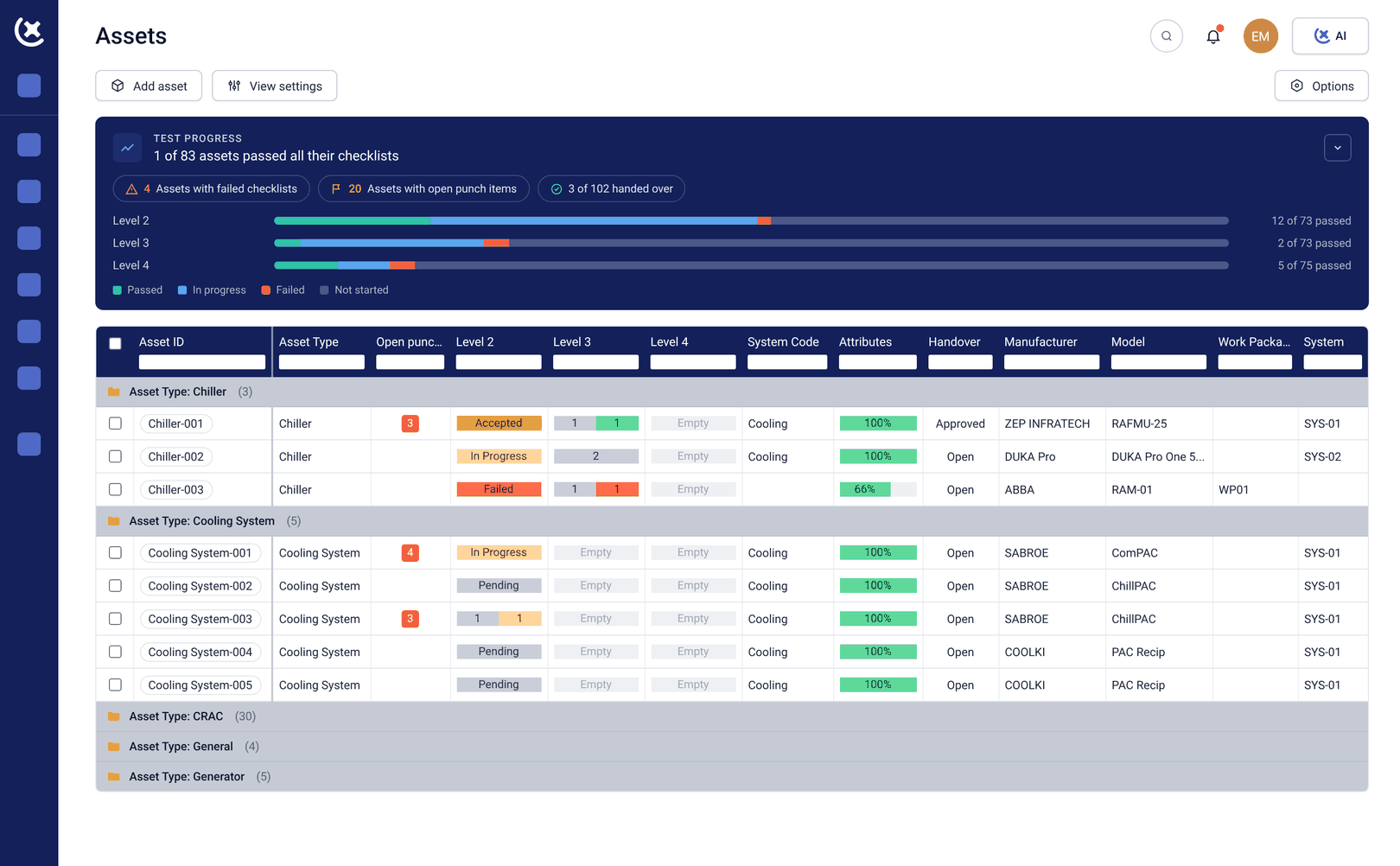
What CxPlanner covers on an enterprise data center project
A structured commissioning programme on an enterprise data center project, from Level testing through to audit-ready handover documentation.
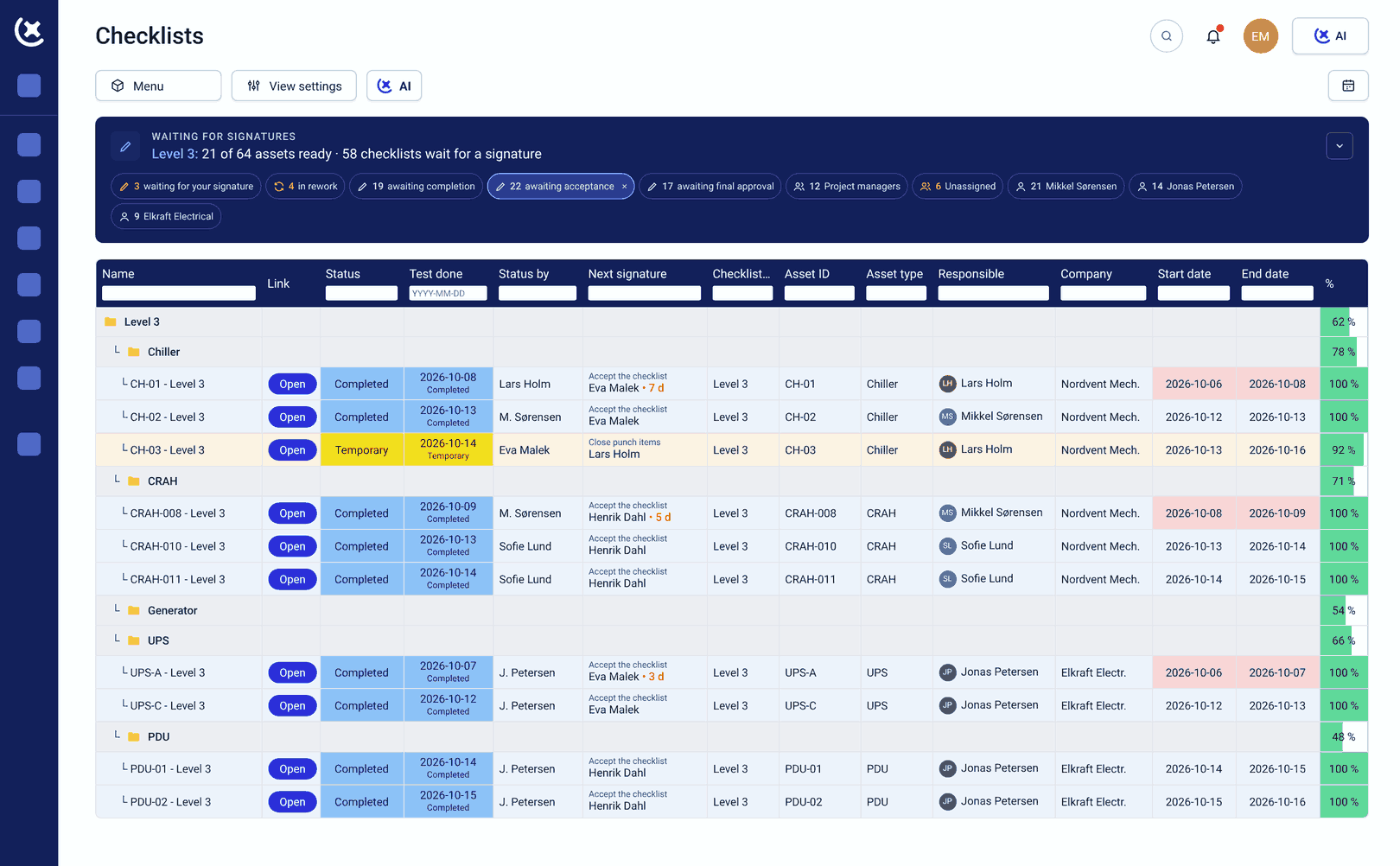
L1-L5 programme structure from day one
The programme is built around the Level testing model. Assets, check-sheets, and test records are linked to L1 through L5 from the start. Gate enforcement is built in: L4 cannot begin until L3 is signed off.
Subcontractor check-sheets to the required standard
Electrical and mechanical subcontractors complete check-sheets directly in CxPlanner, to the format required. Submissions that do not meet the standard are rejected with specific comments, no reformatting on the Cx team's end.
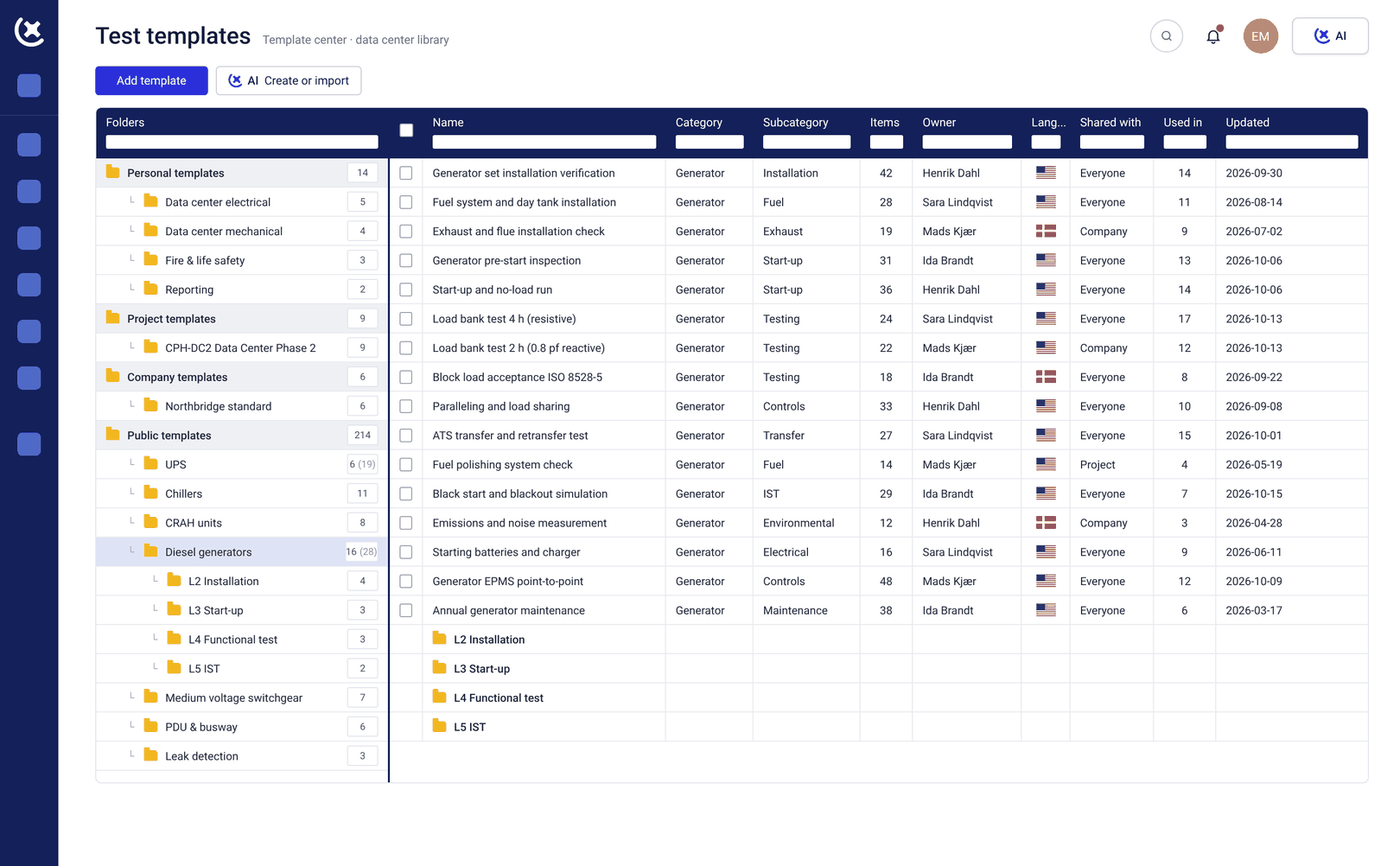
CxAI for programme admin
CxAI generates test scripts, scans nameplates at a reported 75% time saving on data capture, and drafts status reports from live data. For a small Cx team running a large programme, the admin reduction is significant.
Audit-ready documentation throughout the programme
Test records, check-sheets, and sign-offs accumulate in CxPlanner throughout. The handover package is drawn from data already in the system, not assembled from scattered sources in the final week.
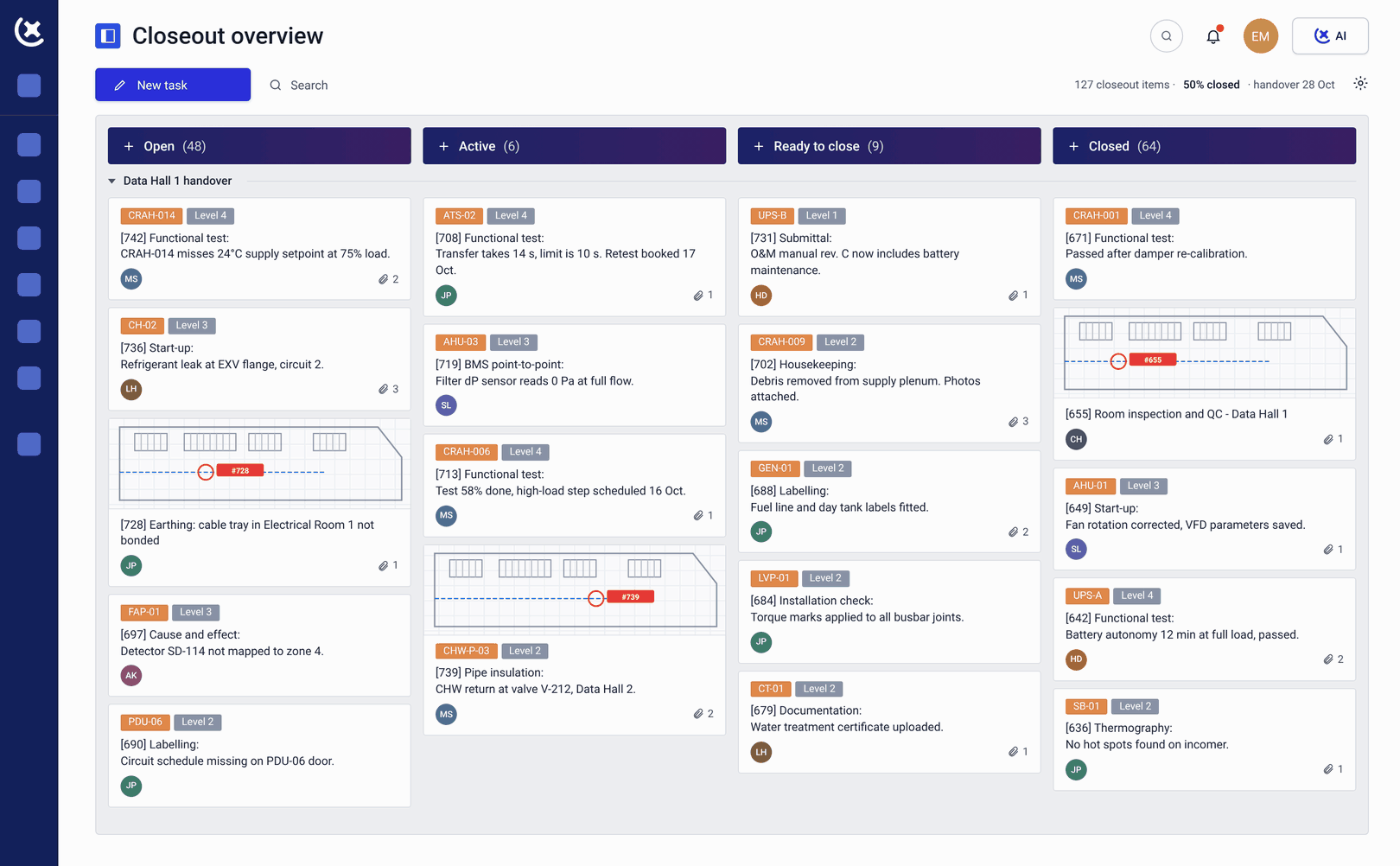
Owner programme visibility
The owner gets direct dashboard access to the live programme, including gate status and subcontractor progress, without a weekly report from the Cx team.
Key benefits from running the enterprise programme in CxPlanner
A smaller Cx team runs the same rigorous Level testing programme, without the usual tool overhead.
Programme setup takes hours.
The Level testing structure, templates, and asset register start from what is already in CxPlanner, not a blank spreadsheet. An enterprise data center Cx team can have a structured programme running before the first subcontractor arrives.
Subcontractor documentation lands correctly first time.
When check-sheets are built to the required standard first, the rejection and resubmission cycle that adds days to L2 and L3 gets shorter. For a small Cx team, each avoided rework cycle is a meaningful time saving.
Handover documentation is ready when the programme is.
Everything tracked throughout the enterprise data center programme becomes the handover package, so the final weeks reflect a programme closing out, not one compiling documentation.
Run your enterprise data center commissioning programme in CxPlanner
If your Cx team manages the test programme across a spreadsheet and a shared drive, book a walkthrough. We will show you what a structured Level testing programme looks like in CxPlanner from day one.
Request a walkthroughCommon questions about commissioning software for enterprise data centers
Is CxPlanner suitable for a smaller Cx team running an enterprise data center build?
Yes. CxPlanner gives a small Cx team the structure to run a complete Level testing programme, without the tool overhead. You activate only the workflows and modules needed for the scale of your build.
How quickly can an enterprise Cx team get a programme set up in CxPlanner?
The programme structure, check-sheet templates, and asset register can be set up in hours. CxAI generates templates from project documentation and extracts asset data from P&IDs and equipment lists.
Does CxPlanner produce audit-ready handover documentation automatically?
The documentation accumulates throughout the enterprise data center programme, since everything is captured in CxPlanner from the start. At handover, the package is drawn from data already in the system.
Can the owner access the programme directly without a weekly report from the Cx team?
Yes. Owners get direct dashboard access to the live programme without a reporting cycle.